Trautmann
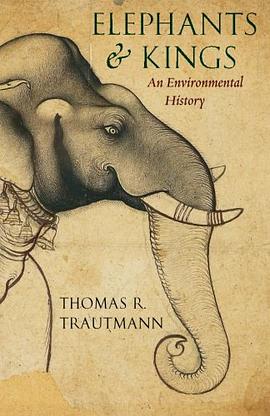
Elephants and Kings
Douban
Thomas R. Trautmann publishing house: University Of Chicago Press 2015 - 8
Because of their enormous size, elephants have long been irresistible for kings as symbols of their eminence. In early civilizations – such as Egypt, Mesopotamia, the Indus Civilization, and China – kings used elephants for royal sacrifice, spectacular hunts, public display of live captives, or the conspicuous consumption of ivory – all of them tending toward the elephant's extinction. The kings of India, however, as Thomas R Trautmann shows in this study, found a use for elephants that actually helped preserve their habitat and numbers in the wild: war. Trautmann traces the history of the war elephant in India and the spread of the institution to the West – where elephants took part in some of the greatest wars of antiquity – and Southeast Asia (but not China, significantly), a history that spans 3,000 years and a considerable part of the globe, from Spain to Java. He shows that because elephants eat such massive quantities of food, it was uneconomic to raise them from birth. Rather, in a unique form of domestication, Indian kings captured wild adults and trained them, one by one, through millennia. Kings were thus compelled to protect wild elephants from hunters and elephant forests from being cut down. By taking a wide-angle view of human-elephant relations, Trautmann throws into relief the structure of India's environmental history and the reasons for the persistence of wild elephants in its forests. "With substantial and wide-ranging scholarship, Trautmann lucidly presents the elephant's history in India, illuminating the important role of the war elephant and its powerful links to Indian kingship. The result is a unique and original work." - Rachel Dwyer, SOAS, University of London and author of Bollywood's India
Languages and Nations
Douban
Trautman, Thomas R.
Read Feb. 12, 2020
"Languages-and-nations project"; dynamics of Orientalism more determined by the intellectual project of ethnology-philology, rather than colonial context; Orientalism relying on Indian philological practices but from different cultural/epistemological register
Trautmann
印度
India : brief history of a civilization, 2nd ed. Douban
湯瑪士·特洛曼(Thomas R. Trautmann) translator: 林玉菁 publishing house: 時報文化 2018 - 5
印度為何能成為稱霸南亞的主宰? 文字、宗教、建築、藝術,又如何影響南亞諸國? 專為入門者量身打造, 人生的第一本印度歷史入門 印度,擁有多元民族與文化的國度, 在歷史洪流中兼容中亞、伊斯蘭與西方的優點, 透過其文字、宗教、政治的影響力,奠定南亞霸權的地位。 在長達五千年的歷史洪流中,印度的社會制度與宗教規範於吠陀時代奠定,是現今印度傳統文化的源頭。天文、科學等知識,是跟阿拉伯與中亞間相互交流後,彼此影響而來。藝術、文學與王制在笈多王朝時建立起古典形式,代代沿用並傳承下去。即便經歷穆斯林與大英帝國的統治,仍未完全伊斯蘭化、西方化,反而融合成印度獨有的樣貌。民族主義更是為印度注入新思想,甚至蔓延至周邊國家。 歷經各個時代的演變,融合多元文化的經驗,才塑造出今日璀璨亮眼又與眾不同的印度文明。印度文明可以說是印度史的縮影,而印度文明不僅屬於印度,從古至今,無論是文字、藝術、宗教、建築等,許多方面都影響南亞國家,進而轉化為歷史與文化的一部分。印度是南亞地區歷史的源頭,了解印度,就能掌握整個全南亞。本書史軸縱觀古代至當代,從文明起源到形成民族國家,全面總覽印度五千年的歷史軌跡。 市面上有許多與印度歷史有關的著作,但真正能概括全印度的卻鮮少。本書由知名古印度學者、美國密西根大學歷史系榮譽教授湯瑪士‧特洛曼,為了解決學生因了解冗長又複雜的印度文明史而信心大失,進其去蕪存菁,並以見微知著的寫作手法,搭配三十四張地圖與圖片,寫出精彩的著作。無論是對印度有興趣,或是想到印度旅行、經商、求學,甚至是生活的人,本書能滿足你探究印度歷史的好奇心,這絕對是人人都該擁有的印度史、南亞史入門聖經。 從印度文明與歷史中發生的大事件, 一一解讀印度與南亞的區域發展史: ●印度河文明曾出現過都市文明,從摩亨佐─達羅與哈拉帕遺跡中發現下城、穀倉和高丘,呈現出井然有序的城市規劃痕跡。出土的滑石印章上的文字至今仍無法解讀,依據其他文物推測或許印度河宗教可能為印度教的前身。 ●雅利安人最早創造了梵文,並用於宗教祭祀,屬於獻祭的宗教。由他們產生的吠陀文化,衍生自西亞與中亞的先祖,卻在印度建立了嚴密的社會結構和階級制度。而種姓制度便是在這時期創造出來的。 ●在印度河─恆河平原出現的諸多小國,以摩揭陀國居優勢地位,吞併其他國家後,國力並將橫跨整個印度。此時婆羅門教式微,佛教、耆那教和宿命論等反吠陀宗教出現。 ●孔雀王朝是印度史上第一個帝國。第三代君主阿育王時代國勢強盛,統治範圍幾乎擴及整個印度次大陸。阿育王不僅宣揚佛法,也建立正法,終結派系之間的鬥爭。非暴力的慈悲原則,也首次成為君主治國的典範。 ●貴霜王朝的迦膩色迦王帝國版圖,延伸至印度,開啟今後印度每五百年一次,遭受中亞遊牧民族軍事入侵的輪迴。對於被攻掠的土地採向農民徵稅的方式,而非掠奪以維持君主權威,對當地宗教也給予庇護。 ●笈多王朝是由印度人建立的最後一個帝國政權,中央集權色彩薄弱,這時期吠陀婆羅門教獲得復興,並加入大眾化、虔愛形式的宗教,形成印度教,同時大乘佛教盛行,是印度古典文化的黃金時期。 ●伊斯蘭勢力在印度建立德里蘇丹與蒙兀兒帝國,形成特有印度穆斯林文化,阿克巴大帝採取宗教寬容政策,但後繼者奧朗則布卻想讓印度伊斯蘭化,但因君主昏庸無能,計劃失敗收場。 ●大航海時代,印度成了歐洲列強的殖民地,卻在英國東印度公司獲得統治權後,結束蒙兀兒帝國,由大英帝國直接統治,但英國政府僅維持最低功能,並不涉入印度的社會與婚姻制度。 ●印度民族主義崛起,脫離大英帝國統治。因宗教因素,分裂成印度共和國與巴基斯坦,更間接影響南亞地區的各民族國家建立。 名人推薦 吳德朗 夢想印度博物館及台北印度文化中心創辦人___________________專文推薦 印度尤 駐印度特約記者、作家 黃偉雯 歷史文化作家、講師 ___________________好評讚美 欣見這般簡潔卻又可以在有限的文字當中,精準寫出印度歷史的各種細節知識。尤其是闡述出「印度文明」與「印度共和國」兩種涵蓋的意象與內容大不同,相當適合對印度歷史有興趣的讀者,作為首選的入門書籍。――黃偉雯,歷史文化作家、講師 這是湯瑪士‧特洛曼的獨特之作。內容清楚明晰、引人入勝卻又精微奧妙的印度史入門書。他提出印度歷史綜觀,時空橫跨上古至現代,可作為了解區域歷史動力的完美映襯。沒有任何其他南亞入門書籍,能比得上他處理描述不同歷史年代篇幅間的微妙平衡,以絕對清晰的論述與深廣博學的內容相互結合。本書精煉出一位史學大師終身的所學所思。――瑪莉娜麗妮‧辛哈(Mrinalini Sinha),密西根大學 特洛曼是少數有資格以權威口吻論述印度文明的學者之一,內容含括從古代至現代的所有歷史事實。他以專業方式書寫,卻不會刪除歷史中細微精妙之處。――蘇米特‧古哈(Sumit Guha),德州大學奧斯汀分校 本書達成僅有少數南亞歷史入門書可成就的壯舉――將印度整整五千年歷史,轉化為可近好讀的書籍。特洛曼擁有印度史與人類學的專業,以富含願景與文筆優雅的寫作方式,精鍊成這部珍寶之作。本書對印度史的貢獻無價,更是教學良伴。――A. 阿茲法‧摩因(A. Azfar Moin),德州大學奧斯汀分校 本書雖然是印度全史,內容卻相當精簡;學術價值高,但卻意外好讀。我會將本書推薦給任何想要精彩印度史入門書的讀者。――希爾維亞‧格雷(Sylvia Gray),波特蘭社區學院
To read Sept. 19, 2018
南亚文化的……“霸权”?你逗呢?
Trautmann
Lewis Henry Morgan and the Invention of Kinship
Douban
Trautmann, Thomas R. 2008 - 7
Lewis Henry Morgan of Rochester, New York, lawyer and pioneering anthropologist, was the leading American contributor of his generation to the social sciences. Among the classic works whose conjunction in the 1860s gave modern anthropology its shape, Morgan's massive and technical Systems of Consanguinity and Affinity of the Human Family was decisive. Thomas R. Trautmann offers a new interpretation of the genesis of "kinship" and of the role it played in late nineteenth-century intellectual history. This Bison Books edition features a new introduction and appendices by the author. Thomas R. Trautmann is a professor of history and anthropology at the University of Michigan. He is the author of several books, including Dravidian Kinship, Aryans and British India, The Aryan Debate, and Languages and Nations: The Dravidian Proof in Colonial Madras.
India
Douban
Thomas R. Trautmann publishing house: Oxford University Press 2010 - 7
India: Brief History of a Civilization provides a brief overview of a very long period, allowing students to acquire a mental map of the entire history of Indian civilization in a short book. Most comprehensive histories devote a few chapters to the early history of India and an increasing number of pages to the more recent period, giving an impression that early history is mere background and that Indian civilization finds its fulfillment in the nation-state. Thomas R. Trautmann believes that the deep past lives on and is a valuable resource for understanding the present day and for creating a viable future. The result is a book that is short enough to read in a few sittings, but comprehensive in coverage--5,000 years of India in brief.
Aryans and British India
Douban
Thomas R. Trautmann publishing house: University of California Press 1997 - 3
'Aryan,' a word that today evokes images of racial hatred and atrocity, was first used by Europeans to suggest bonds of kinship, as Thomas Trautmann shows in his far-reaching history of British Orientalism and the ethnology of India. When the historical relationship uniting Sanskrit with the languages of Europe was discovered, it seemed clear that Indians and Britons belonged to the same family. Thus the Indo-European or Aryan idea, based on the principle of linguistic kinship, dominated British ethnological inquiry. In the nineteenth century, however, an emergent biological 'race science' attacked the authority of the Orientalists. The spectacle of a dark-skinned people who were evidently civilized challenged Victorian ideas, and race science responded to the enigma of India by redefining the Aryan concept in narrowly 'white' racial terms. By the end of the nineteenth century, race science and Orientalism reached a deep and lasting consensus in regard to India, which Trautmann calls 'the racial theory of Indian civilization,' and which he undermines with his powerful analysis of colonial ethnology in India. His work of reassessing British Orientalism and the Aryan idea will be of great interest to historians, anthropologists, and cultural critics.
Read
Oct. 21, 2013
学术史、思想史、帝国史、印度学,和人类学理论融合在一起,材料非常丰富,如果能和思想传播的社会状况结合在一起讨论一下就更好了。
Trautmann
Languages and Nations
Douban
Trautmann, Thomas R. publishing house: Univ of California Pr 2006 - 8
British rule of India brought together two very different traditions of scholarship about language, whose conjuncture led to several intellectual breakthroughs of lasting value. Two of these were especially important: the conceptualization of the Indo-European language family by Sir William Jones at Calcutta in 1786 - proposing that Sanskrit is related to Persian and languages of Europe - and the conceptualization of the Dravidian language family of South India by F.W. Ellis at Madras in 1816 - the 'Dravidian proof', showing that the languages of South India are related to one another but are not derived from Sanskrit. These concepts are valid still today, centuries later. This book continues the examination Thomas R. Trautmann began in "Aryans and British India" (1997). While the previous book focused on Calcutta and Jones, the current volume examines these developments from the vantage of Madras, focusing on Ellis, Collector of Madras, and the Indian scholars with whom he worked at the College of Fort St. George, making use of the rich colonial record. Trautmann concludes by showing how elements of the Indian analysis of language have been folded into historical linguistics and continue in the present as unseen but nevertheless living elements of the modern.