Trilling
诚与真
Douban
★ 9.1 20 ratings
(美)莱昂内尔·特里林 translator: 刘佳林 publishing house: 江苏教育出版社 2006
《诚与真》是特里林1970年在担任哈佛大学诺顿诗歌教授时的演讲集,主要围绕历史中的自我之真诚与真实问题展开,某种程度上浓缩了他此前对诸多作家及文学文化现象的研究与思考。由于涉及众多的文学现象和理论问题,又包容了黑格尔、弗洛伊德有关精神的自我实现及潜意识理论,这部演讲集的思辨色彩很浓。他认为,对真诚和忠于自我的不懈追求在道德生活中占据了一个至关重要的地位;但是,在进一步的变化中,这种地位却被强劲的现代真实观念所篡夺。在整个西方文学和思想领域中比比皆是的例子都暗示着“诚”与“真”这两种观念所引起的矛盾和反讽。
Sincerity and Authenticity
Douban
★ 9.6 5 ratings
Lionel Trilling publishing house: Harvard University Press 1972 - 1
"Now and then," writes Lionel Triling "it is possible to observe the moral life in process of revising itself." In this new book he is concerned with such a mutation: the process by which the arduous enterprise of sincerity, of being true to one's self, came to occupy a place of supreme importance in the moral life--and the further shift which finds that place now usurped by the darker and still more strenuous modern ideal of authenticity. Instances range over the whole of Western literature and thought, from Shakespeare to Hegel to Sartre, from Robespierre to R.D. Laing, suggesting the contradictions and ironies to which the ideals of sincerity and authenticity give rise, most especially in contemporary life. Lucid, and brilliantly framed, its view of cultural history will give "Sincerity and Authenticity" an important place among the works of this distinguished critic.
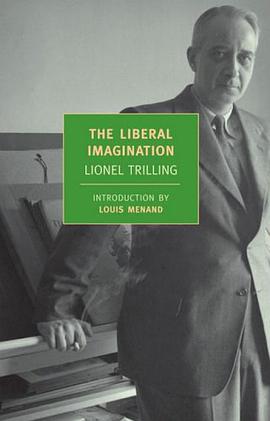
The Liberal Imagination
Douban
Lionel Trilling publishing house: NYRB Classics 2008 - 9
The Liberal Imagination is one of the most admired and influential works of criticism of the last century, a work that is not only a masterpiece of literary criticism but an important statement about politics and society. Published in 1950, one of the chillier moments of the Cold War, Trilling’s essays examine the promise —and limits—of liberalism, challenging the complacency of a naïve liberal belief in rationality, progress, and the panaceas of economics and other social sciences, and asserting in their stead the irreducible complexity of human motivation and the tragic inevitability of tragedy. Only the imagination, Trilling argues, can give us access and insight into these realms and only the imagination can ground a reflective and considered, rather than programmatic and dogmatic, liberalism. Writing with acute intelligence about classics like Huckleberry Finn and the novels of Henry James and F. Scott Fitzgerald, but also on such varied matters as the Kinsey Report and money in the American imagination, Trilling presents a model of the critic as both part of and apart from his society, a defender of the reflective life that, in our ever more rationalized world, seems ever more necessary—and ever more remote.