Valmiki
The Ramayana
Douban
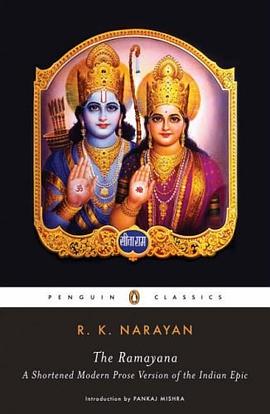
R. K. Narayan publishing house: Penguin Classics 2006 - 11
在线阅读本书 "The Ramayana" is, quite simply, the greatest of Indian epics - and one of the world's supreme masterpieces of storytelling. 'Almost every individual living in India,' writes R. K. Narayan in the Introduction to this new interpretation, 'is aware of the story of "The Ramayana". Everyone of whatever age, outlook, education or station in life knows the essential part of the epic and adores the main figures in it - Rama and Sita. Every child is told the story at bedtime ..."The Ramayana" pervades our cultural life.' Although the Sanskrit original was composed by Valmiki, probably around the fourth century BC, poets have produced countless variant versions in different languages. Here, drawing his inspiration from the work of an eleventh-century Tamil poet called Kamban, Narayan has used the talents of a master novelist to recreate the excitement and joy he has found in the original. It can be enjoyed and appreciated, he suggests, for its psychological insight, its spiritual depth and its practical wisdom - or just as a thrilling tale of abduction, battle and courtship played out in a universe thronged with heroes, deities and demons.
Ramayana
Douban
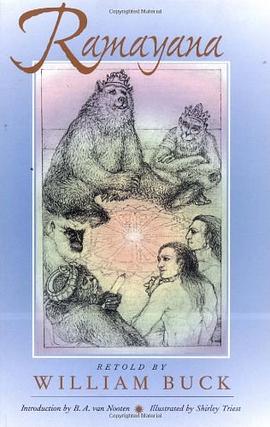
Buck, William/ Van Nooten, B. A. (INT)/ Triest, Shirley (ILT) publishing house: Univ of California Pr 2000 - 11
Few works in world literature have inspired so vast an audience, in nations with radically different languages and cultures, as the "Ramayana" and "Mahabharata", two Sanskrit verse epics written some 2,000 years ago. In "Ramayana" (written by a poet known to us as Valmiki), William Buck has retold the story of Prince Rama - with all its nobility of spirit, courtly intrigue, heroic renunciation, fierce battles, and triumph of good over evil - in a length and manner that will make the great Indian epics accessible to the contemporary reader.The same is true for the "Mahabharata" - in its original Sanskrit, probably the longest Indian epic ever composed. It is the story of a dynastic struggle, between the Kurus and Pandavas, for land. In his introduction, Sanskritist B. A. van Nooten notes, "Apart from William Buck's rendition [no other English version has] been able to capture the blend of religion and martial spirit that pervades the original epic." Presented accessibly for the general reader without compromising the spirit and lyricism of the originals, William Buck's "Ramayana" and "Mahabharata" capture the essence of the Indian cultural heritage.
The Ramayana
Douban
Valmiki translator: Arshia Sattar publishing house: Penguin Global 2010 - 1
A brilliant new translation of the timeless epic One of India's two greatest epics, The Ramayana pervades the country's moral and cultural consciousness. For generations it has served as a bedtime story for Indian children, while at the same time engaging the interest of philosophers and theologians. Now this magnificent translation makes the monumental work available to a new audience. Believed to have been composed by Valmiki sometime between the eighth and sixth centuries BC, the Ramayana tells the tragic and magical story of Rama, the prince of Ayodhya, an incarnation of Lord Visnu, born to rid the earth of the terrible demon Ravana. Exiled for fourteen years because of his stepmother's fit of jealousy on the eve of his coronation, Rama enters the forests of Dandaka with his beautiful wife Sita and devoted brother Laksmana. Sita is abducted from the forest by Ravana who takes her to his isolated kingdom on the far side of the southern ocean. The two brothers set out to rescue her and, along the way, make an alliance with a dispossessed monkey, king Sugriva. At the end of a bloody war Ravana is killed and Sita, reunited with her husband, and victorious Rama returns to Ayodhya to claim the throne that is rightfully his. An idealized heroic tale ending with the inevitable triumph of good over evil, The Ramayana is also an intensely personal story of family relationships, love and loss, duty and honour, of harem intrigue, petty jealousies and destructive ambitions. All this played out in a universe populated by larger-than-life humans, gods and celestial beings, wondrous animals and terrifying demons.