Weber
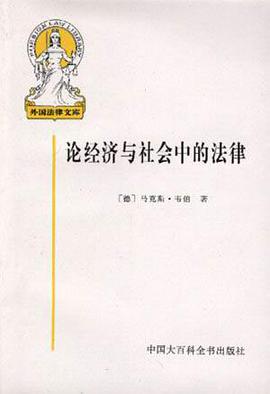
论经济与社会中的法律
Douban
[德] 马克斯·韦伯 translator: 张乃根 publishing house: 中国大百科全书出版社 1998 - 9
《论经济与社会中的法律》是马克斯·韦伯的遗作,书中包含了丰富的法律社会学理论,读者可以从中全面、完整地了解韦伯的法律社会学理论的基本观点。
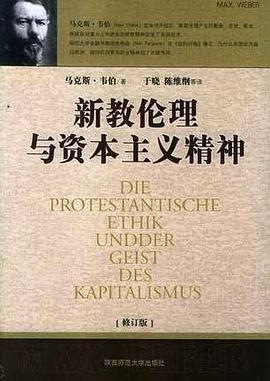
韦伯作品集Ⅻ:新教伦理与资本主义精神
Die protestantische Ethik und der Geist des Kapitalismus Douban
★ 9.3 11 ratings
[德国] 马克斯·韦伯 translator: 康乐/简惠美 publishing house: 广西师范大学出版社 2007 - 7
《韦伯作品集》总序 余英时 序言 苏国勋 说明 康乐 前言 第一部 新教伦理与资本主义精神 文献 第一卷 问题 第一章 宗教信仰与社会阶层 第二章 资本主义的精神 第三章 路德的职业观:研究的课题 第二卷 禁欲新教的职业伦理 第一章 人世禁欲的宗教基础 第二章 禁欲与资本主义精神 第二部 新教教派与资本主义精神 附录 译名对照表 索引
Read Nov. 9, 2017
20131214
Weber
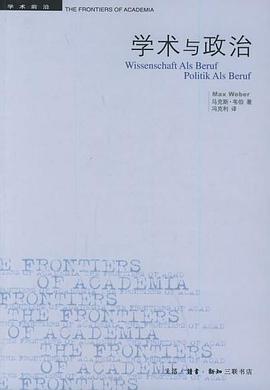
学术与政治
Wissenschaft als Beruf und Politik als Beruf Douban Goodreads
★ 8.6 24 ratings
[德国] 马克斯·韦伯 translator: 冯克利 publishing house: 生活·读书·新知三联书店 2005 - 3
《学术与政治》内容简介:研究韦伯者,无一不深知这两篇演说的重要性。因为它们不但浓缩着韦伯学术思想的精华,也由于他作为当时一名“精神贵族”式的德国知识界领袖,对其身边的思潮做出了十分个性化的回应,这是从韦伯其他学术著作中难得一见的。 (正在采用)
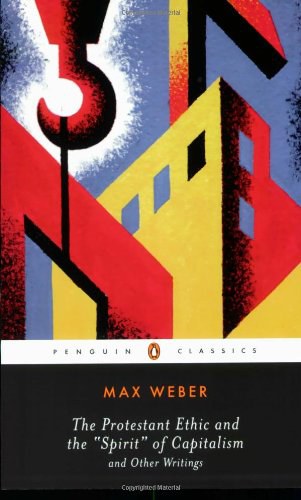
The Protestant Ethic and the Spirit of Capitalism
Douban
WEBER translator: Baehr, Peter R. / Wells, Gordon C. publishing house: Penguin 2002 - 4
n The Protestant Ethic, Max Weber opposes the Marxist concept of dialectical materialism and relates the rise of the capitalist economy to the Calvinist belief in the moral value of hard work and the fulfillment of one's worldly duties. Based on the original 1905 edition, this volume includes, along with Weber's treatise, an illuminating introduction, a wealth of explanatory notes, and exemplary responses and remarks-both from Weber and his critics-sparked by publication of The Protestant Ethic and the Spirit of Capitalism. This is the first English translation of the 1905 German text and the first volume to include Weber's unexpurgated responses to his critics, which reveal important developments in and clarifications of Weber's argument.
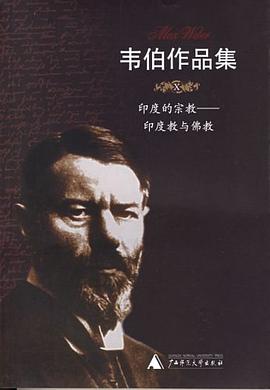
韦伯作品集X:印度的宗教——印度教与佛教
Hinduismus und Buddhismus Douban
韦伯 translator: 康乐 / 简惠美 publishing house: 广西师范大学出版社 2005
马克斯·韦伯,德国著名社会学家,他是社会学的大师,犹如牛顿之与物理学,也是现代一位最具生命力和影响力思想家。科塞评价说:韦伯以永不停息的斗争为代价获得了清晰透彻的认识。很少有人达到他那样的深度。他带来的是对人和社会的深刻理解。他对社会行动中的磨难、悲剧以及偶尔的成功的超脱的关注,使他成为社会分析的科学和艺术的至今无人能及的大师。如果说八十年代以前的中国知识界对韦伯还很陌生的话,那么经过至今余温尚存的“韦伯热”,大家对“祛魅”、“理想型”等韦伯特有的术语已耳熟能详了。八十年代中后期以来,大陆市场上的韦伯作品层出不穷,但一直不成系统,各个译本的译品亦参差不齐。此次广西师大出版社引进的台湾钱永祥等先生合力译出的韦伯作品集,填补了一直以来的缺憾。本书为该系列中的一本,主要是对印度教的一次梳理。 对印度人的物质生活、精神文化等诸多方面,至今仍有着重大影响的印度教,到底是一种什么样的宗教?公元前5世纪崛起于印度的佛教,尽管曾经灿烂一时,终究仍如过眼云烟,在千年前即销声匿迹于印度大陆,然而本书的标题仍为《印度的宗教——印度教与佛教》;反之,尽管中国至今角为世界上拥有最多佛教信徒的国家,韦伯在论述中国的宗教时,书名用的却是《儒教与道教》,其中也很少提到佛教,其道理何在?这些方面都可以在本书找到答案。为了便于阅读,本书在翻译过程中增添了许多译注,对于了解印度社会、思想与佛教而言,这无疑是一本最佳的入门读物。 本书属于社会学大师韦伯作品集之一。作者在本书研究了印度的宗教。作者认为,对亚洲整体而言,中国扮演了类似法国在近代欧洲所扮演的角色:所有世情通达的‘洗练’,莫不是源自中国,再传布于西藏、日本和中南半岛。相反的,印度的意义则可媲美于古代的希腊世界:在亚洲,举凡超越现实利害的思相,很少能不将其根源追溯到印度的。尤其是,印度的(不管正统或异端的)救赎宗教,在整个亚洲地区扮演了类似于基督教的角色。
Read
March 28, 2012
p.20, Purana, “富兰那书”…… 后面还有,Dravidian, “德拉威人”……不能忍。
Weber
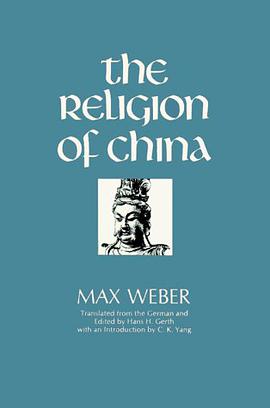
The Religion of China
Konfuzianismus und Taoismus Douban
Max Weber translator: Hans H. Gerth publishing house: Free Press 1968 - 5
"The Religion of China: Confucianism and Taoism" (original Free Press edition 1951) is one of a number of works by the German sociologist Max Weber (1864-1920) published in English translation only long after his death, during a post-World-War II boom in Anglo-American interest in his writing. Such interest has recurred at irregular intervals since (one marked by this 1968 paperback reprinting), and Weber's major works, including technical and methodological studies, apparently have all been translated. Initially familiar to readers of English only for his theories on the relation between the Protestant (mainly Calvinist) world-view and the capitalist "rationalization" of economic life ("The Protestant Ethic and the Spirit of Capitalism"), Weber gradually has been revealed as an explorer of the nature of human societies in many times and places. Sinologists have given his studies of China (here and in a few essays published elsewhere) a somewhat mixed reception. On the one hand, it was an important example of China being taken seriously as major civilization, illustrating basic trends in human social behavior, instead of an exotic footnote ("Oriental Despotism," "The Oriental Mode of Production"). A product of Bismarck's Germany, Weber was acutely aware of the effects of bureaucracy, centralization of authority, and economic rationalization on traditional societies, and used China as a test case for his general theories. The religious responses to China's social and political order are a main, but not the only focus, and his treatment of both Confucianism and (mainly philosophical) Taoism as embodying genuine religious experiences was then unusual. Weber's mastery of the available translations and secondary literature is often mentioned as amounting to nearly a professional command of the field. On the other hand, Weber *was* unable to consult the primary sources directly. He was acutely aware that much of his information came from missionaries with ideological biases; according to some, however, he often chose the *wrong* missionary to believe. He seriously underestimated the antiquity of some developments in Chinese government. His examples are sometimes wrong, sometimes not especially pertinent; and better ones are missing because he had no access to them. He accepted the view of Confucius as a sort of learned academic with an interest in ethical government (popular among some modern Chinese as well as westerners), without seeming to notice that he has often been regarded as a supernatural figure, a prophet, or, in Weber's own terms, a "charismatic" leader. And the study of Buddhism in China was in its infancy, and its transformative impacts on Confucian and Taoist thought and practice only beginning to be grasped. The study of the very complex history of Taoism *as a religion* is also mostly a more recent development. Bearing these limits in mind, Weber's study remains fascinating. His suggested interpretations of Chinese society have set the terms for much research attempting to confirm or refute his ideas. He was sometimes wrong about both absolute and relative datings, but he recognized many important trends, and successfully framed them in larger contexts. As very much an amateur in Chinese studies (with greater limits than Weber, and not nearly as industrious, but able to benefit from modern scholarship), I have long found the book illuminating; I just try to check it against recent studies. For those who are familiar with Weber only for "The Protestant Ethic" (and the attendant controversy), this volume, and its companions on "Ancient Judaism" and "The Religions of India," may come as a considerable surprise. Those interested in the sociology of Chinese religion (rather than beliefs and practices) will want to take a look at a book by C.K. Yang, the author of the Introduction to this translation. Yang's "Religion in Chinese Society: A Study of Contemporary Social Functions of Religion and Some of Their Historical Factors" (originally University of California Press, 1961) provides information on Chinese religion in relation to government policies, and community and family structures, with documentation for specific regions. I consider it a complement, not a substitute, for Weber, because several chapters are probably too statistical to make it attractive to many readers. Yang also assumes familiarity with a body of professional sociological thought that Weber was still establishing. Of course, it too is beginning to show its age.
To read March 17, 2012
2012.3.16@CSWR
Weber
The Religion of India
Douban
Max Weber translator: Hans Gerth / Don Martindale publishing house: Munshiram Manoharlal Publishers 2000
Fuck off the English translation!!!
学术与政治
Wissenschaft als Beruf und Politik als Beruf Douban Goodreads
★ 9.5 15 ratings
韦伯 translator: 钱永祥 publishing house: 广西师范大学出版社 2004 - 5
本书收入韦伯最著名的两篇演讲:《学术作为一种志业》和《政治作为一种志业》。这两篇演讲,是韦伯去世不久,在战争与革命因袭下的德国“新”文化的重镇慕尼黑发表的,是20世纪思想的最重要文献。韦伯总摄他一生学术、思想、道德与政治的关怀,通过历史与社会学角度的比较分析,以及在道德价值层次上的批判反省,就学术知识与政治行动的性质、条件和限制,提出冷酷的界定和慷慨的呼吁。它们让读者沉痛地认识到近代人处境的艰难,也迫使读者用“英雄伦理”的态度,在“平实的眼前工作”中,把握住关系到人性尊严的一线希望。
From Max Weber
Douban
Max Weber translator: C. Wright Mills publishing house: Oxford University Press (Galaxy imprint) 1958
An introduction to the work of the greatest German sociologist and a key figure in the development of present-day sociological thought.
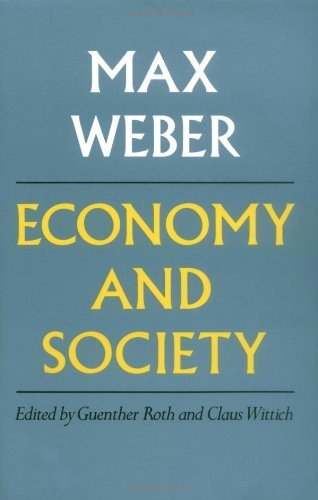
Economy and Society
Wirtschaft und Gesellschaft Douban
Max Weber publishing house: University of California Press 1978
Economy and Society is a book by political economist and sociologist Max Weber, published posthumously in 1922 by his wife Marianne. Alongside The Protestant Ethic and the Spirit of Capitalism, this is considered to be one of Weber's most important works. Extremely broad in scope, the book covers numerous themes including religion, economics, politics, public administration and sociology. A complete translation of the work was not published in English until 1968.
To read May 21, 2008
煌煌巨著啊
Weber
Max Weber
Douban
Max Weber translator: Matthews, E. publishing house: 劍橋大學出版社 1978 - 4
In this volume, Mr Runciman has selected extracts, from Max Weber's writings which reflect the full range of his major concerns: the nature of domination in human society, the role of ideas in history, the social determinants of religion, the origin and impact of industrial capitalism and the scope and limits of social science itself. He has also included some shorter extracts from Weber's less familiar writings on such diverse topics as the stock exchange and the history of the piano.
To read March 30, 2008
Weber