Weller
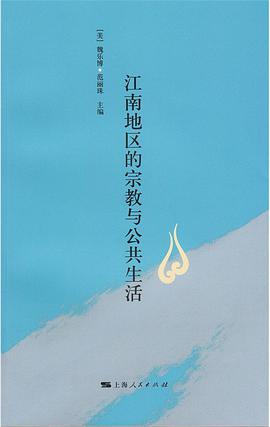
江南地区的宗教与公共生活
Douban
[美]魏乐博 publishing house: 上海人民出版社 2015 - 3
本书以“江南地区宗教与公共生活”为主题,多名中外该领域有专门研究的社会学家、人类学家和历史学家参与、历经三年时间完成。研究涉及安徽、江苏、浙江等地民众公共生活领域的重要内容,发现南部江苏和部分浙江地区居士佛教的兴盛,并促进了当地的公益慈善活动的开展。研究发现,在日益融入全球化时代的中国社会,传统文化的复兴并非是整个地回到过去,而是在民众公共生活中成为应对社会变迁与各种困扰的重要形式。
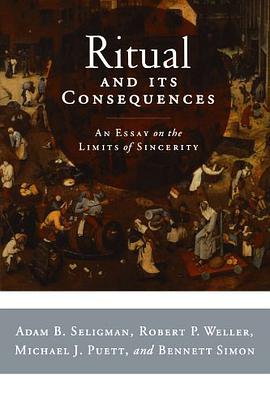
Ritual and Its Consequences
Douban
Adam B. Seligman / Robert P. Weller … publishing house: Oxford University Press 2008 - 3
Ritual is usually understood as pointing to some essence beyond the ritual act itself. This ambitious interdisciplinary study offers a convincing challenge to this understanding. The authors begin by seeking to explain how the conventional idea arose in the first place. They locate its origin in a post-Protestant and post-Enlightenment vision of ritual action that emphasizes rituals as merely external signs of interior states. This approach, say the authors, is part of a far larger way of relating to the self and to the world, which they label "sincerity." But ritual, they say, is the very opposite of sincerity because it consists of stylized, repetitive interactions that construct an "as if" world, a world of role, propriety, play, and even fantasy, rather than pointing to the world as it actually is. In fact, that is ritual's great contribution. Ritual modes of behavior make a shared social world possible by helping to navigate between diverse people and groups, rather than attempting to transcend and efface boundaries. After setting forth this argument, the authors go on to build on it by showing how sincerity and ritual are stand-ins for two very different ways of being in the world. Although both modes are always present to some degree, modernity has deeply privileged sincerity and authenticity. And, they say, we are now paying a heavy price for this extreme and often totalizing projection of personality in contemporary political life.
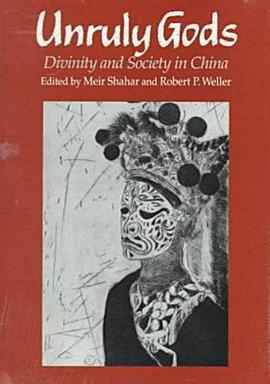
Unruly Gods
Douban
Meir Shahar / Robert P. Weller publishing house: University of Hawaii Press 1996 - 6
The first study in English to offer a systematic introduction to the Chinese pantheon of divinities. It challenges received wisdom about Chinese popular religion, which, until now, presented all Chinese deities as mere functionaries and bureaucrats. The essays in this volume eloquently document the existence of other metaphors that allowed Chinese gods to challenge the traditional power structures and traditional mores of Chinese society. The authors draw on a variety of disciplines and methodologies to throw light on various aspects of the Chinese supernatural. The gallery of gods and goddesses surveyed demonstrates that these deities did not reflect China's socio-political order but rather expressed and negotiated tensions within it. In addition to reflecting the existing order, Chinese gods shaped it, transformed it, and compensated for it, and, as such, their work offers fresh perspectives on the relations between divinity and society in China.
Rethinking Pluralism
Douban
Adam B. Seligman / Robert P. Weller publishing house: Oxford University Press, USA 2012 - 8
How can we order the world while accepting its enduring ambiguities? Rethinking Pluralism suggests a new approach to the problem of ambiguity and social order, which goes beyond the default modern position of 'notation' (resort to rules and categories to disambiguate). The book argues that alternative, more particularistic modes of dealing with ambiguity through ritual and shared experience better attune to contemporary problems of living with difference. It retrieves key aspects of earlier discussions of ambiguity evident in rabbinic commentaries, Chinese texts, and Greek philosophical and dramatic works, and applies those texts to modern problems. The book is a work of recuperation that challenges contemporary constructions of tradition and modernity. In this, it draws on the tradition of pragmatism in American philosophy, especially John Dewey's injunctions to heed the particular, the contingent and experienced as opposed to the abstract, general and disembodied. Only in this way can new forms of empathy emerge congruent with the deeply plural nature of our present experience. While we cannot avoid the ambiguities inherent to the categories through which we construct our world, the book urges us to reconceptualize the ways in which we think about boundaries - not just the solid line of notation, but also the permeable membrane of ritualization and the fractal complexity of shared experience.