Worster
自然的经济体系
Douban
唐纳德・沃斯特 translator: 侯文蕙 publishing house: 商务印书馆 1999
本书是第一部比较系统地探讨生态学的渊源和变迁的著作。作为一门在20世纪60年代勃然兴起的年轻学科,生态学以其迷人的魅力吸引了本书作者。从科学思想史的角度看,本书可谓开风气之先。作者认为,任何科学思想都是一种文化传统的产物。因此,他摆脱了科学史中仅就人物的思想和概念论思想的惯例,在说明生态学历史的每一个阶段时,都只选取有代表性的人物,并把他们置于特定的历史画面之中。但是,作者并不因此而否认一种科学思想的连续性;相反,他尤其强调科学思想的传统对一门科学的形成和发展的影响。生态学是关于人与自然的科学。而长期以来,两种对立的自然观影响着这门新兴学科。一个是以生命为中心,一个是以人类为中心。尊重自然或利用自然,根本分野正在于此。
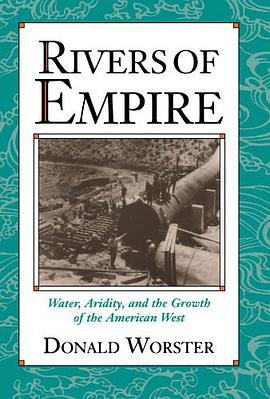
Rivers of Empire
Douban
Donald Worster publishing house: Oxford University Press 1992 - 6
When Henry David Thoreau went for his daily walk, he would consult his instincts on which direction to follow. More often than not his inner compass pointed west or southwest. "The future lies that way to me," he explained, "and the earth seems more unexhausted and richer on that side." In his own imaginative way, Thoreau was imitating the countless young pioneers, prospectors, and entrepreneurs who were zealously following Horace Greeley's famous advice to "go west." Yet while the epic chapter in American history opened by these adventurous men and women is filled with stories of frontier hardship, we rarely think of one of their greatest problems--the lack of water resources. And the same difficulty that made life so troublesome for early settlers remains one of the most pressing concerns in the western states of the late-twentieth century. The American West, blessed with an abundance of earth and sky but cursed with a scarcity of life's most fundamental need, has long dreamed of harnessing all its rivers to produce unlimited wealth and power. In Rivers of Empire, award-winning historian Donald Worster tells the story of this dream and its outcome. He shows how, beginning in the mid-nineteenth century, Mormons were the first attempting to make that dream a reality, damming and diverting rivers to irrigate their land. He follows this intriguing history through the 1930s, when the federal government built hundreds of dams on every major western river, thereby laying the foundation for the cities and farms, money and power of today's West. Yet while these cities have become paradigms of modern American urban centers, and the farms successful high-tech enterprises, Worster reminds us that the costs have been extremely high. Along with the wealth has come massive ecological damage, a redistribution of power to bureaucratic and economic elites, and a class conflict still on the upswing. As a result, the future of this "hydraulic West" is increasingly uncertain, as water continues to be a scarce resource, inadequate to the demand, and declining in quality. Rivers of Empire represents a radically new vision of the American West and its historical significance. Showing how ecological change is inextricably intertwined with social evolution, and reevaluating the old mythic and celebratory approach to the development of the West, Worster offers the most probing, critical analysis of the region to date. He shows how the vast region encompassing our western states, while founded essentially as colonies, have since become the true seat of the American "Empire." How this imperial West rose out of desert, how it altered the course of nature there, and what it has meant for Thoreau's (and our own) mythic search for freedom and the American Dream, are the central themes of this eloquent and thought-provoking story--a story that begins and ends with water.
帝国之河
Rivers of Empire: Water, Aridity, and the Growth of the American West Douban
[美]唐纳德·沃斯特(Donald Worster) translator: 侯深 publishing house: 译林出版社 2018 - 8
本书是一部讲述水与对水的征服的历史。作者力图通过两个途径来破解既有的美国西部神话:一是发现、分析自然,特别是自然中的水,在西部历史的演进过程中扮演的角色;二是超越西部,在一个远为宏阔、久远的时空中理解西部的水与人类的关系,考察水与水控制的历史。这两个途径在流淌的水中“合入其流域的独圈”,映现出横亘于西部大大小小的水坝、沟渠上方的主题:通过技术与资本成就的对自然的主宰,与掌握技术与资本的人对其他人的控制相始终。 本书自出版以来,即引起极大争议。赞誉者将之视为环境史与新西部史学的绝妙之作,批评者则往往认为其论点过激。然而无法否认,此书无论文字还是论述均属上乘,迄今为止仍是环境史、西部史以及其他美国史学者的必读书。
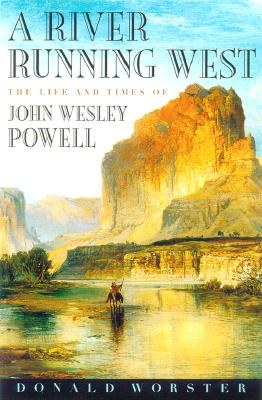
A River Running West
Douban
Donald Worster publishing house: OUP USA 2000
Editorial Reviews From Library Journal John Wesley Powell (1834-1902) is best remembered for leading the first expedition down the Colorado River through the Grand Canyon in 1869. However, he should more accurately be recalled for directing the survey that mapped the region around the canyon and for establishing and directing the Bureau of American Ethnology in the Smithsonian Institution, which put the study of Native Americans on a scientific footing. Drawing on a large number of archival and published sources, Worster (history, Univ. of Kansas; Dust Bowl) traces Powell's life from his frontier childhood through his years in Washington directing both the Bureau and the Geological Survey. The author delineates the influences that led Powell to the West in the first place and shows how he fit into the intellectual milieu of the late 19th century. This thorough and detailed biography is highly recommended for academic and larger public libraries.DStephen H. Peters, Northern Michigan Univ. Lib., Marquette Copyright 2001 Reed Business Information, Inc. --This text refers to an out of print or unavailable edition of this title. From Booklist Worster's life-of covers every detail of Powell's peregrinations and writings, fitting them into the great matters that occupied his life. A fascination with nature inspired Powell's self-education in geology and archaeology; as a young man, he lost an arm in the Battle of Shiloh, and following the Civil War, he gained fame as the explorer of the final unmapped stretches of the Colorado River. Thus wearing the laurels as the contemporary authority on all things western, including water rights and the regulation of relations with Native Americans, Powell, boosted by the political patronage of James Garfield, reached the top of the then-tiny federal bureaucracy of the 1880s, as chief of both the U.S. Geological Survey and the Smithsonian's Bureau of Ethnology. In all, an event-crowded and courageous career, yet Powell the personality is much the fainter element here, through no fault of Worster's, whose subject was disinclined toward self-reflection. The dangerous adventure of Powell's Colorado River runs of 1869 and 1871-72 carries most of the water here and parlays Worster's opus into a stalwart position in western historiography. Gilbert Taylor Copyright © American Library Association. All rights reserved --This text refers to an out of print or unavailable edition of this title.
To read March 15, 2017
John Wesley Powell!
Worster
The Ends of the Earth
Douban
Donald Worster publishing house: 劍橋大學出版社 1989 - 1
Since 1492, when Columbus "discovered" America, the world has been moving toward an increasingly integrated global economy, higher population levels and consequently greater resource demands, and an increasingly precarious state of the biosphere. These developments play a major part in both modern history and in daily life. Understanding their interrelationships and development is crucial to the future of humanity and of the Earth, and is the unifying theme of this collection of readings.
Nature's Economy
Douban
Donald Worster publishing house: 劍橋大學出版社 1994 - 9
Nature's Economy is a wide-ranging investigation of ecology's past. It traces the origins of the concept, discusses the thinkers who have shaped it, and shows how it in turn has shaped the modern perception of our place in nature. The book includes portraits of Linnaeus, Gilbert White, Darwin, Thoreau, and such key twentieth-century ecologists as Rachel Carson, Frederic Clements, Aldo Leopold, James Lovelock, and Eugene Odum. It concludes with a new Part VI, which looks at the directions ecology has taken most recently.