Yang_Anand
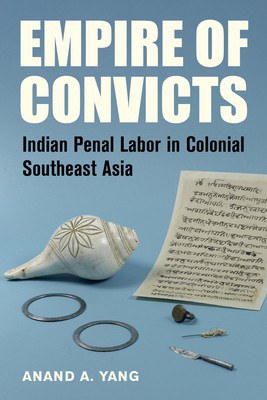
Empire of Convicts
Douban
Anand A. Yang publishing house: University of California Press 2021 - 1
Empire of Convicts focuses on male and female Indians incarcerated in Southeast Asia for criminal and political offenses committed in colonial South Asia. From the seventeenth century onward, penal transportation was a key strategy of British imperial rule, exemplified by deportations first to the Americas and later to Australia. Case studies from the insular prisons of Bengkulu, Penang, and Singapore illuminate another carceral regime in the Indian Ocean World that brought South Asia and Southeast Asia together through a global system of forced migration and coerced labor. A major contribution to histories of crime and punishment, prisons, law, labor, transportation, migration, colonialism, and the Indian Ocean World, Empire of Convicts narrates the experiences of Indian bandwars (convicts) and shows how they exercised agency in difficult situations, fashioning their own worlds and even becoming “their own warders.” Anand A. Yang brings long journeys across kala pani (black waters) to life in a deeply researched and engrossing account that moves fluidly between local and global contexts.
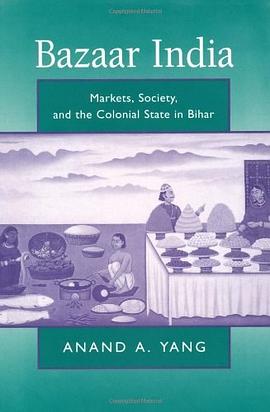
Bazaar India
Douban
Yang, Anand A. 1999 - 2
The role of markets in linking local communities to larger networks of commerce, culture, and political power is the central element in Anand A. Yang's provocative and original study. Yang uses bazaars in the northeast Indian state of Bihar during the colonial period as the site of his investigation. The bazaar provides a distinctive locale for posing fundamental questions regarding indigenous societies under colonialism and for highlighting less familiar aspects of colonial India. At one level, Yang reconstructs Bihar's marketing system, from its central place in the city of Patna down to the lowest rung of the periodic markets. But he also concentrates on the dynamics of exchanges and negotiations between different groups and on what can be learned through the 'voices' of people in the bazaar: landholders, peasants, traders, and merchants. Along the way, Yang uncovers a wealth of details on the functioning of rural trade, markets, fairs, and pilgrimages in Bihar. A key contribution of "Bazaar India" is its many-stranded narrative history of some of South Asia's primary actors over the past two centuries. But Yang's approach is not that of a detached observer; rather, his own voice is engaged with the voices of the past and with present-day historians. By focusing on the world beyond the mud walls of the village, he widens the imaginative geography of South Asian history. Readers with an interest in markets, social history, culture, colonialism, British India, and historiographic methods will welcome his book.