programming
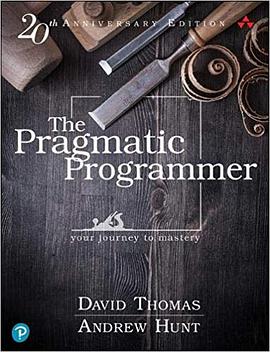
The Pragmatic Programmer
Douban
★ 8.9 8 ratings
David Thomas / Andrew Hunt publishing house: Addison-Wesley Professional 2019 - 9
“One of the most significant books in my life.” —Obie Fernandez, Author, The Rails Way “Twenty years ago, the first edition of The Pragmatic Programmer completely changed the trajectory of my career. This new edition could do the same for yours.” —Mike Cohn, Author of Succeeding with Agile, Agile Estimating and Planning, and User Stories Applied “. . . filled with practical advice, both technical and professional, that will serve you and your projects well for years to come.” —Andrea Goulet, CEO, Corgibytes, Founder, LegacyCode.Rocks “. . . lightning does strike twice, and this book is proof.” —VM (Vicky) Brasseur, Director of Open Source Strategy, Juniper Networks The Pragmatic Programmer is one of those rare tech books you’ll read, re-read, and read again over the years. Whether you’re new to the field or an experienced practitioner, you’ll come away with fresh insights each and every time. Dave Thomas and Andy Hunt wrote the first edition of this influential book in 1999 to help their clients create better software and rediscover the joy of coding. These lessons have helped a generation of programmers examine the very essence of software development, independent of any particular language, framework, or methodology, and the Pragmatic philosophy has spawned hundreds of books, screencasts, and audio books, as well as thousands of careers and success stories. Now, twenty years later, this new edition re-examines what it means to be a modern programmer. Topics range from personal responsibility and career development to architectural techniques for keeping your code flexible and easy to adapt and reuse. Read this book, and you’ll learn how to: Fight software rot Learn continuously Avoid the trap of duplicating knowledge Write flexible, dynamic, and adaptable code Harness the power of basic tools Avoid programming by coincidence Learn real requirements Solve the underlying problems of concurrent code Guard against security vulnerabilities Build teams of Pragmatic Programmers Take responsibility for your work and career Test ruthlessly and effectively, including property-based testing Implement the Pragmatic Starter Kit Delight your users Written as a series of self-contained sections and filled with classic and fresh anecdotes, thoughtful examples, and interesting analogies, The Pragmatic Programmer illustrates the best approaches and major pitfalls of many different aspects of software development. Whether you’re a new coder, an experienced programmer, or a manager responsible for software projects, use these lessons daily, and you’ll quickly see improvements in personal productivity, accuracy, and job satisfaction. You’ll learn skills and develop habits and attitudes that form the foundation for long-term success in your career. You’ll become a Pragmatic Programmer. Register your book for convenient access to downloads, updates, and/or corrections as they become available. See inside book for details.
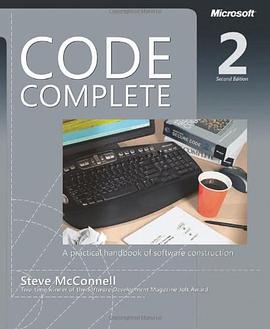
Code Complete
Code Complete Douban Goodreads Skybridge
★ 10.0 6 ratings
Steve McConnell publishing house: Microsoft Press 2004 - 6 other title: Code Complete: A Practical Handbook of Software Construction
在线阅读本书 Widely considered one of the best practical guides to programming, Steve McConnells original CODE COMPLETE has been helping developers write better software for more than a decade. Now this classic book has been fully updated and revised with leading-edge practicesand hundreds of new code samplesillustrating the art and science of software construction. Capturing the body of knowledge available from research, academia, and everyday commercial practice, McConnell synthesizes the most effective techniques and must-know principles into clear, pragmatic guidance. No matter what your experience level, development environment, or project size, this book will inform and stimulate your thinkingand help you build the highest quality code. Discover the timeless techniques and strategies that help you: Design for minimum complexity and maximum creativity Reap the benefits of collaborative development Apply defensive programming techniques to reduce and flush out errors Exploit opportunities to refactoror evolvecode, and do it safely Use construction practices that are right-weight for your project Debug problems quickly and effectively Resolve critical construction issues early and correctly Build quality into the beginning, middle, and end of your project 点击链接进入中文版: 代码大全(第2版)
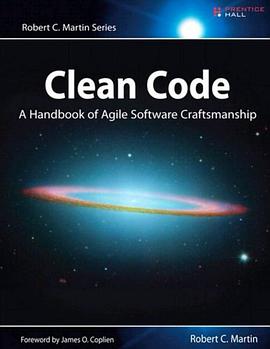
Clean Code
Douban Goodreads
★ 9.6 9 ratings
[美国] Robert C·Martin publishing house: Prentice Hall 2008 - 8
Even bad code can function. But if code isn’t clean, it can bring a development organization to its knees. Every year, countless hours and significant resources are lost because of poorly written code. But it doesn’t have to be that way. Noted software expert Robert C. Martin presents a revolutionary paradigm with Clean Code: A Handbook of Agile Software Craftsmanship. Martin has teamed up with his colleagues from Object Mentor to distill their best agile practice of cleaning code “on the fly” into a book that will instill within you the values of a software craftsman and make you a better programmer—but only if you work at it. What kind of work will you be doing? You’ll be reading code—lots of code. And you will be challenged to think about what’s right about that code, and what’s wrong with it. More importantly, you will be challenged to reassess your professional values and your commitment to your craft. Clean Code is divided into three parts. The first describes the principles, patterns, and practices of writing clean code. The second part consists of several case studies of increasing complexity. Each case study is an exercise in cleaning up code—of transforming a code base that has some problems into one that is sound and efficient. The third part is the payoff: a single chapter containing a list of heuristics and “smells” gathered while creating the case studies. The result is a knowledge base that describes the way we think when we write, read, and clean code. Readers will come away from this book understanding How to tell the difference between good and bad code How to write good code and how to transform bad code into good code How to create good names, good functions, good objects, and good classes How to format code for maximum readability How to implement complete error handling without obscuring code logic How to unit test and practice test-driven development This book is a must for any developer, software engineer, project manager, team lead, or systems analyst with an interest in producing better code.