S1E1
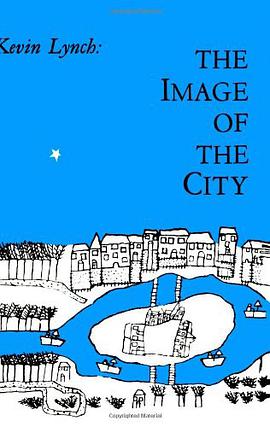
The Image of the City Douban
author: Kevin Lynch publishing house: MIT Press 1960 - 1
What does the city's form actually mean to the people who live there? What can the city planner do to make the city's image more vivid and memorable to the city dweller? To answer these questions, Mr. Lynch, supported by studies of Los Angeles, Boston, and Jersey City, formulates a new criterion--imageability--and shows its potential value as a guide for the building and rebuilding of cities.The wide scope of this study leads to an original and vital method for the evaluation of city form. The architect, the planner, and certainly the city dweller will all want to read this book.
Aug. 22, 2021 to read
S1E1
What Is History? Douban
8.4 (5 ratings) author: Edward Hallett Carr publishing house: Random House USA Children's Books 1990 - 8
Aug. 22, 2021 to read
S1E1
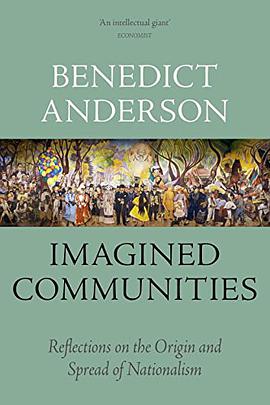
Imagined Communities Douban Goodreads
author: Benedict Anderson publishing house: Verso 2016 - 9
This “sparkling” and world-famous work examines what drives people to live, die, and kill in the name of nations—revealing the surprising origins and development of nationalism (The Guardian)<br /><br />The full magnitude of Benedict Anderson’s intellectual achievement is still being appreciated and debated. Imagined Communities remains the most influential book on the origins of nationalism, filling the vacuum that previously existed in the traditions of Western thought. Cited more often than any other single English-language work in the human sciences, it is read around the world in more than thirty translations.<br /><br />Written with exemplary clarity, this illuminating study traces the emergence of community as an idea to South America, rather than to nineteenth-century Europe. Later, this sense of belonging was formed and reformulated at every level, from high politics to popular culture, through print, literature, maps and museums. Following the rise and conflict of nations and the decline of empires, Anderson draws on examples from South East Asia, Latin America and Europe’s recent past to show how nationalism shaped the modern world.
Aug. 22, 2021 to read
S1E1
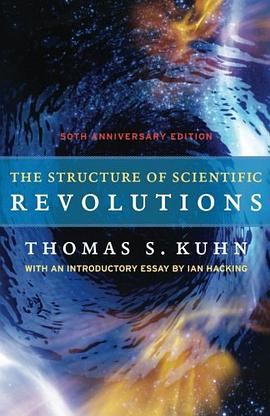
The Structure of Scientific Revolutions Douban
author: Thomas S. Kuhn publishing house: University Of Chicago Press 2012 - 4
A good book may have the power to change the way we see the world, but a great book actually becomes part of our daily consciousness, pervading our thinking to the point that we take it for granted, and we forget how provocative and challenging its ideas once were—and still are. The Structure of Scientific Revolutions is that kind of book. When it was first published in 1962, it was a landmark event in the history and philosophy of science. Fifty years later, it still has many lessons to teach.
With The Structure of Scientific Revolutions, Kuhn challenged long-standing linear notions of scientific progress, arguing that transformative ideas don’t arise from the day-to-day, gradual process of experimentation and data accumulation but that the revolutions in science, those breakthrough moments that disrupt accepted thinking and offer unanticipated ideas, occur outside of “normal science,” as he called it. Though Kuhn was writing when physics ruled the sciences, his ideas on how scientific revolutions bring order to the anomalies that amass over time in research experiments are still instructive in our biotech age.
This new edition of Kuhn’s essential work in the history of science includes an insightful introduction by Ian Hacking, which clarifies terms popularized by Kuhn, including paradigm and incommensurability, and applies Kuhn’s ideas to the science of today. Usefully keyed to the separate sections of the book, Hacking’s introduction provides important background information as well as a contemporary context. Newly designed, with an expanded index, this edition will be eagerly welcomed by the next generation of readers seeking to understand the history of our perspectives on science.
Aug. 22, 2021 to read
S1E1
理想国 Douban
9.6 (7 ratings) author: 柏拉图 translator: 郭斌和 / 张竹明 publishing house: 商务印书馆 2018 - 10
《理想国》是柏拉图的一篇重要对话录,涉及柏拉图思想体系的各个方面,包括哲学、伦理、教育、文艺、政治等内容,主要的是探讨理想国家的问题。对话录里柏拉图以苏格拉底之口通过与其他人对话的方式设计了一个真、善、美相统一的政体,即可以达到公正的理想国。柏拉图的理想国是人类历史上早的乌托邦。在他的理想国里统治者必须是哲学家,他认为现存的政治都是坏的,人类的真正出路在于哲学家掌握政权,也只有真正的哲学家才能拯救当时城邦所处的危机。这种信念构成了柏拉图成熟的政治哲学体系的核心。在他的眼里“哲学家”有着特殊的内涵。他认为哲学家是高尚、有学识的人,而这种贤人统治下的贤人政体就是好是政体。所以,只有建立以哲学家为国王的国家才是理想的国家。这个国家就是存在于天上的模范国家。
Aug. 22, 2021 to read
S1E1