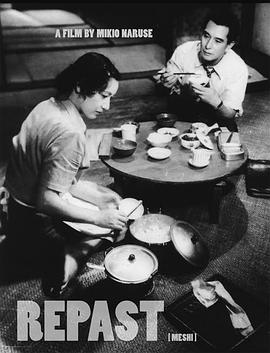
【导演】成濑巳喜男
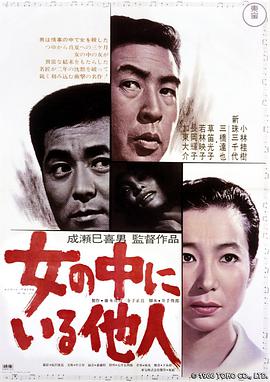
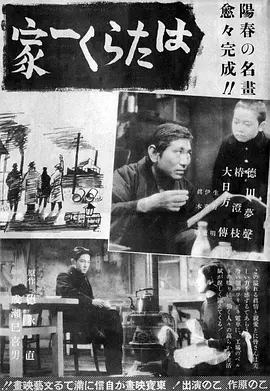
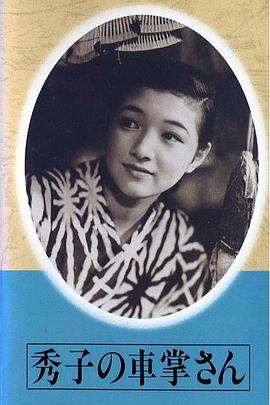



Wife (1953)
妻 WikiData IMDb TMDB Douban
other title:
妻
/
Tsuma
…
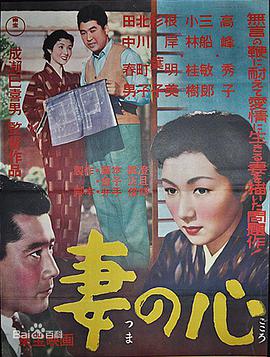
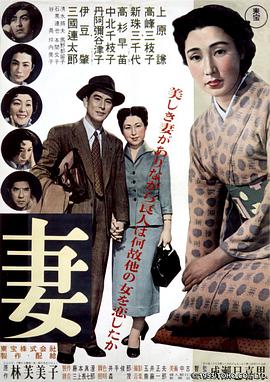
Ten years into a marriage, the wife is disappointed by the husband's lack of financial success, meaning she has to work and can't treat herself and the husband finds the wife slovenly and mean-spirited: she neither cooks not cleans particularly well and is generally disagreeable. In turn, he alternately ignores her and treats her as a servant. Neither is particularly happy, not helped by their unsatisfactory lodgers. The husband is easily seduced by an ex-colleague, a widow with a small child who needs some security, and considers leaving his wife.
The Song Lantern (1943)
歌行燈 WikiData IMDb TMDB Douban
other title:
歌行灯
/
歌行燈
…
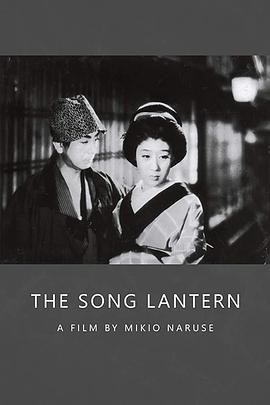
A self-absorbed young actor humiliates an elderly Noh performer, who then commits suicide. His act of cruelty compels his father to disown him, leading the once promising actor to a life on the streets. But his desire to win back the respect of his father and the affection of the dead actor's daughter pushes him toward a more noble existence. Naruse employed a delicately structured mise-en-scene in this family melodrama, which evokes the work of Josef von Sternberg.
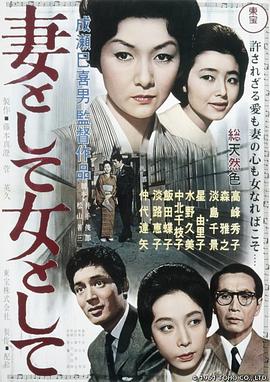
As a Wife, As a Woman (1962)
妻として女として WikiData IMDb TMDB Douban
Mikio Naruse
actor:
Hideko Takamine
/
Chikage Awashima
…
other title:
作为妻子,作为女人
/
妻として女として
…
A tale of jealousy
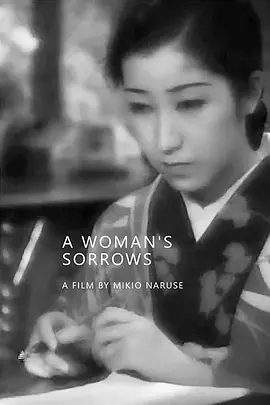
A Woman's Sorrows (1937)
女人哀愁 WikiData IMDb TMDB Douban
Mikio Naruse
actor:
Takako Irie
/
佐伯秀男
…
other title:
女人的哀愁
/
女人哀愁
…
In his review of Feminine Melancholy in Kinema Junpo, critic Mizumachi Seiji praises Irie's performance as the best of her talkie career. However, he is very critical of the film itself, which he sees as a typical story of a woman in an unhappy marriage. He is not sympathetic toward the heroine's patient suffering and describes the nagging mother-in-law as a "hackneyed theme." Naruse's detailed "documentation" of Hiroko's role in the household is dismissed as a "manneristic obsession," and Mizumachi suggests that the director is hiding behind "the shadow of the materials." Most severely, he criticizes Naruse for "abandoning his authority as an auteur" by resorting to "shinpa-tragedy," which is seen as a capitulation to a form that has "wielded a powerful hold over the imagination of the masses." Although Mizumachi notes that Naruse has probed into "the deepest recess of the female psyche," he doesn't recognize this as the film's achievement, perhaps because he is looking for something else from the director. His review reveals the difficulties Naruse faced in maintaining his "auteur status" while moving with the tides of popular culture. For Mizumachi, the character of Yoko is the most typical Naruse heroine, perhaps because she is dragged down by her delinquent lover; however, in retrospect, it is evident that Hiroko's tenacious survival of adverse circumstances looks forward to Naruse's postwar heroines.
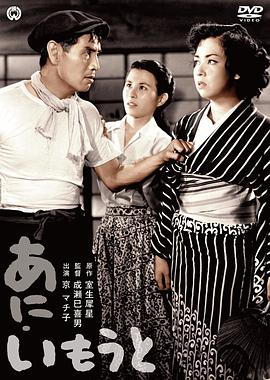


Flowing (1956)
流れる WikiData IMDb TMDB Douban
other title:
流浪记
/
流れる
…
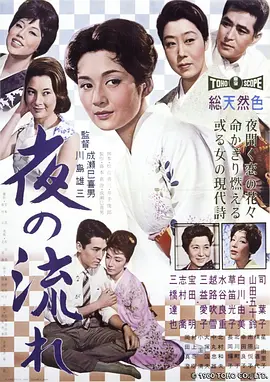
Otsuta is running the geisha house Tsuta in Tokyo. Her business is heavily in debt. Her daughter Katsuyo doesn't see any future in her mother's trade in the late days of Geisha. But Otsuta will not give up. This film portraits the day time life of geisha when not entertaining customers.


Wife! Be Like a Rose! (1935)
妻よ薔薇のやうに WikiData IMDb TMDB Douban Eggplant.place +2
other title:
愿妻如蔷薇
/
妻よ薔薇のやうに
…
Kimiko, a Tokyo white-collar working girl, lives with her serious, intellectual, haiku-writing mother. Kimiko seeks to marry her boyfriend but needs her absent father to act as the go-between and negotiate the marriage. Kimiko travels and finds her father living with a second family.
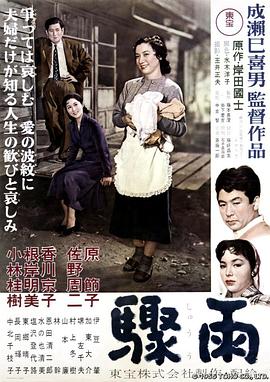
Sudden Rain (1956)
驟雨 WikiData IMDb TMDB Douban
other title:
骤雨
/
驟雨
…
Fumiko and Ryōtarō Namiki's marriage has gone stale, with both constantly arguing over what to do on a day off, or about her cutting out recipes from the newspaper before he finishes reading it. Their animosities are witnessed by Fumiko's niece Ayako, who visits to complain about her own husband's inattentiveness, and their new neighbours, the Imasatos.