塔罗
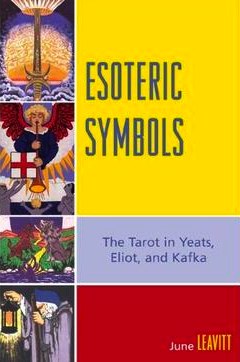
Esoteric Symbols
Douban
June Leavitt publishing house: University Press of America 2007
In this pioneering scholarly work on occult symbols in literature, the reader is offered a vivid look into how W.B. Yeats, T.S. Eliot, and Franz Kafka_three masters of symbolic expression_utilized Tarot cards in their poetry and prose. Focusing on the Tarot's ancient associations with divine knowledge, its pictorial representation of both the Jewish and Christian Cabala, and the Tarot's more recent pedestrian affiliation with the occult, June Leavitt skillfully demonstrates how Yeats, Eliot, and Kafka align themselves in their uniquely individual ways with the Tarot symbols' mapping of reality. Paying close attention to the mystical nuances of the Tarot, Ms. Leavitt shows how Tarot symbols allow for radically new readings of the texts in which they are situated, and play a transformative role in the three writers' search for God. This search remained indecisive for Kafka, resulted in Eliot's conversion to Anglo-Catholicism, and went hand in hand with Yeats' passion for pagan gods and angels. Visit the author's website at http://www.spiritualityteaching.com.
A Cultural History of Tarot: From Entertainment to Esotericism
Douban Goodreads
Helen Farley publishing house: Bloomsbury Academic 2009 - 9 other title: A Cultural History of Tarot
The enigmatic and richly illustrative tarot deck reveals a host of strange and iconic mages, such as The Tower, The Wheel of Fortune, The Hanged Man and The Fool: over which loom the terrifying figures of Death and The Devil. The 21 numbered playing cards of tarot have always exerted strong fascination, way beyond their original purpose, and the multiple resonances of the deck are ubiquitous. From T S Eliot and his 'wicked pack of cards' in "The Waste Land" to the psychic divination of Solitaire in Ian Fleming's "Live and Let Die"; and from the satanic novels of Dennis Wheatley to the deck's adoption by New Age practitioners, the cards have in modern times become inseparably connected to the occult. They are now viewed as arguably the foremost medium of prophesying and foretelling. Yet, as the author shows, originally the tarot were used as recreational playing cards by the Italian nobility in the Renaissance. It was only much later, in the 18th and 19th centuries, that the deck became associated with esotericism before evolving finally into a diagnostic tool for mind, body and spirit. This is the first book to explore the remarkably varied ways in which tarot has influenced culture. Tracing the changing patterns of the deck's use, from game to mysterious oracular device, Helen Farley examines tarot's emergence in 15th century Milan and discusses its later associations with astrology, kabbalah and the Age of Aquarius.
Read
March 30, 2020
脉络清晰,帮助很大。
塔罗