最新消息
罗琳于2月1日更新了她的官方网站,里面登出了Harry Potter and the Deathly Hallows 《哈利波特与死圣》的出版日期。哈利波特7将于今年7月21日英国夏令时间00:01分开始发售。当然,今年也是《哈利波特与魔法石》的发售十周年纪念。
太阳报消息,罗琳在 Balmoral 旅馆的大理石像后边写下了下面的内容:“罗琳于2007年1月11日在此房间(652) 内完成Harry Potter and the Deathly Hallows 《哈利波特与死圣》的写作。”现在这条消息目前已经得到了BBC的证实。
The latest news about Harry Potter and the Deathly Hallows March 29th
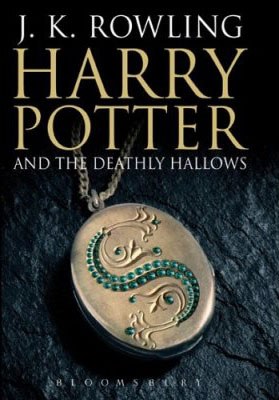
Bloomsbury Publishing Plc is delighted to release the book jacket images for Harry Potter and the Deathly Hallows by J.K.Rowling, to be published on 21st July 2007. The cover illustration for the children’s edition is by Jason Cockcroft, who drew the cover illustrations for the previous two Harry Potter books: Harry Potter and the Order of the Phoenix and Harry Potter and the Half-Blood Prince. The cover design for the adult edition is from a photograph by Michael Wildsmith, who has photographed all the adult edition jackets.
These covers will be used throughout the world on the English language editions excluding the USA. Scholastic US have also released their cover images of Harry Potter and the Deathly Hallows. Bloomsbury will publish the children’s edition, adult edition, special edition, audio (read by Stephen Fry) and large print editions on 21st July 2007. The RNIB will publish the Braille edition simultaneously. The book jackets and all the pages will be printed on 100% Ancient Forest Friendly pulp, made from a mixture of FSC pulp and Post-Consumer Waste recycled pulp.
Fast Fact About Harry Potter 7
* The last chapter was written back in 1999; it dealt with "what happens to the survivors afterward"; the last word is scar; this chapter will still be tweaked
* The book will contain a lot of the back story of the Potters
* Aunt Petunia has never performed magic, and never will, but there's more to her than meets the eye; the letter left with Harry on the doorstep was not the first one Dumbledore sent Petunia
* The Sorting Hat is not a horcrux, but there's more to it than what we've read in the first books
* "Ravenclaw will have their day"
* No book character has returned from the future
* There is significance to the fact that Harry has his mother's eyes
* Book 7 will be released on July 21, 2007
* There is a frighteningly large universe of Harry Potter fan sites which, among other things, collect and analyze interviews with JK Rowling
Publisher Comments :
New York, NY (February 1, 2007) — Harry Potter and the Deathly Hallows, the seventh and final book in the bestselling series by J. K. Rowling, has been scheduled for release at 12:01 a.m. on July 21, 2007, it was announced today by Scholastic, the global children's publishing, education, and media company.
In making the announcement, Lisa Holton, President of Scholastic Children's Books said, "We are thrilled to announce the publication date of the seventh installment in this remarkable series. We join J. K. Rowling's millions of readers — young and old, veterans and newcomers — in anticipating what lies ahead."
Harry Potter and the Half-Blood Prince, Rowling's sixth Harry Potter book, was released on July 16, 2005, and was the fastest-selling book in history, with 6.9 million copies sold in the first 24 hours. All six Harry Potter books, Harry Potter and the Sorcerer's Stone, Harry Potter and the Chamber of Secrets, Harry Potter and the Prisoner of Azkaban, Harry Potter and the Goblet of Fire, Harry Potter and the Order of the Phoenix and Harry Potter and the Half-Blood Prince have been number one bestsellers in the United States, the U.K., and around the world. There are currently over 120 million copies of the Harry Potter books in print in the United States alone.
Wikipedia
Harry Potter and the Deathly Hallows will be the seventh book in the Harry Potter series of novels by J. K. Rowling. It will feature the final adventures of Harry Potter as he attempts to bring an end to his nemesis, Lord Voldemort. The book title was announced on 21 December, 2006 via the publisher and a special Christmas-themed "hangman" puzzle on J.K. Rowling's website. Rowling has stated that the final volume relates so closely to the previous book in the series, Harry Potter and the Half-Blood Prince, that "I feel almost as though they are two halves of the same novel."
Rowling has also stated that she has no intention of writing any further stories about the Harry Potter characters. However, she might produce an encyclopedia of the Wizarding world based on her copious notes, possibly for charity as in the case of her two other Harry Potter books (Quidditch Through the Ages and Fantastic Beasts and Where to Find Them). As of 2007, she has been working on the Harry Potter stories for over 17 years.
On 1 February, 2007, it was officially announced that Book 7 will be released in English-speaking countries around the world at 00:01 British Summer Time on 21 July, 2007. In the USA, however, the book will be released at 00:01 local time. Rowling left a signed statement written on a marble bust of Hermes in her room at the Balmoral Hotel in Edinburgh saying; "JK Rowling finished writing Harry Potter and the Deathly Hallows in this room (652) on 11th Jan 2007". The book reached the top spot on both the Amazon and Barnes and Noble best-seller lists just a few hours after the date was announced.
The meaning of hallows
Hallow is a word usually used as a verb, meaning "to make holy or sacred, to sanctify or consecrate, to venerate". However, in Harry Potter and the Deathly Hallows, the word hallows appears as a noun. In modern English, the word is used as a noun in "All Hallows' Day" or "All Saints' Day," which is the day after Hallowe'en or "All Hallows' Eve". Hallows can refer to saints, the relics of saints, or the relics of gods. One story where hallows play a crucial role is in the grail legend, where the Fisher King is the guardian of the four hallows, which include the Grail itself, the serving dish/or stone, the sword or dagger, and the spear. Many scholars have since identified the connection of these four hallows with four treasures of the Tuatha de Danaan, which include a chalice (Grail), a baton or wand (spear), a pentacle (serving dish), and a sword.
There has been much speculation from many Harry Potter fans about whether the grail legend might play a part in the final Harry Potter book. Many Harry Potter fans have seen a connection between the four founders of Hogwarts, their relics, and the four hallows in the grail legend. It is known from the books that Godric Gryffindor's relic is a sword, Helga Hufflepuff's relic is a cup (chalice), and Salazar Slytherin's relic is a locket (pentacle), presumably leaving Rowena Ravenclaw's relic as a spear or wand. In addition, many scholars have argued that the four hallows in the Grail legend symbolize the four natural elements (earth, fire, water, and air). J. K. Rowling has explicitly stated that the four Hogwarts founders represent the four natural elements. Presumably Helga Hufflepuff and her house Hufflepuff connects with earth (the house's symbol is a Badger), Rowena Ravenclaw and Ravenclaw with air (the symbol is a bird), Salazar Slytherin and Slytherin with water and Godric Gryffindor and Gryffindor with fire (fire is often associated with protection from evil in Harry Potter, for example it is used to combat Inferi). This solidifies the connection between the four founders and the four hallows in the Grail legend. It is also known that Harry Potter must find four horcruxes, and that Voldemort wanted a hallow, or relic, from each of the four founders.
The Final Chapter
The pubdate of the seventh and final Harry Potter book has been announced, and the rumours are already circulating - what are the Deathly Hallows? Who will make it through to the end? This is set to be the best book out of the series, and we at Amazon.co.uk are so excited that we are giving you the chance to pre-order your copy now! We promise to give you our best price before publication even if you order now and do continue to watch this space, as we will keep you up to date with the latest information and news as soon as we hear it.
Why We Love Harry
Favorite Moments from the Series
There are plenty of reasons to love Rowling's wildly popular series--no doubt you have several dozen of your own. Our list features favorite moments, characters, and artifacts from the first five books. Keep in mind that this list is by no means exhaustive (what we love about Harry could fill ten books!) and does not include any of the spectacular revelatory moments that would spoil the books for those (few) who have not read them. Enjoy.
The Series of Harry Potter
The Harry Potter series was originally published as a children's book by British publisher Bloomsbury, and American publisher Scholastic Press. However, it rapidly became a phenomenal success amongst children and adults alike. The books each chronicle one year at school for the characters concerned and follows a long tradition of children's series about life in schools. Perhaps unlike some of the traditional series of this format, each book has matured and expanded in complexity and scope compared to the last, approximately developing with the age of the principal characters (later books are also significantly darker in tone than earlier ones). Although the author has said that she comprehensively plotted the entire series of books before the first was published, and that this plot remains unchanged, she has also stated that it has undergone a number of revisions as it has progressed. The books started as relatively slim volumes (223 pages Philosopher's Stone UK ed.), but have grown as the series progressed (766 pages Order of the Phoenix UK ed.).
The books contain a significant element of fantasy and magic, but this is combined with a detective-novel approach to the story. Each volume contains a complete problem and task for the heroes to complete, but each has also added to the background information about the wizarding world in general and contains many pieces of information whose importance only becomes apparent in later volumes (known as foreshadowing). Thus a considerable fan following has developed of people wanting to discover how the many loose ends and unfinished adventures in the book will finally be completed. The author has stated that, more than with any other book in the series, the final volume continues the unfinished story in book six. She has also stated that she doesn't have plans for any other novels concerning Harry Potter.
Harry Potter and the Sorcerer's Stone
* Harry's first trip to the zoo with the Dursleys, when a boa constrictor winks at him.
* When the Dursleys' house is suddenly besieged by letters for Harry from Hogwarts. Readers learn how much the Dursleys have been keeping from Harry. Rowling does a wonderful job in displaying the lengths to which Uncle Vernon will go to deny that magic exists.
* Harry's first visit to Diagon Alley with Hagrid. Full of curiosities and rich with magic and marvel, Harry's first trip includes a trip to Gringotts and Ollivanders, where Harry gets his wand (holly and phoenix feather) and discovers yet another connection to He-Who-Must-No-Be-Named. This moment is the reader's first full introduction to Rowling's world of witchcraft and wizards.
* Harry's experience with the Sorting Hat.
Harry Potter and the Chamber of Secrets
* The de-gnoming of the Weasleys' garden. Harry discovers that even wizards have chores--gnomes must be grabbed (ignoring angry protests "Gerroff me! Gerroff me!"), swung about (to make them too dizzy to come back), and tossed out of the garden--this delightful scene highlights Rowling's clever and witty genius.
* Harry's first experience with a Howler, sent to Ron by his mother.
* The Dueling Club battle between Harry and Malfoy. Gilderoy Lockhart starts the Dueling Club to help students practice spells on each other, but he is not prepared for the intensity of the animosity between Harry and Draco. Since they are still young, their minibattle is innocent enough, including tickling and dancing charms.
Harry Potter and the Prisoner of Azkaban
* Ron's attempt to use a telephone to call Harry at the Dursleys'.
* Harry's first encounter with a Dementor on the train (and just about any other encounter with Dementors). Harry's brush with the Dementors is terrifying and prepares Potter fans for a darker, scarier book.
* Harry, Ron, and Hermione's behavior in Professor Trelawney's Divination class. Some of the best moments in Rowling's books occur when she reminds us that the wizards-in-training at Hogwarts are, after all, just children. Clearly, even at a school of witchcraft and wizardry, classes can be boring and seem pointless to children.
* The Boggart lesson in Professor Lupin's classroom.
* Harry, Ron, and Hermione's knock-down confrontation with Snape.
Harry Potter and the Goblet of Fire
* Hermione's disgust at the reception for the veela (Bulgarian National Team Mascots) at the Quidditch World Cup. Rowling's fourth book addresses issues about growing up--the dynamic between the boys and girls at Hogwarts starts to change. Nowhere is this more plain than the hilarious scene in which magical cheerleaders nearly convince Harry and Ron to jump from the stands to impress them.
* Viktor Krum's crush on Hermione--and Ron's objection to it.
* Malfoy's "Potter Stinks" badge.
* Hermione's creation of S.P.E.W., the intolerant bigotry of the Death Eaters, and the danger of the Triwizard Tournament. Add in the changing dynamics between girls and boys at Hogwarts, and suddenly Rowling's fourth book has a weight and seriousness not as present in early books in the series. Candy and tickle spells are left behind as the students tackle darker, more serious issues and take on larger responsibilities, including the knowledge of illegal curses.
Harry Potter and the Order of the Phoenix
* Harry's outburst to his friends at No. 12 Grimmauld Place. A combination of frustration over being kept in the dark and fear that he will be expelled fuels much of Harry's anger, and it all comes out at once, directly aimed at Ron and Hermione. Rowling perfectly portrays Harry's frustration at being too old to shirk responsibility, but too young to be accepted as part of the fight that he knows is coming.
* Harry's detention with Professor Umbridge. Rowling shows her darker side, leading readers to believe that Hogwarts is no longer a safe haven for young wizards. Dolores represents a bureaucratic tyrant capable of real evil, and Harry is forced to endure their private battle of wills alone.
* Harry and Cho's painfully awkward interactions. Rowling clearly remembers what it was like to be a teenager.
* Harry's Occlumency lessons with Snape.
* Dumbledore's confession to Harry.
Harry Potter and the Half-Blood Prince
* The introduction of the Horcrux.
* Molly Weasley asking Arthur Weasley about his "dearest ambition." Rowling has always been great at revealing little intriguing bits about her characters at a time, and Arthur’s answer "to find out how airplanes stay up" reminds us about his obsession with Muggles.
* Harry's private lessons with Dumbledore, and more time spent with the fascinating and dangerous pensieve, arguably one of Rowling’s most ingenious inventions.
* Fred and George Weasley’s Joke Shop, and the slogan: "Why Are You Worrying About You-Know-Who? You Should Be Worrying About U-NO-POO--the Constipation Sensation That's Gripping the Nation!"
* Luna's Quidditch commentary. Rowling created scores of Luna Lovegood fans with hilarious and bizarre commentary from the most unlikely Quidditch commentator.
* The effects of Felix Felicis.
About Author
J. K. (Jo) Rowling was born in Chipping Sodbury in the UK in 1965. Such a funny-sounding name for a birthplace may have contributed to her talent for collecting odd names.
Jo moved house twice when she was growing up. The first move was from Yate (just outside Bristol in the south west of England) to Winterbourne. Jo, her sister and friends used to play together in her street in Winterbourne. Two of her friends were a brother and sister whose surname just happened to be Potter! The second move was when Jo was nine and she moved to Tutshill near Chepstow in the Forest of Dean. Jo loved living in the countryside and spent most of her time wandering across fields and along the river Wye with her sister. For Jo, the worst thing about her new home was her new school.
Tutshill Primary School was a very small and very old-fashioned place. The roll-top desks in the classrooms still had the old ink wells. Jo's teacher, Mrs Morgan, terrified her. On the first day of school, she gave Jo an arithmetic test, which she failed, scoring zero out of ten. It wasn't that Jo was stupid - she had never done fractions before. So Jo was seated in the row of desks far to the right of Mrs Morgan. Jo soon realised that Mrs Morgan seated her pupils according to how clever she thought they were: the brightest sat to her left, and those she thought were dim were seated to her right. Jo was in the 'stupid' row, 'as far right as you could possibly get without sitting in the playground'.
From Tutshill Primary, Jo went to Wyedean Comprehensive. She was quiet, freckly, short-sighted and not very good at sports. She even broke her arm playing netball. Her favourite subject by far was English, but she also liked languages.
Jo always loved writing more than anything. 'The first story that I ever wrote down, when I was five or six, was about a rabbit called Rabbit. He got the measles and was visited by his friends, including a giant bee called Miss Bee. And ever since Rabbit and Miss Bee, I have wanted to be a writer, though I rarely told anyone so. I was afraid they'd tell me I didn't have a hope.'
At school, Jo would entertain her friends at lunchtime with stories. 'I used to tell my equally quiet and studious friends long serial stories at lunchtimes.' In these stories, Jo and her friends would be heroic and daring.
As she got older, Jo kept writing but she never showed what she had written to anyone, except for some of her funny stories that featured her friends as heroines.
After school, Jo attended the University of Exeter in Devon where she studied French. Her parents hoped that by studying languages, she would enjoy a great career as a bilingual secretary. But as Jo recalls, 'I am one of the most disorganised people in the world and, as I later proved, the worst secretary ever.' She claims that she never paid much attention in meetings because she was too busy scribbling down ideas. 'This is a problem when you are supposed to be taking the minutes of the meeting,' she says.
When she was 25, Jo started writing a third novel ('I abandoned the first two when I realised how bad they were'). A year later, she went to Portugal to teach English, which she really enjoyed. Working afternoons and evenings, she had mornings free to write. The new novel was about a boy who was a wizard.
When she returned to the UK, Jo had a suitcase full of stories about Harry Potter. She moved to Edinburgh with her young daughter and worked as a French teacher. She also set herself a target: she would finish the 'Harry' novel and get it published. In 1996, one year after finishing the book, Bloomsbury bought Jo's first novel, Harry Potter and the Philosopher's Stone.
'The moment I found out that Harry would be published was one of the best of my life,’ says Jo. A few months after 'Harry' was accepted for publication in Britain, an American publisher bought the rights for enough money to enable Jo to give up teaching and write full time - her life's ambition!
作者简介:
J. K. (Jo) Rowling was born in Chipping Sodbury in the UK in 1965. Such a funny-sounding name for a birthplace may have contributed to her talent for collecting odd names.
She was quiet, freckly, short-sighted and not very good at sports. She even broke her arm playing netball. Her favourite subject by far was English, but she also liked languages.
Jo always loved writing more than anything. 'The first story that I ever wrote down, when I was five or six, was about a rabbit called Rabbit. He got the measles and was visited by his friends, including a giant bee called Miss Bee. And ever since Rabbit and Miss Bee, I have wanted to be a writer, though I rarely told anyone so. I was afraid they'd tell me I didn't have a hope.'
As she got older, Jo kept writing but she never showed what she had written to anyone, except for some of her funny stories that featured her friends as heroines.
Jo attended the University of Exeter in Devon where she studied French. When she was 25, Jo started writing a third novel ('I abandoned the first two when I realised how bad they were'). A year later, she went to Portugal to teach English, which she really enjoyed. Working afternoons and evenings, she had mornings free to write. The new novel was about a boy who was a wizard.
When she returned to the UK, Jo had a suitcase full of stories about Harry Potter. She moved to Edinburgh with her young daughter and worked as a French teacher. She also set herself a target: she would finish the 'Harry' novel and get it published. In 1996, one year after finishing the book, Bloomsbury bought Jo's first novel, Harry Potter and the Philosopher's Stone.
'The moment I found out that Harry would be published was one of the best of my life,’ says Jo. A few months after 'Harry' was accepted for publication in Britain, an American publisher bought the rights for enough money to enable Jo to give up teaching and write full time - her life's ambition!