塞尚
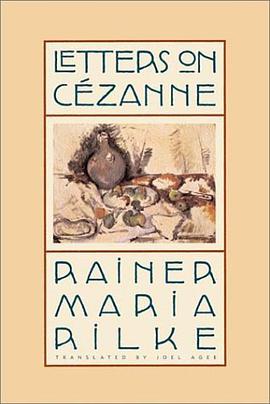
Letters on Cezanne
Douban
Rainer Maria Rilke translator: Joel Agee publishing house: North Point Press 2002 - 9
Rilke's prayerful responses to the french master's beseeching art For a long time nothing, and then suddenly one has the right eyes. Virtually every day in the fall of 1907, Rainer Maria Rilke returned to a Paris gallery to view a Cezanne exhibition. Nearly as frequently, he wrote dense and joyful letters to his wife, Clara Westhoff, expressing his dismay before the paintings and his ensuing revelations about art and life. Rilke was knowledgeable about art and had even published monographs, including a famous study of Rodin that inspired his New Poems. But Cezanne's impact on him could not be conveyed in a traditional essay. Rilke's sense of kinship with Cezanne provides a powerful and prescient undercurrent in these letters -- passages from them appear verbatim in Rilke's great modernist novel, The Notebooks of Malte Laurids Brigge. Letters on Cezanne is a collection of meaningfully private responses to a radically new art.
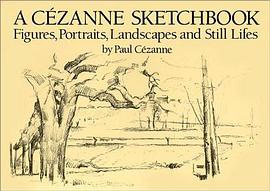
A Cezanne Sketchbook
Douban
Paul Cezanne publishing house: Dover Publications 1985 - 2
Great artist experiments with tonal effects, light, mass, other qualities in over 100 drawings. A revealing view of developing master painter, precursor of Cubism. 102 black-and-white illustrations.
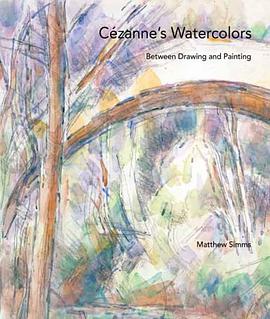
Cezanne's Watercolors
Douban
Matthew Simms publishing house: Yale University Press 2008 - 10
Cezanne's watercolours exhibit not only kaleidoscopic arrays of translucence but also very light graphite pencil lines that contrast strikingly with the soft watery touches of colour. These drawn lines have been largely overlooked in previous studies of Cezanne's work in this medium.In this ravishing book, Matthew Simms argues that it was the dialogue between drawing and painting - the movement between pencil and paintbrush - that attracted Cezanne to watercolour. The technique allowed Cezanne to express what he termed his "sensations" in two distinct modes that become a record of his shifting and spontaneous responses to his subject. Combining close visual analysis and examination of historical context, Simms focuses on the counterpoint of drawing and colour in Cezanne's work over the course of his career and as viewed in relation to his oil paintings. More than a tool for sketching or preparing for oil paintings, Simms contends, watercolour was a unique means of expression in its own right that allowed Cezanne to combine in one place the two otherwise opposed mediums of drawing and painting.