束
Atlas of Middle-earth
Douban
★ 10.0 5 ratings
Karen Wynn Fonstad publishing house: Houghton Mifflin 2001 - 4
Karen Wynn Fonstad's THE ATLAS OF MIDDLE-EARTH is an essential volume that will enchant all Tolkien fans. Here is the definitive guide to the geography of Middle-earth, from its founding in the Elder Days through the Third Age, including the journeys of Bilbo, Frodo, and the Fellowship of the Ring. Authentic and updated -- nearly one third of the maps are new, and the text is fully revised -- the atlas illuminates the enchanted world created in THE SILMARILLION, THE HOBBIT, and THE LORD OF THE RINGS. Hundreds of two-color maps and diagrams survey the journeys of the principal characters day by day -- including all the battles and key locations of the First, Second, and Third Ages. Plans and descriptions of castles, buildings, and distinctive landforms are given, along with thematic maps describing the climate, vegetation, languages, and population distribution of Middle-earth throughout its history. An extensive appendix and an index help readers correlate the maps with Tolkien's novels.
The Silmarillion
Douban
J. R. R. Tolkien publishing house: HarperCollins 2007 - 11
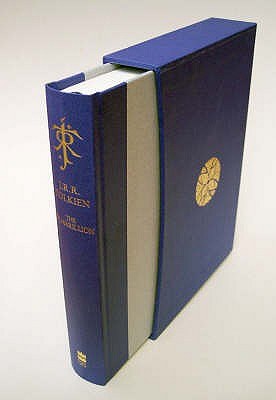
To celebrate the 30th anniversary of first publication, a new de luxe edition of The Silmarillion, featuring the revised, reset text, a colour frontispiece illustration, bound in special materials and presented in a matching slipcase. The Silmarillion is an account of the Elder Days, of the First Age of Tolkien's world. It is the ancient drama to which the characters in The Lord of the Rings look back, and in whose events some of them such as Elrond and Galadriel took part. The tales of The Silmarillion are set in an age when Morgoth, the first Dark Lord, dwelt in Middle-Earth, and the High Elves made war upon him for the recovery of the Silmarils, the jewels containing the pure light of Valinor. Included in the book are several shorter works. The Ainulindale is a myth of the Creation and in the Valaquenta the nature and powers of each of the gods is described. The Akallabeth recounts the downfall of the great island kingdom of Numenor at the end of the Second Age and Of the Rings of Power tells of the great events at the end of the Third Age, as narrated in The Lord of the Rings. For the first time, we are publishing a deluxe edition of this pivotal work, featuring the revised, corrected text and including, by way of an introduction, a fascinating letter written by Tolkien in 1951 in which he gives a full explanation of how he conceived the early Ages of Middle-earth. Quarter-bound, and set in a matching slipcase, this attractive edition will prove a fine addition to any Tolkien collection.
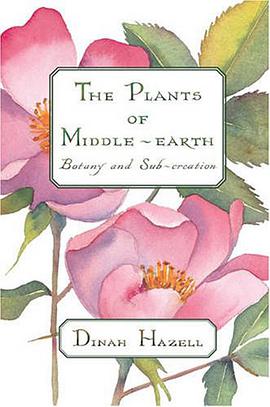
The Plants of Middle-earth
Douban
Dinah Hazell publishing house: Kent State University Press 2006
"This is a very nice book about important items in Middle-earth. Apart from some typical middle-earth plants like elanor, athelas and mallorn, all the flora from Middle-earth can be found in your average plant determination book. They help you feel at home in Middle-earth. Dinah Hazell explores this aspect of Tolkiens world. She links the plants also to biographical information on Tolkien, to other authors well-known by Tolkien like William Morris and William Shakespeare, to old literature, and to British folklore. The book has five chapters. The first is about the names of female hobbits, which are all related to plants (Rosie and Lily Cotton, e.g.). The second chapter takes you on a botanical trip from Frodo's garden to the crossroads. Ithilien gets a chapter of its own, as it has a very detailed description of its mediterranean vegetation. Also woods and trees get their own chapter. The last chapter is on destruction and recovery, both symbolised by botanical life. The destruction of plants is one of the dominant manifestations of evil (the Two Trees, Isengard, rowan trees in Fangorn). The book has beautifull illustrations, b/w drawings and watercolours. One point of criticism is that Dinah Hazell only talks about plants in The Lord of the Rings. She refers to other books, but she did not take the time to reread even The Hobbit on extra botanical information, let alone Unfinished Tales or HoME. And that is a pity".