舒伯特
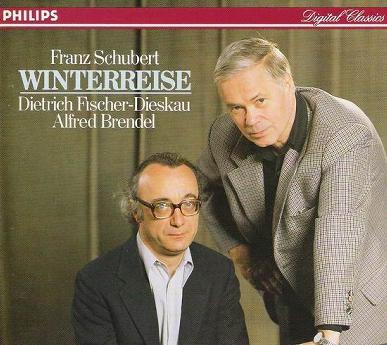
舒伯特:冬之旅
Douban
★ 9.0 8 ratings
Franz Schubert / Dietrich Fischer-Dieskau … genre: Classical
release date 2000-12-18 publisher: PHILIPS
舒伯特在1827年的2月到10月间,写成了《冬之旅》(Winterreise D.911)中的24首歌曲,成为他最优秀的艺术套曲。在这趟孤独的冬日旅行中,音乐的处理充满了浓郁的哀愁,旋律线似乎在每个乐句的结束处沉没,这种手法特别值得注意。第二册的歌曲表现较为明显,显示已达到新的灵感层次,即使身处忧郁中,依然善于表达丰富的情感。 《菩提树》(Der Lindenbaum)是《冬之旅》中深受人们喜爱的曲目,后来就变成了民歌而广为流传。歌曲内容是:流浪汉故乡的门前,有一棵菩提树,他曾在树下度过了幸福的时光。如今他在凛冽的寒风中流浪,仍仿佛听见菩提树在向他轻轻呼唤。这首歌旋律朴素、简练,感情亲切,具有德奥民歌的风格特点,于宁静中给人以流浪人悲哀的感受。 第二册的第一首歌曲《邮车》(Die Post)展现了舒伯特对歌词的洞察力,以及他处理音乐手法的简洁。邮车号角的鼓号曲及钢琴疾驰的装饰音,宣告了满载着当日邮件的驿车来到。但在此曲的中段,当男主角发现爱人没有来信时,和声从降E大调骤变为降e小调,生动地传达了他从期待到绝望的情绪变化。 菲舍尔-迪斯考在1985年与布伦德尔合作的录音中,可以听出他正尝试利用各种技巧来克服嗓音的退化——并在歌曲中掺入了戏剧性元素,因此使这版唱片成为菲舍尔最感人的诠释。即使他的歌声有点过于紧绷,但感情的表达真是令人赞叹。布伦德尔的伴奏也居功厥伟,他并不过分突显自我,但完全呈现了舒伯特作品的多变风格。他弹奏《信件》中扩大的第六和弦以伴随歌词“汹涌澎湃”的手法,只是他众多演奏技巧之一而已。(整理)
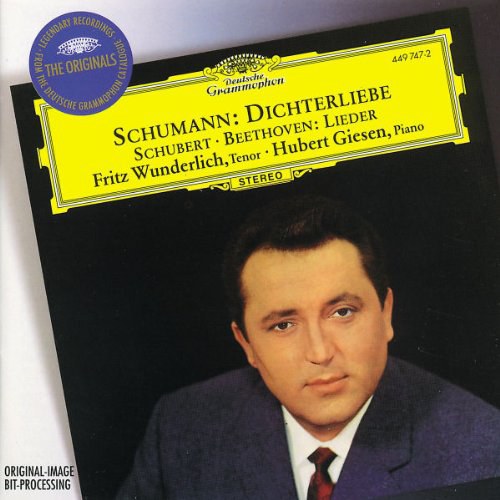
Schumann: Dichterliebe; Schubert & Beethoven: Lieder
Douban
★ 9.7 15 ratings
Fritz Wunderlich / Hubert Giesen genre: Classical
release date 1997-02-04 publisher: Deutsche Grammophon
LUDWIG VAN BEETHOVEN 4 Lieder Zärtliche Liebe · Adelaide Resignation · Der Kuß Fritz Wunderlich Hubert Giesen CD |A|D|D| 000289 449 7472 0 |G|OR| + Schumann: Dichterliebe Schubert: 9 Lieder The Originals Int. Release 06 Jan. 1997 Robert Schumann (1810 - 1856) Dichterliebe, Op.48 1. Im wunderschönen Monat Mai [1:33] 2. Aus meinen Tränen sprießen [0:52] 3. Die Rose, die Lilie, die Taube, die Sonne [0:32] 4. Wenn ich in deine Augen seh' [1:23] 5. Ich will meine Seele tauchen [0:55] 6. Im Rhein, im heiligen Strome [1:45] 7. Ich grolle nicht [1:19] 8. Und wüßten's die Blumen, die kleinen [1:17] 9 9. Das ist ein Flöten und Geigen [1:31] 10. Hör' ich das Liedchen klingen [1:55] 11. Ein Jüngling liebt ein Mädchen [1:02] 12. Am leuchtenden Sommermorgen [2:37] 13. Ich hab' im Traum geweinet [2:32] 14. Allnächtlich im Traume seh' ich dich [1:28] 15. Aus alten Märchen winkt es [2:31] 16. Die alten, bösen Lieder [4:08] Ludwig van Beethoven (1770 - 1827) 17 Zärtliche Liebe, WoO 123 "Ich liebe dich" [2:08] 18 Adelaïde, Op.46 [5:56] 19 Resignation, WoO149 [2:26] 20 Der Kuss, Op.128 [1:59] Franz Schubert (1797 - 1828) 21 An Sylvia, D.891 (Op.106/4) [3:00] 22 Lied eines Schiffers an die Dioskuren, D360 [2:46] 23 Liebhaber in allen Gestalten, D.558 [1:17] 24 Der Einsame, D.800 [4:23] 25 Im Abendrot, D.799 [3:26] Schwanengesang, D.957 26 Ständchen "Leise flehen meine Lieder" [3:46] 27 An die Laute, D. 905 (Op.81/2) [1:56] 28 Der Musensohn, D.764 (Op.92/1) [2:16] 29 An die Musik, D.547 (Op.88/4) [2:24] Fritz Wunderlich, Hubert Giesen Total Playing Time[1:05:03]
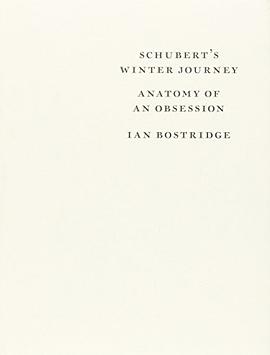
Schubert's Winter Journey
Douban
Ian Bostridge publishing house: Knopf 2015 - 1
An exploration of the world’s most famous and challenging song cycle, Schubert's Winter Journey (Winterreise), by a leading interpreter of the work, who teases out the themes—literary, historical, psychological—that weave through the twenty-four songs that make up this legendary masterpiece. Completed in the last months of the young Schubert’s life, Winterreise has come to be considered the single greatest piece of music in the history of Lieder. Deceptively laconic—these twenty-four short poems set to music for voice and piano are performed uninterrupted in little more than an hour—it nonetheless has an emotional depth and power that no music of its kind has ever equaled. A young man, rejected by his beloved, leaves the house where he has been living and walks out into snow and darkness. As he wanders away from the village and into the empty countryside, he experiences a cascade of emotions—loss, grief, anger, and acute loneliness, shot through with only fleeting moments of hope—until the landscape he inhabits becomes one of alienation and despair. Originally intended to be sung to an intimate gathering, performances of Winterreise now pack the greatest concert halls around the world. Drawing equally on his vast experience performing this work (he has sung it more than one hundred times), on his musical knowledge, and on his training as a scholar, Bostridge teases out the enigmas and subtle meanings of each of the twenty-four lyrics to explore for us the world Schubert inhabited, his biography and psychological makeup, the historical and political pressures within which he became one of the world’s greatest composers, and the continuing resonances and affinities that our ears still detect today, making Schubert’s wanderer our mirror.