萨特
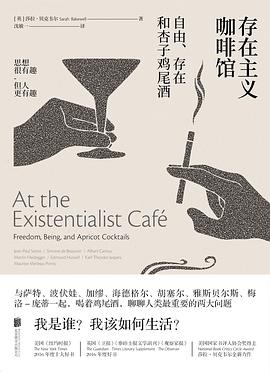
存在主义咖啡馆
At the Existentialist Café:Freedom,Being,and Apricot Cocktails Douban Goodreads
★ 8.5 198 ratings
[英国] 莎拉·贝克韦尔 translator: 沈敏一 publishing house: 北京联合出版公司 2017 - 12
巴黎,1933年…… 三位朋友正坐在蒙帕纳斯大道上的煤气灯酒吧里喝着杏子鸡尾酒。其中一个叫雷蒙·阿隆的年轻哲学家,正在向同为哲学家的让-保罗·萨特和西蒙娜·德·波伏娃盛赞一种他在德国发现的新鲜哲学——现象学。“你看,”他说,“如果你是一个现象学家,你可以谈论这杯鸡尾酒,然后从中研究出哲学来!” 就这样,20世纪影响最广泛也最深远的哲学运动发端了。受到启发的萨特,将现象学与他那种法式的人文主义情感结合在一起,创立了一门全新的哲学思想——现代存在主义。 在本书中,英国著名作家莎拉·贝克韦尔将历史、传记与哲学结合在一起,以史诗般恢弘的视角,激情地讲述了一个充满了斗争、爱情、反抗与背叛的存在主义故事,深入探讨了在今天这个纷争不断、技术驱动的世界里,当我们每个人再次面对有关绝对自由、全球责任与人类真实性的问题时,曾经也受过它们困扰的存在主义者能告诉我们什么。
Existentialism Is a Humanism
Douban Goodreads Goodreads
★ 7.3 6 ratings
Jean Paul Sartre translator: Carol Macomber publishing house: Yale University Press 2007 - 7
It was to correct common misconceptions about his thought that Sartre accepted an invitation to speak on October 29, 1945, at the Club Maintenant in Paris. The unstated objective of his lecture ("Existentialism Is a Humanism") was to expound his philosophy as a form of "existentialism," a term much bandied about at the time. Sartre asserted that existentialism was essentially a doctrine for philosophers, though, ironically, he was about to make it accessible to a general audience. The published text of his lecture quickly became one of the bibles of existentialism and made Sartre an international celebrity.The idea of freedom occupies the center of Sartre's doctrine. Man, born into an empty, godless universe, is nothing to begin with. He creates his essence--his self, his being--through the choices he freely makes ("existence precedes essence"). Were it not for the contingency of his death, he would never end. Choosing to be this or that is to affirm the value of what we choose. In choosing, therefore, we commit not only ourselves but all of mankind.This edition of "Existentialism Is a Humanism" is a translation of the 1996 French edition, which includes Arlette Elkaim-Sartre's introduction and a QandA with Sartre about his lecture. Paired with "Existentialism Is a Humanism" is another seminal Sartre text, his commentary on Camus's "The Stranger." In her foreword, intended for an American audience, acclaimed Sartre biographer Annie Cohen-Solal offers an assessment of both works.