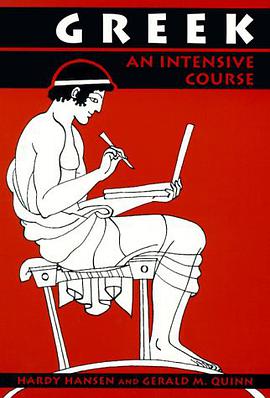
Greek
Greek
Douban
Hardy Hansen / Gerald M. Quinn publishing house: Fordham University Press 1992
The first edition of this extremely popular two volume "Greek" text has been successfully adopted in many colleges; the organization and approach used by the authors, make it an equally effective tool for those who would enjoy learning the language on their own. The set is designed for a two semester course at the introductory level. This second edition incorporates the authors' improvements and corrections gathered from users' commentary. Those who are currently using the first edition will find this update valuable, those who are seeking a Greek language text will "find Greek: An Intensive Course" one of the most complete and accessible books on the market.
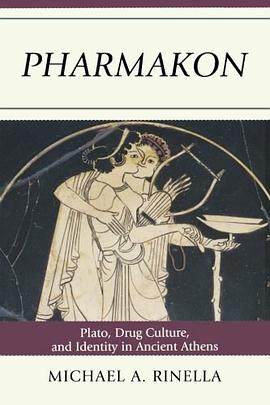
Pharmakon
Douban
Michael A. Rinella publishing house: Lexington Books 2011 - 11
Pharmakon: Plato, Drug Culture, and Identity in Ancient Athens examines the emerging concern for controlling states of psychological ecstasy in the history of western thought, focusing on ancient Greece (c. 750-146 BCE), particularly the Classical Period (c. 500-336 BCE) and especially the dialogues of the Athenian philosopher Plato (427-347 BCE). Employing a diverse array of materials ranging from literature, philosophy, medicine, botany, pharmacology, religion, magic, and law, Pharmakon fundamentally reframes the conceptual context of how we read and interpret Plato's dialogues. Michael A. Rinella demonstrates how the power and truth claims of philosophy, repeatedly likened to a pharmakon, opposes itself to the cultural authority of a host of other occupations in ancient Greek society who derived their powers from, or likened their authority to, some pharmakon. These included Dionysian and Eleusinian religion, physicians and other healers, magicians and other magic workers, poets, sophists, rhetoricians, as well as others. Accessible to the general reader, yet challenging to the specialist, Pharmakon is a comprehensive examination of the place of drugs in ancient thought that will compel the reader to understand Plato in a new way.