IanBostridge
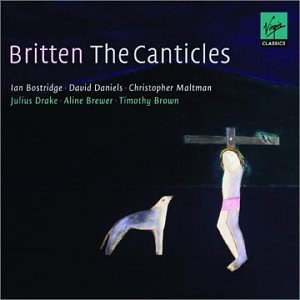
Britten: The Canticles (Ian Bostridge, David Daniels)
Douban
Ian Bostridge / David Daniels … genre: Classical
release date 2002-11-05 publisher: EMI Classics
David Daniels seems to be the current leader of the opera world's March of the Falsettos--and with good reason: he's one of the first countertenors with enough beef in his voice to sound convincing in the heroic castrato roles of Handel's operas. His first solo disc is a collection of arias from just those roles--and an impressive debut it is. Daniels has the solid coloratura technique a Handel singer needs and a quick, narrow vibrato that can blend with Baroque instruments without alienating traditional opera buffs. (In fact, he sometimes sounds surprisingly like Marilyn Horne, one of his coaches.) Best of all, he has a musicality and dramatic sense that save the laments and slow serenades from dullness and the bravura showpieces from empty virtuoso display. The performances aren't flawless: Norrington's tempos are occasionally too quick for comfort (Daniels's and the listener's), and Daniels's vibrato sometimes spreads unattractively at the top of his range. He's at his best in the low alto roles that Handel wrote for the great castrato Il Senesino, such as the title roles in Giulio Cesare and Orlando. Let's hope we get to hear him in complete recordings of these operas soon. --Matthew Westphal
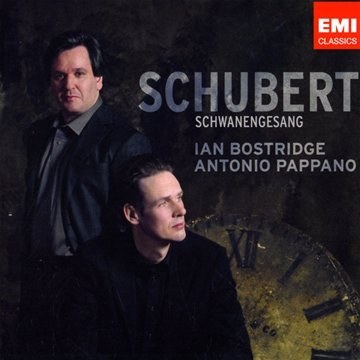
Schubert: Schwanengesang
Douban
Ian Bostridge / Antonio Pappano genre: Classical
release date 2009-02-16 publisher: EMI Classic
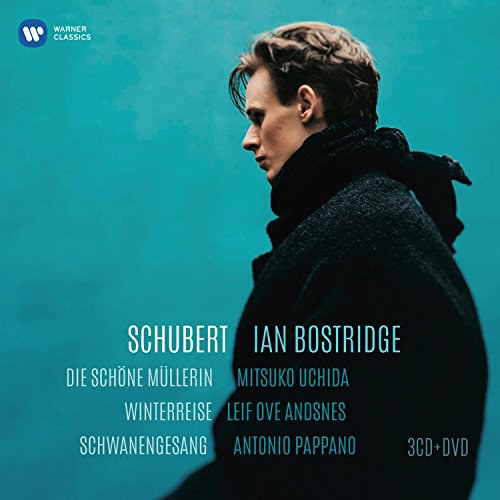
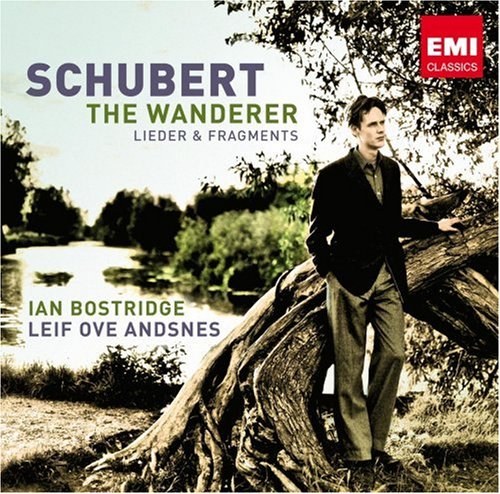
Following their highly acclaimed Hugo Wolf lieder album, Ian Bostridge and Antonio Pappano have renewed their musical partnership with a recording of Franz Schubert’s Schwanengesang, the third and last of the composer’s song cycles, and literally his swan song, as he succumbed to illness shortly after its completion in 1828. In addition to Schwanengesang, the CD also includes Schubert songs Abschied (D475); Geheimnis (D250); An Schwager Kronos (D369) and Widerschein (D639). Bostridge and Pappano performed Schwanengesang in recital at the Schwarzenberg (Austria) Schubertiade, at the Edinburgh and Aldeburgh festivals and in Glasgow before committing it to disc: “[a recital] characterised by unaffected intimacy and reverence to the music … The two gave a performance as intense and intriguing as it was timeless." (The Scotsman); “Each song is a mini-drama … [Bostridge] is a performer of extremes who, at the moment of delivery, convinces you that this is how it must be." (Evening Standard) Schwanengesang ("Swan Song") was published posthumously. This title is attributed to Schubert’s publisher, Haslinger, who, in his attempt to maximize profits after the composer’s death, presented the work as the composer’s final musical testament. In contrast with Schubert’s previous song cycles, Die schöne Müllerin and Winterreise, each composed to verses by a single poet, Schwanengesang draws on the work of two poets, Ludwig Rellstab (1799-1860) and Heinrich Heine (1797-1856). In the original manuscript, all 13 songs (seven by Rellstab, six by Heine) were copied in Schubert's handwriting on consecutive manuscript pages and appear in the standard performance order. There are thematic connections between the Rellstab and Heine verses in terms of subject matter and musical motifs. Taubenpost, to a text by Johann Gabriel Seidl (1804-1875), is often performed as a finale to Schwanengesang. However, research indicates that, rather than being intended as such by Schubert, this tradition was initiated by the publisher, who appended the song to the first edition. While the song is not technically part of Schwanengesang, it is considered to be Schubert's last lied. Ian Bostridge is firmly established in the opera house, concert hall and recital room, and much sought after internationally as one of the finest of his generation of tenors. He is one of today’s leading interpreters of Schubert lieder, repertoire that he names as his first love. Bostridge’s Schubert cycles and song explorations on EMI Classics began in 1998 with the release of a lieder disc with Julius Drake. Subsequent Schubert lieder albums, most recently The Wanderer, a collection of Schubert lieder and fragments released in summer 2008, and cycles of Der Winterreise and Die schöne Müllerin have seen Bostridge in partnership with Leif Ove Andsnes and Mitsuko Uchida.
Witchcraft and Its Transformations, C.1650-c.1750 (Oxford Historical Monographs)
Douban
Ian Bostridge publishing house: Clarendon Press 1997 - 3
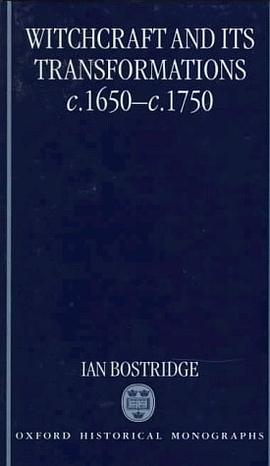
This book is about the significance of witchcraft in English public life (c.1650-c.1750), and deals with contemporary opinion regarding its theological, philosophical, and legal dimensions. Ian Bostridge discusses civil war politics, the writings of Thomas Hobbes, the debate about witchcraft at the time of the Glorious Revolution, and the disputes surrounding the repeal of Jacobean witchcraft legislation in 1736. He also examines the work of less familiar writers and propagandists such as Richard Boulton, Francis Hutchinson, and James Erskine of Grange, and balances this account of the gradual demise of witchcraft theory in Britain with a comparative case study of the debate in France. Finally, by asserting that witchcraft remained a serious topic of debate well into the eighteenth century, and that its descent into polite ridicule had as much to do with politics as with the birth of reason, Witchcraft and its Transformations offers a lively critique of current interpretations of English popular culture and political change.