Physics
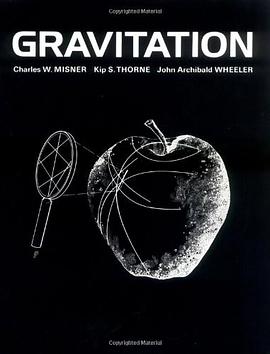
Gravitation
Douban
Charles W. Misner / Kip S. Thorne … publishing house: W. H. Freeman 1973 - 9
This landmark text offers a rigorous full-year graduate level course on gravitation physics, teaching students to: • Grasp the laws of physics in flat spacetime • Predict orders of magnitude • Calculate using the principal tools of modern geometry • Predict all levels of precision • Understand Einstein's geometric framework for physics • Explore applications, including pulsars and neutron stars, cosmology, the Schwarzschild geometry and gravitational collapse, and gravitational waves • Probe experimental tests of Einstein's theory • Tackle advanced topics such as superspace and quantum geometrodynamics The book offers a unique, alternating two-track pathway through the subject: • In many chapters, material focusing on basic physical ideas is designated as Track 1. These sections together make an appropriate one-term advanced/graduate level course (mathematical prerequisites: vector analysis and simple partial-differential equations). The book is printed to make it easy for readers to identify these sections. • The remaining Track 2 material provides a wealth of advanced topics instructors can draw from to flesh out a two-term course, with Track 1 sections serving as prerequisites.
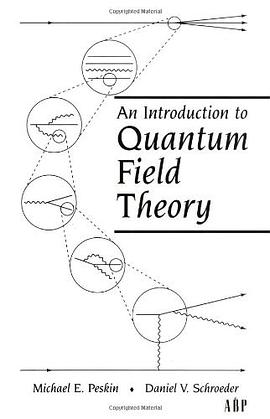
An Introduction to Quantum Field Theory
Douban
Michael E. Peskin / Daniel V. Schroeder publishing house: Westview Press 1995 - 10
An Introduction to Quantum Field Theory is a textbook intended for the graduate physics course covering relativistic quantum mechanics, quantum electrodynamics, and Feynman diagrams. The authors make these subjects accessible through carefully worked examples illustrating the technical aspects of the subject, and intuitive explanations of what is going on behind the mathematics. After presenting the basics of quantum electrodynamics, the authors discuss the theory of renormalization and its relation to statistical mechanics, and introduce the renormalization group. This discussion sets the stage for a discussion of the physical principles that underlie the fundamental interactions of elementary particle physics and their description by gauge field theories.
力学
Douban
L. D. Landau / E. M. Lifshitz publishing house: 世界图书出版公司 1999
Devoted to the foundation of mechanics, namely classical Newtonian mechanics, the subject is based mainly on Galileo's principle of relativity and Hamilton's principle of least action. The exposition is simple and leads to the most complete direct means of solving problems in mechanics. The final sections on adiabatic invariants have been revised and augmented. In addition a short biography of L D Landau has been inserted.
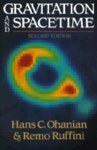
Gravitation and Spacetime (Second Edition)
Douban
Hans C. Ohanian / Remo Ruffini publishing house: W.W. Norton & Co. 1994 - 11
Now more than ever, Gravitation and Spacetime, Second Edition, by Hans C. Ohanian and new coauthor Remo Ruffini, deserves John Wheeler s praise as "the best book on the market today of 500 pages or less on gravitation and general relativity." Gravitation and Spacetime has been thoroughly updated with the most exciting finds and hottest theoretical topics in general relativity and cosmology. Highlights of the revision include the rise and fall of the fifth force, principles and applications of gravitational lensing, COBE s spectacular confirmation of the blackbody spectrum of the cosmic thermal radiation, theories of dark matter and inflation, and the early universe as a testing ground for particle physicists unification theories, and much, much more. The ideal choice for a graduate-level introduction to general relativity, Gravitation and Spacetime is also suitable for an advanced undergaduate course.
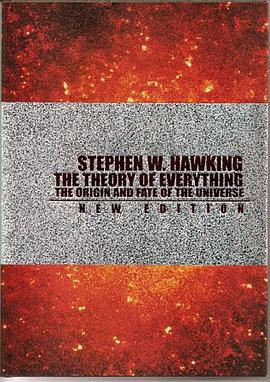
The Theory of Everything - The Origin and Fate of the Universe
Douban
史蒂夫·霍金 publishing house: Phoenix Books 2007 - 1
Amazon.com With a title inspired as much by Douglas Adams' Hitchhiker series as Einstein, The Theory of Everything delivers almost as much as it promises. Transcribed from Stephen Hawking's Cambridge Lectures, the slim volume may not present a single theory unifying gravity with the other fundamental forces, but it does carefully explain the state of late 20th-century physics with the great scientist's characteristic humility and charm. Explicitly shunning math, Hawking explains the fruits of 100 years of heavy thinking with metaphors that are simple but never condescending--he compares the settling of the newborn universe into symmetry to the formation of ice crystals in a glass of water, for example. While he explores his own work (especially when speaking about black holes), he also discusses the important milestones achieved by others like Richard Feynman. Though occasionally an impenetrably obscure phrase does slip by, the reader will find the bulk of the text enlightening and engaging. The material, from the nature of time to the possibility that the universe has no beginning or end, is rich and deep and inevitably ignites metaphysical thinking. After all, Hawking is famous for his "we would know the mind of God" remark, which ends the final lecture herein. --Rob Lightner --This text refers to an out of print or unavailable edition of this title.