
纪录片


The King of Communism: The Pomp & Pageantry of Nicolae Ceausescu (2002)
The King of Communism:The Pomp & Pageantry of Nicolae Ceausescu IMDb TMDB Douban
本·刘易斯
actor:
Mariana Aliman
/
Vartan Arachelian
…
other title:
共产王者:齐奥塞斯库的华丽排场
/
The King of Communism:The Pomp & Pageantry of Nicolae Ceausescu
…
THE KING OF COMMUNISM
Monday 17 November 2003 10.30pm-11.30pm
Nicolae Ceausescu created a unique personality cult in the 1970s and 1980s, transforming communist Romania into one of the strangest regimes Europe has ever seen. Newspapers had to mention his name 40 times on every page, factory workers spent months rehearsing dance routines dressed as soldiers and gymnasts for huge shows at which thousands of citizens were lined up to form the words Nicolae Ceausescu with their bodies.
When the Romanian economy and living standards plummeted in the 1980s, the line between theatre and life blurred completely. Ceausescu went on working visits to the countryside where he inspected displays of meat and fruit made out of polystyrene, and closer to home began work on what would have been the largest palace in the world. At the final parade in 1989, workers walked past their leader to the sound of taped chants and applause.
Using Ceausescu's own archive of 35mm propaganda films, King of Communism offers a surprising and chilling view of the absurd world of the Romanian dictator's regime.
"This is a real-life communist version of Springtime for Hitler," says director Ben Lewis. "It's an all-singing, all-dancing unmasking of the illusions of communism, but it's also a serious study of the experience, effects and legacy of the twentieth century's most destructive political system."

The collapse of the Ceausescu regime (1990)
チャウシェスク政権の崩壊 ~市民が撮った革命の7日間~ Douban
斯毕鲁·塞雷修
/
唐·乔巴努
actor:
尼古拉·齐奥塞斯库
other title:
齐奥塞斯库政权的崩溃·市民拍摄的7日革命
/
チャウシェスク政権の崩壊 ~市民が撮った革命の7日間~
歴史はときとして、人々の想像を超えて進行します。1989年はベルリンの壁の崩壊、東西冷戦の終結など、ソビエト連邦主導のもとに社会主義国家であった東欧諸国が次々と民主化し世界の政治情勢が一変した年でした。東欧諸国の民主化革命の中、唯一、流血の事態となったルーマニアでの民主革命を記録した番組をお送りします。
1989年、東欧諸国で民主化が進む中、ルーマニアではニコラエ・チャウシェスクが独裁政権を維持しようとしていました。チャウシェスクは1965年に第一書記に就任。政敵を葬り、秘密警察と軍隊を用いて独裁体制を24年間にわたって続けていたのです。ルーマニアの民主革命は、ハンガリーとの国境に近い町ティミショアラで起きた反政府集会を制圧し、多数の死傷者を出したことに端を発しました。
番組はクリスマスを目前にしたルーマニアの首都ブカレストから始まった民主化革命を、二人のアマチュアカメラマンが命をかけて記録した映像を中心に、ルーマニアでの民主革命の全容をお伝えします。
【語り】
金内 吉男
【制作スタッフ】
○撮影: スピル・ゼレシュ/ダン・チョバヌ
○取材: 智片 通博/高橋 妙季
○編集: 今井 潤/高橋 明
○音響効果: 尾上 正幸
○技術: 小谷 公人/坪田 卓栄
○構成: 関藤 隆博/安井 浩志
○制作: 坂本 勝/北本 功
Chuck Norris vs Communism (2015)
Chuck Norris vs Communism WikiData IMDb TMDB Douban Eggplant.place +2
Ilinca Calugareanu
actor:
Irina Margareta Nistor
/
Ana Maria Moldovan
…
other title:
查克·诺里斯对共产主义
/
Chuck Norris vs Comunism
…
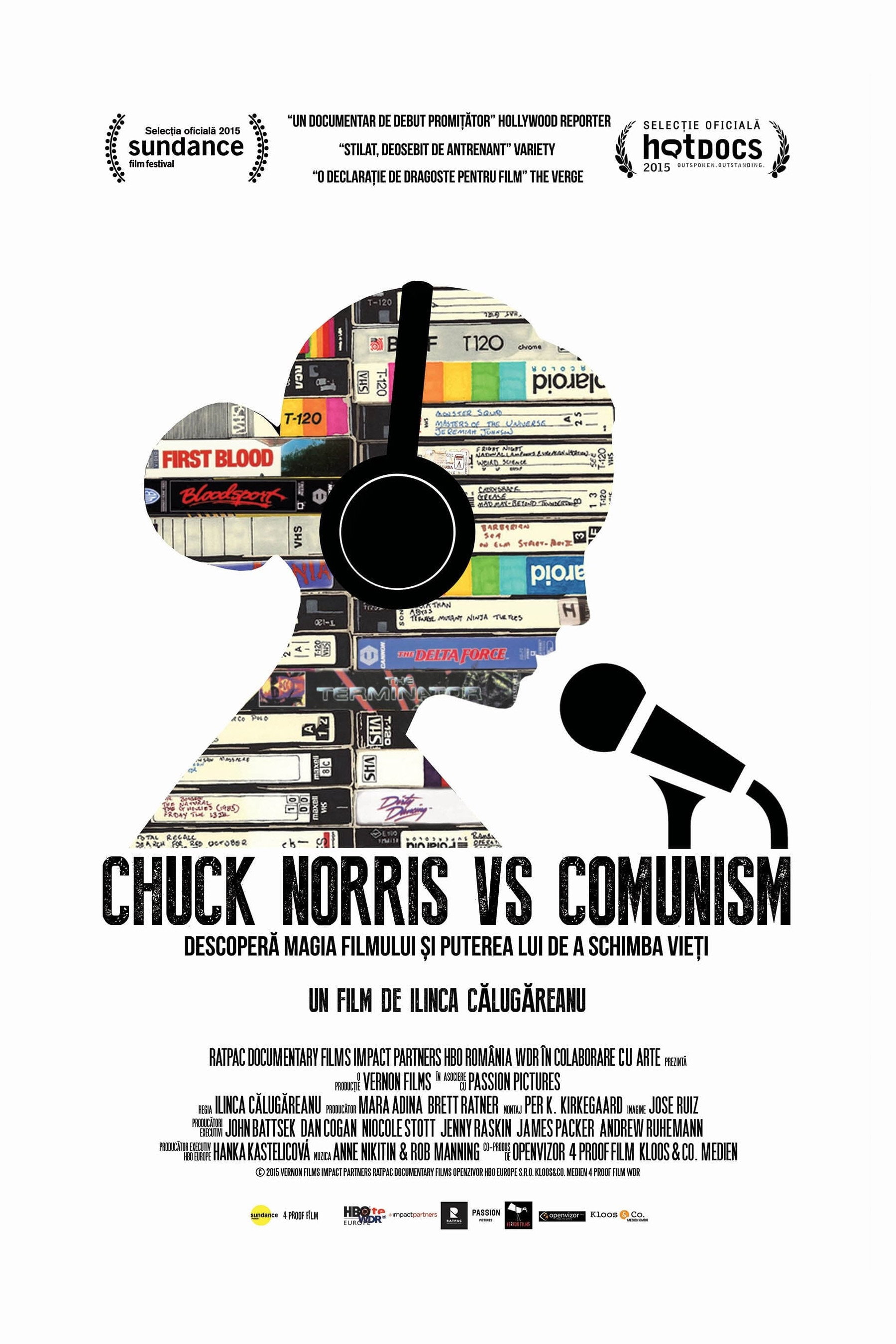
In communist Romania, thousands of Western films on bootleg VHS tapes — mostly Hollywood action movies — were smuggled behind the Iron Curtain, opening a window into the free world.
Under President Nicolae Ceaușescu, Romania was culturally isolated and ideologically censored. Images of life outside its borders were cut off and TV was reduced to propaganda bulletins. From the drab concrete housing blocks to the food ration lines, the threat of surveillance prevented people from stepping out of line.
But in the mid-1980s, under the nose of the Securitate, Ceaușescu’s secret police, thousands of Hollywood films were smuggled into the country by an underground operative named Zamfir, and they were all covertly dubbed by Irina Nistor, a courageous translator whose distinct voice captivated the nation and became a symbol of freedom.
As we see through evocative re-creations in Chuck Norris vs Communism, a network of secret screening rooms sprung up across Romania as families, friends, and neighbors gathered to watch action heroes like Norris, Van Damme, and Stallone, along with romantic comedies, dramas, and Hollywood epics. While the stories captured the imagination, it was the lavish settings and backdrops that mesmerized the audience. The films offered Romanians glimpses of the abundant West, which prompted the regime to clamp down on the clandestine screenings, casting an atmosphere of ever-present danger and suspicion.

The Dead Nation (2017)
Țara moartă Douban
拉杜·裘德
actor:
拉杜·裘德
other title:
死去的国度
/
Țara moartă
…
畫面來自攝影師哥斯提卡厄辛特的照相館,是羅馬尼亞小鎮攝於1937 至1946 年間的珍貴照片。聲音則來自一名猶太裔醫生同期的日記,記下當年反猶太主義抬頭, 羅馬尼亞的大屠殺歷史,並穿插那時候的政府宣傳片聲帶。雷杜祖迪繼《押奴記》(39 屆)及《少年詩人的心疤》 (41 屆)後,轉拍非劇情片,同樣充滿震憾力。聲音與畫面,明明出自同一時空,卻彷彿兩個平行宇宙,猶太人面對的苦難命運,與羅馬尼亞小鎮的生活面貌,看似割裂分離,卻又互相對照,彼此補足。

The Autobiography of Nicolae Ceausescu (2010)
Autobiografia lui Nicolae Ceauşescu Douban
other title:
尼古拉·齐奥塞斯库的自传
/
Autobiografia lui Nicolae Ceauşescu
…
"After all, a dictator is simply an artist who is able to fully put into practice his egotism. It is a mere question of aesthetic level, whether he turns out to be Baudelaire or Bolintineanu, Louis XVI or Nicolae Ceausescu." Andrei Ujica. From a formal point of view, The Autobiography of Nicolae Ceausescu proves that it is possible to only use existing images to yield films focused on recent history, yet with an epic vein similar to that of the historical fiction cinema - such as, most notably, the ample period pieces dedicated by American cinema to the Vietnam War generation. This is an eminently syntactic endeavor, where montage plays a twofold part: mise-en-scene, as it builds scenes that do not exist as such in the rushes, and classical editing, connecting scenes together. We may be witnessing the birth of a new film genre.


Jerusalem Cuts (2008)
Douban
Liran Atzmor
One war, ten days, three stories: the Old City of Jerusalem, at the dawn of a new Middle East. For the Brits, it's the shameful end of 30 years Mandate. For the Jews, it's the birthday of their State. And for the Palestinians, it's a catastrophe. Only now, 60 years later, images can be shown from three opposing points of view, telling a whole new story.

Rabin in His Own Words (2015)
Douban
Erez Laufer
actor:
Yitzhak Rabin
20 years after his assassination, Yitzhak Rabin himself tells his dramatic life story.

Babi Yar. Context (2021)
Бабин Яр. Контекст WikiData IMDb TMDB Douban
other title:
娘子谷大屠杀
/
Бабин Яр. Контекст
…
It seems, happily, we are to have a new narrative feature or documentary (or both) every year from Ukraine’s Sergei Loznitsa. Shortly after his 2012 sophomore narrative film In the Fog, Loznitsa had announced plans to commence filming on Babi Yar, which details the brutal eponymous massacre which took place in 1941 Ukraine. Due to the severe civil and political unrest in the region, Loznitsa was forced to move on to other projects. But following the premiere of 2018’s Donbass as the Un Certain Regard opening film (one of the year’s best films and still in need of US distribution), the director announced plans to revisit Babi Yar, eyeing a summer 2019 shoot.

Octopus (2021)
Octopus Douban
卡里姆·卡西姆
actor:
Fouad Mahouly
other title:
章鱼
Traffic rushes by as if nothing has happened. But beside the road, the rubble is smoldering, and firefighting helicopters are circling overhead. Ten minutes in, this is the first specific image we see of the devastating explosion that took place on 4 August 2020 at the Port of Beirut. Until this point, its presence in the film has been indirect—a man smoking beside a broken window, the distant sounds of ships’ horns and sirens.
Octopus is a thoughtful testimony to the aftermath of the explosion. First there is the stillness. Tightly framed shots show residents staring silently in houses with shattered windows. Shots of empty streets, with crumbling walls and cars dented by the shockwave, form an elegy accompanied by an ambient score.
In the second half, stillness cautiously makes way for a new beginning. Playing children fill the streets, and there are sounds of reconstruction; the city starts to regenerate and human resilience emerges.
Letter to a Refusing Pilot (2013)
Douban
Akram Zaatari
Lebanese artist-filmmaker Zaatari conducts both an investigation and a stirring tribute to an act of resistance (or forbearance) that marked his childhood memories: the refusal of an Israeli pilot to bomb a boys' high school in south Lebanon in 1982.

On Three Posters (2004)
On Three Posters Douban
Rabih Mroue
other title:
三张海报
On Three Posters is gebaseerd op found footage van videobrieven opgenomen door leden van de Libanese Communistische Partij, voorafgaand aan het uitvoeren van hun zelfmoordmissies.
Kort voor zijn dood in 1985 oefende Jamal Salti, die tegen de Israëlische bezetting van Zuid-Libanon (1982-2000) streed, zijn videogetuigenis in drie takes die maar minimaal van elkaar verschillen. Dit materiaal vormt het vertrekpunt voor gedachten over het spanningsveld tussen fundamenteel menselijke trekken en de heroïsche verbeelding van martelaarschap.
Rabih Mroué’s analyse spitst zich toe op een moment van aarzeling in een van de ongebruikte opnamen. Ook doet hij uit de doeken hoe, sinds de eerste presentatie van dit werk (als Three Posters samen met Elias Khoury in het jaar 2000), de ontvangst ervan is veranderd in de context van het geopolitieke landschap van na 11 september.
The Pixelated Revolution (2012)
Douban
Rabih Mroue
“Syriërs filmen hun eigen dood”, zo begint The Pixelated Revolution, een studie van het gebruik van mobiele telefoons tijdens de demonstraties in de eerste maanden van de revolutie in Syrië. Rabih Mroué plaatst een selectie van gevonden videomateriaal van botsingen en confrontaties, door opstandelingen gefilmd en op het internet gezet, in een nieuw kader en een nieuwe context om de breekbaarheid van het menselijk lichaam en populaire technologie in de werkelijkheid van een oorlog uit te lichten.
Zijn lezing is een bespiegeling over hoe Syriërs hun beelden “nu en hier” vastleggen, over de relatie tussen deze daad van fotografische documentatie en de dood, en over hoe wij die video’s als “nu, maar daar” bekijken.

Beirut fi Ain Al-Assifa (2021)
بيروت في أين الأسيف Douban
麦·马斯里
other title:
贝鲁特:风暴之眼
/
بيروت في أين الأسيف
…
It’s October 2019, and four progressive women are documenting the uprising in Beirut. They are journalist Hanine, Iraqi camerawoman Lujain, and Noel and Michelle, two artist sisters whose often-ironic songs have made them a voice for their generation. The prevailing mood is one of hope and change. But a few months later, Covid-19 has locked down the city, and all optimism seems to have evaporated.
This non-chronological account of a tumultuous period in recent Lebanese history loops back and forth between uprising and lockdown, with the four women calling each other and the film’s director Mai Masri on video. They express their opinions about current events and place them into historical perspective, but also offer glimpses into their personal lives.
The devastating blow of the explosion at the Port of Beirut, just ten months after the uprising, was still to come. Will the young women be able to hold onto their dream of a new Lebanon?
Darkness There and Nothing More (2021)
Darkness There and Nothing More Douban
提亚·图拔吉克 Tea Tupajic
other title:
那里除了黑暗一无所有
在电影导演提亚·图拔吉克只有七岁的时候,前南斯拉夫的内战就已经打到了她的家乡萨拉热窝。战争留下的伤痛在她的艺术作品中发挥了重要作用。在这部电影中,图拔吉克请荷兰退伍老兵弗兰克和哈姆与她共度了一个谈话之夜——在逐渐变暗的,空荡荡的剧院里,图拔吉克希望得到一些痛苦问题的答案,同时,她也试图在这两个受访者身上发现一些可以给她带来希望的东西。
一个女人、一个男人,一台摄像机——通过这个简单的设置,电影将所有的注意力集中在两场会面中的语言、手势和行为上,并经常用到特写镜头。尽管两位老兵他们都渴望得到某种解脱,对话的双方似乎来自两个无法结合的不同的世界。哈姆带着巨大的负罪感,而弗兰克则完全没有感情。图拔吉克试图解释:她的家人和朋友,尽管还活着,但没有一个人真正地从战争中幸存下来。他们能理解彼此的悲伤吗?
本片获IDFA最佳长片奖和IDFA最佳荷兰电影奖提名。

Tonight's Homework (2021)
Tonight's Homework Douban
Ashkan Nejati
/
Mehran Nematollahi
other title:
今晚的家庭作业
/
Mashgh-e Emshab
In Homework (1989), Abbas Kiarostami put questions to students at a public school: questions about homework, punishments, and dreams of the future. The result was a portrait of the generation that grew up during the Iran-Iraq war, trapped by uncertainty and a rigid upbringing.
Now, some 30 years later, directors Ashkan Nejati and Mehran Nematollahi repeat Kiarostami’s questions and come to the conclusion that the school system and society itself have changed dramatically. The gulf between rich and poor has grown far wider, and that has become evident in the schools. Parents, many of whom are illiterate, are unable to help their young ones, or otherwise too busy with their careers to supervise homework. Any sense of interest or guidance is absent.
Two now-adult subjects of Kiarostami’s film agree that there’s something fundamentally wrong with the way responsibilities get dumped on the shoulders of teachers. The only thing that’s unchanged is the way the children reply in the approved manner—yes, of course they’ve done their homework.