肖斯塔科维奇
The Cambridge Companion to Shostakovich Douban
author: Fairclough, Pauline (EDT)/ Fanning, David (EDT) 2008 - 9
As the Soviet Union's foremost composer, Shostakovich's status in the West has always been problematic. Regarded by some as a collaborator, and by others as a symbol of moral resistance, both he and his music met with approval and condemnation in equal measure. The demise of the Communist state has, if anything, been accompanied by a bolstering of his reputation, but critical engagement with his multi-faceted achievements has been patchy. This Companion offers a new starting point and a guide for readers who seek a fuller understanding of Shostakovich's place in the history of music. Bringing together an international team of scholars, the book brings up-to-date research to bear on the full range of Shostakovich's musical output, addressing scholars, students and all those interested in this complex, iconic figure.
Shostakovich Douban
author: Laurel E. Fay publishing house: Oxford University Press 2005 - 7
For this authoritative post-cold-war biography of Shostakovich's illustrious but turbulent career under Soviet rule, Laurel E. Fay has gone back to primary documents: Shostakovich's many letters, concert programs and reviews, newspaper articles, and diaries of his contemporaries. An indefatigable worker, he wrote his arresting music despite deprivations during the Nazi invasion and constant surveillance under Stalin's regime. Shostakovich's life is a fascinating example of the paradoxes of living as an artist under totalitarian rule. In August 1942, his "Seventh Symphony", written as a protest against fascism, was performed in Nazi-besieged Leningrad by the city's surviving musicians, and was triumphantly broadcast to the German troops, who had been bombarded beforehand to silence them. Alone among his artistic peers, he survived successive Stalinist cultural purges and won the Stalin Prize five times, yet in 1948 he was dismissed from his conservatory teaching positions, and many of his works were banned from performance. He prudently censored himself, in one case putting aside a work based on Jewish folk poems. Under later regimes he balanced a career as a model Soviet, holding government positions and acting as an international ambassador with his unflagging artistic ambitions. In the years since his death in 1975, many have embraced a view of Shostakovich as a lifelong dissident who encoded anti-Communist messages in his music. This lucid and fascinating biography demonstrates that the reality was much more complex. Laurel Fay's book includes a detailed list of works, a glossary of names, and an extensive bibliography, making it an indispensable resource for future studies of Shostakovich.
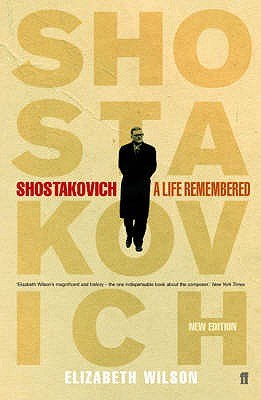
Shostakovich A Life Remembered Douban
author: Wilson, Elizabeth 2011
Shostakovich: A Life Remembered is a unique study of the great composer, drawn from the reminiscences and reflections of his contemporaries. Elizabeth Wilson sheds light on the composer's creative process and his working life in music, and examines the enormous and enduring influence that Shostakovich has had on Soviet musical life.
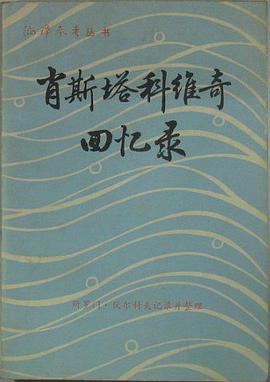
肖斯塔科维奇回忆录 Douban
★ 9.3 (6 ratings) author: 肖斯塔科维奇 / 所罗门·伏尔科夫 translator: 叶琼芳 publishing house: 外文出版局 1981
肖斯塔科维奇1906年9月25日生于圣彼得堡,是苏联最重要的作曲家之一,也是当代世界著名的作曲家之一。他的创作遍及各种音乐体裁,特别是15部交响曲使他享有20世纪交响乐大师的盛誉。此外,他还培养了大批苏联当代著名作曲家,深受苏联人民的喜爱。1975年8月9日卒于莫斯科。
在肖斯塔科维奇生命的最后4年,他与年轻的音乐家伏尔科夫成为密友。在伏尔科夫的鼓励下,一个“从棺材里逃出去”的计划逐渐形成,他决定秘密口述一部回忆录,将真实的自己和真实的历史告诉大众,从而纠正那个“令人心碎的奴颜婢膝的形象”。他为伏尔科夫提供材料,讲述往事,肆意评价那些曾经的风云人物。在伏尔科夫完成写作后,他通读了全书,并逐章签名确认,同意在他死后将书稿送西方出版。
1975年9月,他死于肺癌,被葬在莫斯科新圣女公墓。如他所料,他被东西方阵营各取所需,大卸八块。苏联宣称他是“国家最忠实的儿子”,西方国家则称他为“20世纪最伟大的作曲家之一,苏维埃政权坚定的信徒。”一切仿佛盖棺论定,但他的幽灵却从强权与意识形态的铜墙铁壁中钻了出来,并顺手打了它们一记响亮的耳光——1976年,他的回忆录被伏尔科夫带到了国外,几年后,回忆录面世,题名《见证》。
这是他一生哀乐的见证,也是一个时代的见证,往事已然如烟,生灵早已涂炭,回首前尘,他的心中只剩一片怅然,就像他在生前向伏尔科夫讲述往事的时候,时常忍不住说的那样:“回头看,除了一片废墟,我什么也看不到,只有尸骨成山……”
在自己的回忆录《见证》中,他口述了为苏联国歌作曲的趣事。当时,斯大林政府决定《国际歌》不再作为苏联国歌,因为考虑到《国际歌》是外国作品——法国的。他们匆忙拼凑了新歌词交给作曲家。对音乐充满好奇却又一知半解、被民间喻为“文化秃鹫”的斯大林命令哈恰图良和肖氏合作谱曲。
肖氏对此回忆道:“这个主意愚蠢之至,哈恰图良和我风格不同,工作方法也不同,气质也不同。何况有谁愿意在作曲家集体农庄里干活?但是我们不得不服从。”
评判专家显然认为哈恰图良和肖氏合写的这首最好,但副歌需要作少许修改。斯大林问肖氏需要多少时间,他说5个小时。
肖氏回忆道:“其实,我们5分钟就能弄好,不过如果我说我们当时就能在斯大林的桌子上改好,似乎不妥。尽管如此,斯大林当时一定想:国歌是国家大事,只要5小时就能改好,这不严肃。” 有趣的是,他和哈恰图良合作而成的国歌最后落选了。
Sept. 25, 2026 read
准确来说是伏尔科夫记录的肖斯塔科维奇。哪怕里面很多沉重的东西,这本回忆录还是流畅生动,带着一种(窝囊的)幽默感,很抓人。几部重要的交响乐和舞台配乐的创作背景在里面有记述,更有趣的是里面各种“我的一个朋友”。

后半段关于斯大林的一些记录和对同行的评述比较沉重。
苏联 回忆录 肖斯塔科维奇 音乐