历史


Iris Chang: The Rape of Nanking (2008)
張純如 Douban
Anne Pick
/
Bill Spahic
actor:
郑启蕙
other title:
张纯如 南京大屠杀
/
張純如
…
美籍华裔作家张纯如(Iris Chang 1968.3.28—2004.11.9),在完成自己第一部作品《蚕丝》后,开始将目光着眼于发生在20世纪30年代末的那场惨绝人寰的大屠杀。1937年,日本侵华战争爆发,短短几个月内,中华大地狼烟滚滚,生灵涂炭。日军长驱直入,攻陷时为国民政府首都的南京,并对这座城市和城中的军民进行了丧失人性的洗劫和杀戮。这场超过30万人丧生的大屠杀,却在战后因种种原因而鲜为人知,甚至日方一再否认大屠杀的存在。
为了还原历史,还受害者与公道,张纯如一面收集大量第三方资料,一面前往南京、上海等地与屠杀幸存者进行面对面的取证交谈,前后历经三年时间,终于在1997年南京大屠杀60周年之际推出《南京暴行》一书,使这段“被遗忘了的大屠杀”的历史为世人所知。
2004年,张纯如在筹备第四部作品期间饮弹自杀。
本片由多伦多史维会和大地娱乐(香港)有限公司共同投资拍摄,由华裔郑启蕙扮演张纯如。

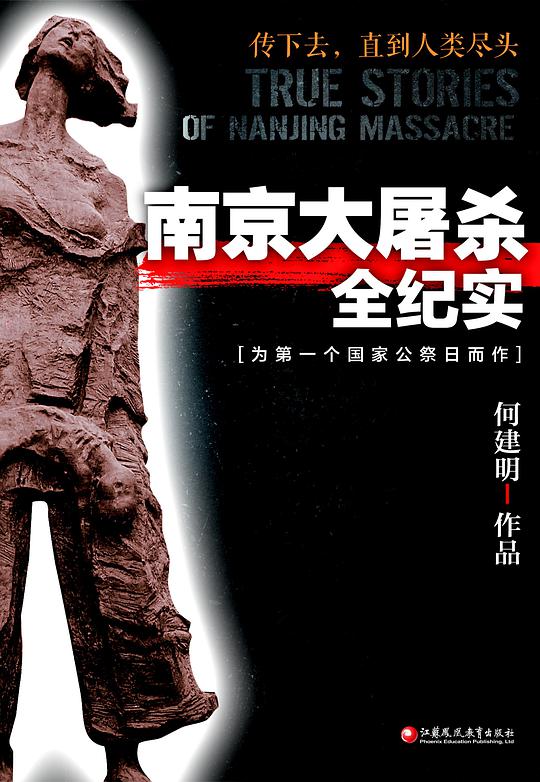
南京大屠杀全纪实
Douban
何建明
publishing house:
江苏凤凰教育出版社
2014
- 11
1937年12月13日,日本侵略者攻破南京,制造了惨绝人寰的大屠杀。进城的日军,以其占领者的优越感,在随后的几个星期里,残暴地屠杀了已经放下武器的中国守城官兵和普通市民达30余万人,在中国人心头和中华民族史上留下了一段永远难以愈合的伤痛……
作者饱蘸国人的血泪,文笔大气磅礴,以详尽的事实和一手资料以及诸多不为人知的历史真相震撼着读者,以犀利的拷问促使今天的读者深刻反思南京大屠杀的历史,深入思考其历史教训现实意义。
国内尚无一部从中国人的视角去全面完整地反映这一事件始末的优秀力作。这部作品将从报告文学角度填补这一空白,也是做为对首次南京大屠杀国家公祭日的献礼。该书已入选国家新闻出版广电总局2014年“培育和践行社会主义核心价值观主题出版重点选题”。
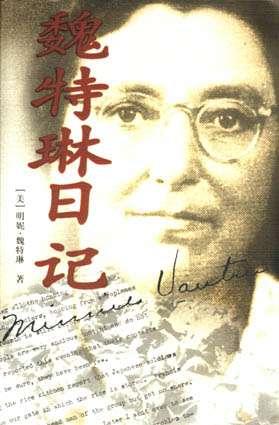
魏特琳日记
Douban
明妮・魏特琳
publishing house:
江苏人民出版社
2000
- 10
已尘封60多年的《魏特琳日记》,首次以全貌与读者见面。�
日记全文50多万字。《魏特琳日记》是继《拉贝日记》、《东史郎日记》之后,又一部反映侵华日军南京大屠杀真相的第一手原始资料。拉贝是一位德国人淇日记以保持原始史料价值见长;东史郎是一位原日本士兵,是作为加害者一方的日记;而魏特琳则作为一位美国人,一位女性、大学教授、南京大屠杀亲历者和南京女性难民心目中的“活菩萨”,其日记具有其他资料不可取代的价值。首先,《魏特琳日记》记载了日军从轰炸南京、进攻南京到南京大屠杀及日军在南京进行殖民统治的全过程,它的翻译出版为进一步深入研究南京大屠杀和沦陷时期南京的政治、经济、社会生活提供了十分重要的资料。其次,由于金陵女子文理学院是专门收容妇女难民的难民所,在侵华日军南京大屠杀期间,这里成了日军实行性暴力的重要目标,作为该难民所的负责人,魏特琳所写的日记是揭露侵华日军性暴行最具说服力的证据。第三,魏特琳女士爱憎分明,感情真切,想像力丰富,其日记文笔优美流畅,可读性强。正是由于魏特琳日记的重要价值,章开沅先生编译的《天理难容》和朱成山先生主编的《侵华日军南京大屠杀外籍人士证言集》,都曾节译魏特琳日记中有关记载南京大屠杀的部分。


The Rape of Nanking
The Rape of Nanking: The Forgotten Holocaust of World War II Douban Goodreads“这是我真正不得不写的一本书。我写,是出自义愤。即使拿不到一分钱,我也不在乎。让世界知道1937年在南京发生了什么事,对我来讲,这才是重要的。”
——张纯如
作者照片:
张纯如,在新泽西州普林斯顿出生,在伊利诺州长大。1989年从伊利诺大学毕业后,曾在美联社和芝加哥论坛报当记者,后来从约翰·霍普金斯大学获得写作学位,并开始全职写作和演说。
张纯如出身书香门第,祖父是抗日国军将领张铁军,后曾为台湾中华日报总主笔。其父当年是台大物理系“状元”,其专著《量子场论》在美国理论物理学术界颇有影响。张纯如的母亲一直从事生物化学的研究工作。
张纯如曾荣膺麦克阿瑟基金会“和平与国际合作计划”奖、美国华人团体“年度女性”称号,并且获得美国“国家科学基金会”、“太平洋文化基金会”及“哈利·杜尔门图书馆”赞助。张纯如曾成为世界最著名的文摘杂志《读者文摘》的封面人物,受到许多电视节目邀请,包括著名新闻访谈节目《夜线》(Nightline)和《吉姆莱赫新闻时间》(NewsHour With Jim Lehrer),也为多家出版物(包括《纽约时报》和《新闻周刊》)写稿。她与NBA体育明星“东方小巨人”姚明、著名钢琴家郎朗被誉为当下美国最引人瞩目的三位华人青年。
1997年,张纯如的《南京大屠杀:被二战遗忘的浩劫》在美国出版。与南京大屠杀有关的研讨会也因此在美国哈佛及斯坦福等大学举行,美国新闻媒介都大幅报道了南京大屠杀。张纯如自己也曾到纽约等地作关于这段历史的演讲。《南京大屠杀》是首部全面记录当年日军血洗南京城暴行的英文著作,曾连续5个月被列为《纽约时报》书评的最佳畅销书,引起英语世界对二次大战时日本在中国实施暴行的关注。1998年4月,东方出版社翻译的20万字《南京大屠杀:被二战遗忘的浩劫》中译本在北京出版。
2004年11月9日,张纯如突然在美国加州自己的轿车内用手枪自杀身亡。有消息推测,年仅36岁的她可能因患抑郁症自杀。
在她的网上祭奠堂的挽联中这样写道:
历经千辛示倭鬼恶昭告世界中华第一人,
自古有死太息青云一瞬如君摇落更堪悲。
Publisher Comments :
In December 1937, the Japanese army swept into the ancient city of Nanking. Within weeks, more than 300,000 Chinese civilians were systematically raped, tortured, and murdered — a death toll exceeding that of the atomic blasts of Hiroshima and Nagasaki combined. Using extensive interviews with survivors and newly discovered documents, Iris Chang has written what will surely be the definitive history of this horrifying episode.
The Rape of Nanking tells the story from three perspectives: of the Japanese soldiers who performed it, of the Chinese civilians who endured it, and of a group of Europeans and Americans who refused to abandon the city and were able to create a safety zone that saved almost 300,000 Chinese. Among these was the Nazi John Rabe, an unlikely hero whom Chang calls the "Oskar Schindler of China" and who worked tirelessly to protect the innocent and publicize the horror. More than just narrating the details of an orgy of violence, The Rape of Nanking analyzes the militaristic culture that fostered in the Japanese soldiers a total disregard for human life. Finally, it tells the appalling story: about how the advent of the Cold War led to a concerted effort on the part of the West and even the Chinese to stifle open discussion of this atrocity. Indeed, Chang characterizes this conspiracy of silence, that persists to this day, as "a second rape".
Amazon.com
China has endured much hardship in its history, as Iris Chang shows in her ably researched The Rape of Nanking, a book that recounts the horrible events in that eastern Chinese city under Japanese occupation in the late 1930s. Nanking, she writes, served as a kind of laboratory in which Japanese soldiers were taught to slaughter unarmed, unresisting civilians, as they would later do throughout Asia. Likening their victims to insects and animals, the Japanese commanders orchestrated a campaign in which several hundred thousand--no one is sure just how many--Chinese soldiers and noncombatants alike were killed. Chang turns up an unlikely hero in German businessman John Rabe, a devoted member of the Nazi party who importuned Adolf Hitler to intervene and stop the slaughter, and who personally saved the lives of countless residents of Nanking. She also suggests that the Japanese government pay reparations and apologize for its army's horrific acts of 60 years ago.
From School Library Journal
The events in this book are horribly off-putting, which, paradoxically, is why they must be remembered. Chang tells of the Sino-Japanese War atrocities perpetrated by the invading Japanese army in Nanking in December 1937, in which roughly 350,000 soldiers and civilians were slaughtered in an eight-week period, many of them having been raped and/or tortured first. Not only are readers given many of the gory details?with pictures?but they are also told of the heroism of some members of a small foreign contingent, particularly of a Nazi businessman who resided in China for 30 years. The story of his bravery lends the ironic touch of someone with evil credentials doing good. Once the author finishes with the atrocities, she proceeds with the equally absorbing and much easier-to-take story of what happened to the Nazi businessman when he returned to Germany and the war ended. This by itself is material for a movie. The author tells why the Japanese government not only allowed the atrocities to occur but also refused, and continues to refuse, to acknowledge that they happened. She is quite evenhanded in reminding readers that every culture has some episode like this in its history; what makes this one important is the number of people killed and tortured, the sadism, and the ongoing Japanese denial of responsibility. Mature readers will look beyond the sensational acts of cruelty to ponder the horror of man's inhumanity to man and the examples of heroism in the midst of savagery.
Judy McAloon, Potomac Library, Prince William County, VA
From Library Journal
Even though the Japanese government still refuses to acknowledge the massacre of at least 250,000 Chinese civilians by invading Japanese troops in 1937, freelance writer Chang (the Chicago Tribune, the New York Times, the Associated Press) has exposed in detail the full, terrible account of what happened to the war-torn capital of Nanking. Chang, whose grandparents survived the brutality, first establishes Japan's social hierarchy by martial competition, then shows how the city of Nanking fell, the six weeks of horror following, and the Nanking safety zone created by Americans and Europeans. The book goes on to depict the city's occupation, the judgment day for Japanese war criminals, the cover-up perpetrated by Japanese textbooks, and Japan's self-imposed censorship. The unseen illustrations will certainly complement the vivid description of one of the most horrible massacres of all. This unique, deeply researched book, with its firsthand account, is an excellent choice for larger public libraries and the East Asia collections of academic libraries.
Steven Lin, American Samoa Community Coll. Lib.
From AudioFile
Few know the details of the Japanese invasion of Nanking during WWII. Once a capital city of China, it became a scene of holocaust, rivaling any of Europe's in brutality and numbers. This is not history for the squeamish. Chang unfolds episodes with painstaking detail. She documents facts, reactions and rebuttals and includes a psycho-sociological analysis of the Japanese character to explain (if not excuse) their excesses. With a dry voice, Fields keeps her narrative from overreaction, using a finely tuned ear for inflection to emphasize the worst horrors. This is a real accomplishment as it would be hard NOT to express indignation. Her intelligent performance makes this a remarkable and compelling experience. S.B.S.
From Kirkus Reviews
Billing itself as the first English-language history devoted to the Japanese Army's 1937 massacre in China's capital, this slight account will by no means be the last word. Repeated references to Schindler's List point to the problem with this overdigested version of the past: It reads like a treatment for a probably inevitable cinema version of the hideous incident. Its economical, blandly shocking anecdotes of crimes against humanity and its cardboard heroes suggest scenes ready-made for screenwritten history. Thus, while rigorous in its moral earnestness, the book is inadequate as a history. After a minimal background chapter on Japanese militarism, Chang, a freelance journalist, describes the Japanese assault on Nanking. The specifics are deeply horrific: Over a period of several months Japanese soldiers killed approximately a quarter of a million Chinese, almost all of them noncombatants, including the elderly, women, and children. But the potential ingredients of a skillfully woven narrative are separated here into lifeless clumps of facts--catalogues of atrocities by kind; tiny summaries of topics of significant contextual interest, like foreign intelligence concerning the massacre; and probably gripping oral recollections flattened into clunky prose (``of the hundreds of people killed that day . . . Tang was the only survivor''). Chang tells only as much as one needs to know to indignantly draw the familiar lessons for humanity--``the frightening ease with which the mind can accept genocide, turning us all into passive spectators to the unthinkable.'' What's needed is to vivify such truths with intense historical reality. Chang fails because he rushes to simplify complex events and to universalize what happened at the expense of a careful, comprehensive appreciation of a world violently destroyed. (photos, not seen) (First serial to Newsweek)
Frederic Wakeman, Director of the Institute of East Asian Studies, University of California, Berkeley
Iris Chang's RAPE OF NANKING is an utterly compelling book. The descriptions of the atrocities raise fundamental questions not only about imperial Japanese militarism but the psychology of the torturers, rapists and murderers. Many Japanese have denied that these events ever took place, substituting amnesia for guilt, but Iris Chang's heartbreaking account will make such evasion impossible in the future for all but the most diehard right-wing Japanese extremists.
About Author
Iris Chang, a full time author living in California, heard stories about the Rape of Nanking from her parents, who survived years of war and revolution before finding a serene home as professors in Champaign-Urbana, Illinois. A journalism graduate of the University of Illinois at Urbana, she worked briefly as a reporter in Chicago before winning a graduate fellowship to the writing seminars program at The Johns Hopkins University. Her first book, Thread of the Silkworm (the story of Tsien-Hsue-shen, father of the People's Republic of China's missile program) received worldwide critical acclaim. She is the recipient of the John T. and Catherine D. MacArthur Foundation's Program on Peace and International Cooperation award, as well as major grants from the National Science Foundation, the Pacific Cultural Foundation, and the Harry Truman Library. She is 30 years old.
Book Dimension :
Height (cm) 19.8 Width (cm) 12.8


中国思想史十讲(上卷)
Douban
金观涛
/
刘青峰
publishing house:
法律出版社
2015
- 7
本书是金观涛、刘青峰两位作者自《观念史研究》后,在国内出版的第二部全新作品。本书根据二位作者主讲的中国思想史讲座讲义整理修改而成,分为上下两卷,上卷包括前六讲的内容,由先秦诸子到清代思想,下卷包括从晚清到当今中国思想大脉络的展开,上下两卷试图展现出一张从春秋战国到当今思潮的思想演化的整体图画。本书为上卷。
书中,作者以其独有的大历史观,把思想史的演化与社会的历史变迁结合起来考察,并着重讲解了思想与社会的生动互动,给人一种思想触手可及、历史通透可察的感觉。该书是当代关于中国思想史的一部厚重专著,适于对中国文化感兴趣的读者、更适于关心人类文明和中国往何处去的读者认真阅读。

开放中的变迁
Google Books Douban
金观涛
/
刘青峰
publishing house:
法律出版社
2011
- 1
作者探讨1840至1956百多年间中国社会宏观结构的变迁的最新著作,观点新颖并富挑战性。作者不同意海内外的流行见解,即把中国近现代社会变迁视为传统社会的断裂,而认为共产党建立的政权不过是传统的某种变构。作者企图超越国共两党和西方学术界对中国近现代史的解释,用大量史料证明,传统深层结构如何左右中国现代化进程,中国近现代社会变迁其实是超稳定结构在对外开放条件下的行为模式。
中国近现代史风云变幻、扑朔迷离,本书则简明清晰地勾画出社会变迁的主线,以新的视角来考察一系列重大历史事件。

思痛录 露沙的路
Douban
韦君宜
publishing house:
文化艺术出版社
2003
- 1
在《思痛录》中,作者所回忆的从延安“抢救运动”以来的大大小小的政治运动,是中年以上的中国人无法回避的共同经历。但很少能有人像她这样把“左”的思想和毒害义无反顾地倾吐出来。1998年,《思痛录》出版后引起了巨大的反响,启发了不少知识分子反思历史的责任感和使命感,因而被文化界称为“韦君宜现象”。
自传体小说《露沙的路》是回忆录《思痛录》的姐妹篇,亦是对前者的诠释,与《思痛录》一样,都反映了20世纪中国知识分子的心路历程。同时,它是第一部以延安“抢救运动”为主题的小说,真实而毫无矫饰地再现了40年代延安边区的生活与种种景象。
此次“最新修订版”所增添的内容,为韦君宜生前最后勘订的;也是读者掌握全面信息和收藏的最佳版本。


明清社會史論
The Ladder of Success in Imperial China: Aspects of Social Mobility, 1368-1911 Douban
何炳棣
translator:
徐泓
publishing house:
聯經出版公司
2013
《明清社會史論》已被譽為明清史專家、中央研究院院士
何炳棣最重要的經典鉅著!
二十世紀五、六〇年代,何炳棣致力於明、清兩朝帝制中國的人口問題、社會結構及階層間的上下流動,《明清社會史論》即是他探索明、清五百多年間中國社會組成及階層流動的歷史鉅作。
作者何炳棣是第一位大量運用近百種明清兩代的進士登科錄,進士三代履歷,進士同年齒錄和晚清若干舉人和特種貢生的三代履歷等鮮為人注意的科舉史料的學者。這批量化的統計資料構成了《明清社會史論》的經線,有系統地呈現明清兩代間,初階、中階和高階舉業所造成的社會流動。何炳棣分析了進士及舉貢共約四萬個案例,發現這些人祖上三代為布衣出身的比例很高,甚至高達百分之四十以上,因此他認為明清時期中國具有高度的社會流動性,遠遠超過英國十八世紀的情形。
另一方面,何炳棣在《明清社會史論》一書裡運用大量的史料,如政府律令、方志、傳記、家譜、社會小說和觀察當代社會與家庭事務的著作等,構成了本書研究的緯線。《明清社會史論》探討了個人與家庭的地位轉移、社會流動的制度化和非制度化因素,以及某些社會概念與迷思。除了從明清科舉觀察社會流動外,何炳棣也討論了清代晚期所廣泛施行的捐納制度,如何使富與貴緊密結合,且影響力量趨強;造成平民向上流動機會大減。同時,何炳棣在書中不但處理向上流動,也討論向下流動及其導因,《明清社會史論》亦有專章討論士農工商、軍民匠灶的橫向水平流動,並論及社會流動的地域差異。
《明清社會史論》討論明清社會流動,根據的樣本數量極多,被譽為討論科舉與社會流動最全面的一部經典鉅著。

黃土與中國農業的起源
Douban
何炳棣
publishing house:
香港中文大学出版社
1969
- 4
中國歷史很多課題之中,最基本而又最困難的一個,莫過於中國文化的起源。在中國文化起源這個異常廣泛的課題之中,中國農業的起源是一個重要的專門課題。
中國農業起源於黃土區域。為比較深刻瞭解中國農業的起源,治史者必須對黃土區域的古自然環境有正確的認識。本刊上編將近代中國科學界對黃土多方面研究的結果,作一極簡單的摘要,以充本刊中編和下編的必要科學背景知識。

明初以降人口及其相关问题
Studies on the Population of China, 1368-1953 Douban
何炳棣
translator:
葛剑雄
publishing house:
生活·读书·新知三联书店
2000
- 11
中国明清以来6个世纪人口的发展一直是从事历史学、经济学、人口学的学者及思考中国人口与历史、中央地方政权体制运作、人口与土地诸问题的读者关注的重要问题。何炳棣先生关于上述问题的精彩论术无疑使本书成为海外汉学研究的经典之作。在何氏之前,从未有一位学者通过追溯人口术语的制度内涵的演变来现解分析已有的人口数据,并对移民、地区经济开发。农作物改善、赋税制度、土地使用权、自然灾害对人口发展的影响做出透彻细致的分析。该书在学术研究上里程碑式的意义是*庸置颖的,而其中对人口及其相关问题的理解和视解仍可启发当代人对中国发展的思考。

血酬定律
Douban
吴思
publishing house:
四川出版集团•四川人民出版社
2013
2003年《新周刊》年度新锐作品
本书提出了血酬和元规则等概念。所谓血酬,即流血拼命所得的酬报,体现着生命与生存资源的交换关系。从晚清到民国,吃这碗饭的人比产业工人多得多。血酬的价值,取决于所拼抢的东西,这就是“血酬定律”。这个道理很浅显,却可以推出许多惊人的结论。如果再引入一些因素,一层一层地推论下去,还可以解释书中的其他概念,成为贯穿全书的基本逻辑。因此,作者把“血酬定律”当作书名。
血酬定律有三个要点:
一、血酬就是以生命为代价从事暴力掠夺的收益。
二、当血酬大于成本时,暴力掠夺发生。
三、暴力掠夺不创造财富。
根据第一个要点,以生命为代价从事狩猎或挖煤的收益不算血酬。暴力掠夺特指以人类及其所拥有的财富为对象的行为。
根据第二个要点,在暴力掠夺发生时,人类必定权衡成本和收益。成本至少有四类:1、良心。同情心和正义感。2、机会成本。在权衡中,与卖命并列的还有卖力、卖身和卖东西等选项,人们会比较血、汗、身、财的付出与收益。3、人工和物资的消耗。4、暴力对抗带来的风险。无论是暴力镇压,暴力反抗,还是暴力掠夺者之间的竞争,暴力掠夺都要面临一定的伤亡风险。以上四类成本与收益的权衡,每类都能演义出一串历史故事。根据第三个要点,暴力掠夺不创造财富,只能转移财富,这就会引出暴力掠夺者与财富创造者互动的漫长故事。本书对血酬定律作了深入的研究。