China
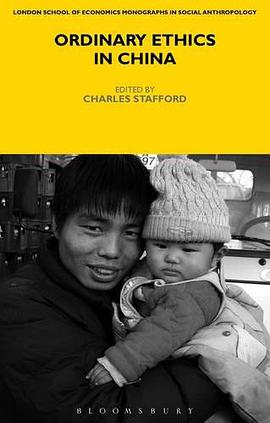
Ordinary Ethics in China
Douban
Charles Stafford publishing house: Bloomsbury Academic 2013 - 4
Drawing on a wide range of anthropological case studies, this book focuses on ordinary ethics in contemporary China. The book examines the kinds of moral and ethical issues that emerge (sometimes almost unnoticed) in the flow of everyday life in Chinese communities. How are schoolchildren judged to be good or bad by their teachers and their peers - and how should a 'bad' student be dealt with? What exactly do children owe their parents, and how should this debt be repaid? Is it morally acceptable to be jealous if one's neighbours suddenly become rich? Should the wrongs of the past be forgotten, e.g. in the interests of communal harmony, or should they be dealt with now? In the case of China, such questions have obviously been shaped by the historical contexts against which they have been posed, and by the weight of various Chinese traditions. But this book approaches them on a human scale. More specifically, it approaches them from an anthropological perspective, based on participation in the flow of everyday life during ethnographic fieldwork in Chinese communities.
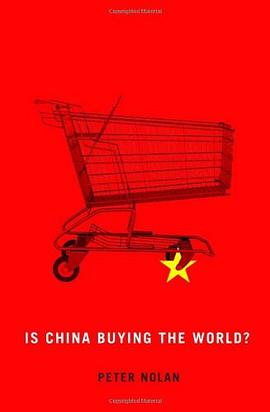
Is China Buying the World?
Douban
Peter Nolan publishing house: Polity Press 2012 - 5
China has become the world's second biggest economy and its largest exporter. It possesses the world's largest foreign exchange reserves and has 29 companies in the FT 500 list of the world's largest companies. ‘China's Rise' preoccupies the global media, which regularly carry articles suggesting that it is using its financial resources to ‘buy the world'. Is there any truth to this idea? Or is this just scaremongering by Western commentators who have little interest in a balanced presentation of China's role in the global political economy? In this short book Peter Nolan - one of the leading international experts on China and the global economy - probes behind the media rhetoric and shows that the idea that China is buying the world is a myth. Since the 1970s the global business revolution has resulted in an unprecedented degree of industrial concentration. Giant firms from high income countries with leading technologies and brands have greatly increased their investments in developing countries, with China at the forefront. Multinational companies account for over two-thirds of China's high technology output and over ninety percent of its high technology exports. Global firms are deep inside the Chinese business system and are pressing China hard to be permitted to increase their presence without restraints. By contrast, Chinese firms have a negligible presence in the high-income countries - in other words, we are ‘inside them' but they are not yet ‘inside us'. China's 70-odd ‘national champion' firms are protected by the government through state ownership and other support measures. They are in industries such as banking, metals, mining, oil, power, construction, transport, and telecommunications, which tend to make use of high technology products rather than produce these products themselves. Their growth has been based on the rapidly growing home market. China has been unsuccessful so far in its efforts to nurture a group of globally competitive firms with leading global technologies and brands. Whether it will be successful in the future is an open question. This balanced analysis replaces rhetoric with evidence and argument. It provides a much-needed perspective on current debates about China's growing power and it will contribute to a constructive dialogue between China and the West.