Education
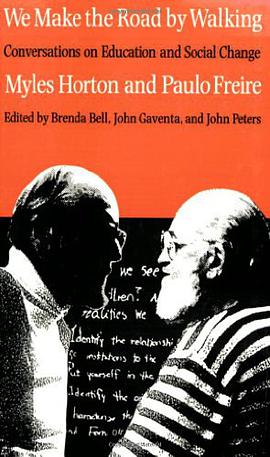
We Make the Road by Walking
Douban
Myles Horton / Paulo Freire publishing house: Temple University Press 1991 - 8
This dialogue between two of the most prominent thinkers on social change in the twentieth century was certainly a meeting of giants. Throughout their highly personal conversations recorded here, Horton and Freire discuss the nature of social change and empowerment and their individual literacy campaigns. The ideas of these men developed through two very different channels: Horton's, from the Highlander Center, a small, independent residential education center situated outside the formal schooling system and the state; Freire's, from within university and state-sponsored programs. Myles Horton, who died in January 1990, was a major figure in the civil rights movement and founder of the Highlander Folk School, later the highlander Research and Education Center. Paulo Freire, author of Pedagogy of the Oppressed, established the Popular Culture Movement in Recife, Brazil's poorest region, and later was named head of the New National Literacy Campaign until a military coup forced his exile from Brazil. He has been active in educational development programs worldwide. For both men, real liberation is achieved through popular participation. The themes they discuss illuminate problems faced by educators and activists around the world who are concerned with linking participatory education to the practice of liberation and social change. How could two men, working in such different social spaces and times, arrive at similar ideas and methods? These conversations answer that question in rich detail and engaging anecdotes, and show that, underlying the philosophy of both, is the idea that theory emanates from practice and that knowledge grows from and is a reflection of social experience.
Cribsheet
Douban
Emily Oster publishing house: Penguin Press 2019 - 4
With Expecting Better, award-winning economist Emily Oster spotted a need in the pregnancy market for advice that gave women the information they needed to make the best decision for their own pregnancies. By digging into the data, Oster found that much of the conventional pregnancy wisdom was wrong. In Cribsheet, she now tackles an even greater challenge: decision-making in the early years of parenting. As any new parent knows, there is an abundance of often-conflicting advice hurled at you from doctors, family, friends, and strangers on the internet. From the earliest days, parents get the message that they must make certain choices around feeding, sleep, and schedule or all will be lost. There's a rule—or three—for everything. But the benefits of these choices can be overstated, and the trade-offs can be profound. How do you make your own best decision? Armed with the data, Oster finds that the conventional wisdom doesn't always hold up. She debunks myths around breastfeeding (not a panacea), sleep training (not so bad!), potty training (wait until they're ready or possibly bribe with M&Ms), language acquisition (early talkers aren't necessarily geniuses), and many other topics. She also shows parents how to think through freighted questions like if and how to go back to work, how to think about toddler discipline, and how to have a relationship and parent at the same time. Economics is the science of decision-making, and CRIBSHEET is a thinking parent's guide to the chaos and frequent misinformation of the early years. Emily Oster is a trained expert—and mom of two—who can empower us to make better, less fraught decisions—and stay sane in the years before preschool.
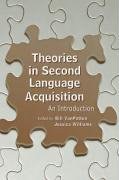
Theories in Second Language Acquisition
Douban
VanPatten, Bill (EDT)/ Williams, Jessica (EDT) publishing house: Routledge 2006 - 10
Theories in Second Language Acquisition surveys the major theoretical approaches currently used in second language acquisition (SLA) research, providing a systematic and coherent presentation in a single source. Each chapter follows a consistent chapter model constructed around the same set of questions, including "What is the Theory?" "What are the major constructs?" "What counts as evidence?" "What are the common misunderstandings about the theory?" The answers to these questions are written at a basic level by a leading expert in the respective theoretical model. As a result, the volume as a whole presents complex ideas in an accessible manner. The book's methodical format allows for easy comparison of approaches. Topics of discussion throughout include: *early theories in SLA; *linguistic theory, universal grammar, and SLA; *the concept-oriented approach; *the associative-cognitive creed; *skill acquisition theory; and *processibility theory and autonomous induction. Intended to serve as an introductory textbook for advanced undergraduate and beginning graduate students, Theories in Second Language Acquisition is an exceptionally thorough resource that effectively expounds the theoretical foundations of the field.
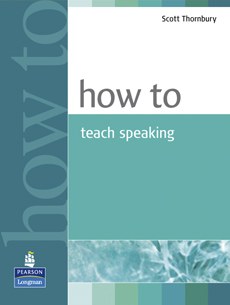
How To Teach Speaking
Douban
THORNBURY publishing house: Prentice Hall 2005 - 11
*Examines the different approaches and activities that can be used for teaching and testing speaking *Covers areas of speech such as articulation, fluency and register *Looks at classroom approaches such as drilling, discussions, drama, dialogues and conversation