economics
Poor Economics
Poor Economics : A Radical Rethinking of the Way to Fight Global Poverty Douban Goodreads Goodreads Skybridge
★ 8.7 11 ratings
Abhijit Banerjee / Esther Duflo publishing house: PublicAffairs 2011 - 4 other title: Poor Economics: A Radical Rethinking of the Way to Fight Global Poverty
Winner of the 2011 Financial Times/Goldman Sachs Best Business Book of the Year Award Billions of government dollars, and thousands of charitable organizations and NGOs, are dedicated to helping the world's poor. But much of their work is based on assumptions that are untested generalizations at best, harmful misperceptions at worst. Abhijit Banerjee and Esther Duflo have pioneered the use of randomized control trials in development economics. Work based on these principles, supervised by the Poverty Action Lab, is being carried out in dozens of countries. Drawing on this and their 15 years of research from Chile to India, Kenya to Indonesia, they have identified wholly new aspects of the behavior of poor people, their needs, and the way that aid or financial investment can affect their lives. Their work defies certain presumptions: that microfinance is a cure-all, that schooling equals learning, that poverty at the level of 99 cents a day is just a more extreme version of the experience any of us have when our income falls uncomfortably low. This important book illuminates how the poor live, and offers all of us an opportunity to think of a world beyond poverty. Learn more at www.pooreconomics.com
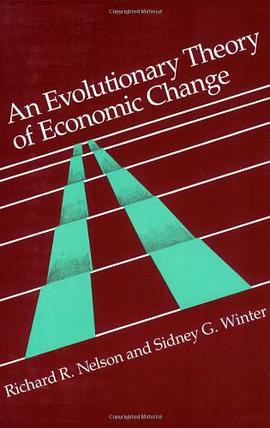
An Evolutionary Theory of Economic Change
Douban
Richard R. Nelson / Sidney G. Winter publishing house: Belknap Press 1985 - 10
This book contains the most sustained and serious attack on mainstream, neoclassical economics in more than forty years. Nelson and Winter focus their critique on the basic question of how firms and industries change overtime. They marshal significant objections to the fundamental neoclassical assumptions of profit maximization and market equilibrium, which they find ineffective in the analysis of technological innovation and the dynamics of competition among firms. To replace these assumptions, they borrow from biology the concept of natural selection to construct a precise and detailed evolutionary theory of business behavior. They grant that films are motivated by profit and engage in search for ways of improving profits, but they do not consider them to be profit maximizing. Likewise, they emphasize the tendency for the more profitable firms to drive the less profitable ones out of business, but they do not focus their analysis on hypothetical states of industry equilibrium. The results of their new paradigm and analytical framework are impressive. Not only have they been able to develop more coherent and powerful models of competitive firm dynamics under conditions of growth and technological change, but their approach is compatible with findings in psychology and other social sciences. Finally, their work has important implications for welfare economics and for government policy toward industry.