milesdavis
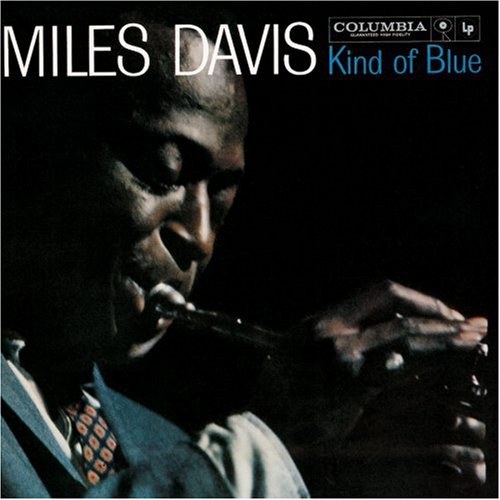
Kind of Blue
Douban Douban
★ 9.8 5 ratings
Miles Davis genre: Jazz
release date 1959-01-01 publisher: Columbia / Legacy
This is the one jazz record owned by people who don't listen to jazz, and with good reason. The band itself is extraordinary (proof of Miles Davis's masterful casting skills, if not of God's existence), listing John Coltrane and Julian "Cannonball" Adderley on saxophones, Bill Evans (or, on "Freddie Freeloader," Wynton Kelly) on piano, and the crack rhythm unit of Paul Chambers on bass and Jimmy Cobb on drums. Coltrane's astringency on tenor is counterpoised to Adderley's funky self on alto, with Davis moderating between them as Bill Evans conjures up a still lake of sound on which they walk. Meanwhile, the rhythm partnership of Cobb and Chambers is prepared to click off time until eternity. It was the key recording of what became modal jazz, a music free of the fixed harmonies and forms of pop songs. In Davis's men's hands it was a weightless music, but one that refused to fade into the background. In retrospect every note seems perfect, and each piece moves inexorably towards its destiny. 《The birth of the Cool(酷的诞生)》,酷派爵士(Cool Jazz)的正名之作。
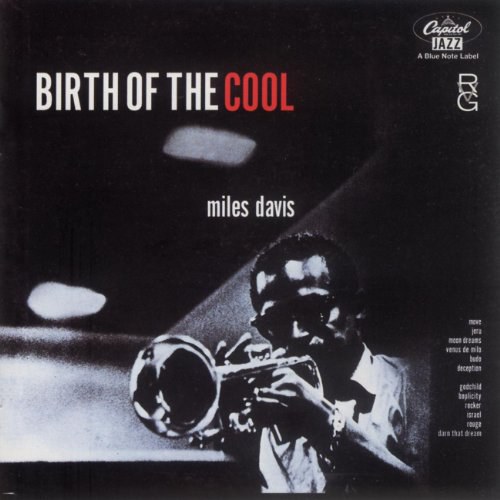
The Birth Of The Cool
Douban
★ 9.2 23 ratings
Miles Davis genre: Jazz
release date 1957-01-01 publisher: Capitol Records
So dubbed because these three sessions -- two from early 1949, one from March 1950 -- are where the sound known as cool jazz essentially formed, The Birth of the Cool remains one of the defining, pivotal moments in jazz. This is where the elasticity of bop was married with skillful, big-band arrangements and a relaxed, subdued mood that made it all seem easy, even at its most intricate. After all, there's a reason why this music was called cool; it has a hip, detached elegance, never getting too hot, even as the rhythms skip and jump. Indeed, the most remarkable thing about these sessions -- arranged by Gil Evansand featuring such heavy-hitters as Kai Winding, Gerry Mulligan, Lee Konitz, and Max Roach-- is that they sound intimate, as the nonet never pushes too hard, never sounds like the work of nine musicians. Furthermore, the group keeps things short and concise (probably the result of the running time of singles, but the results are the same), which keeps the focus on the tones and tunes. The virtuosity led to relaxing, stylish mood music as the end result -- the very thing that came to define West Coast or "cool" jazz -- but this music is so inventive, it remains alluring even after its influence has been thoroughly absorbed into the mainstream