
电子书
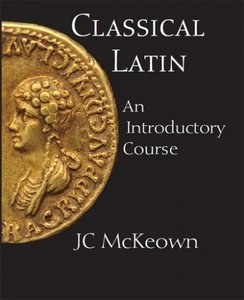
Classical Latin
Douban
J.C. McKeown
publishing house:
Hackett Publishing Co.; Bilingual edition
2010
- 3
Extensively field-tested and fine-tuned over many years, and designed specifically for a one-year course, JC McKeown's Classical Latin: An Introductory Course offers a thorough, fascinating, and playful grounding in Latin that combines the traditional grammatical method with the reading approach.
In addition to grammar, paradigms, and readings, each chapter includes a variety of extraordinarily well-crafted exercises that reinforce the grammar and morphology while encouraging the joy of linguistic and cultural discovery.
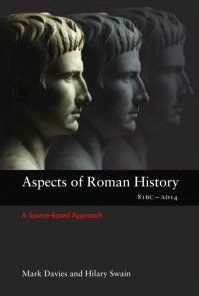
Aspects of Roman History 82BC-AD14
Douban
Davies, Mark Everson; Swain, Hilary
2010
- 6
"Aspects of Roman History 82BC--AD14" examines the political and military history of Rome and its empire in the Ciceronian and Augustan ages. It is an indispensable introduction to this central period of Roman History for all students of Roman history, from pre-university to undergraduate level. This is the first book since H.H. Scullard's "From the Gracchi to Nero", published two generations ago, to offer a full introductory account of one of the most compelling and vital periods in the history of Europe. "Aspects of Roman History 82BC--AD14": brings to life the great figures of Pompey, Caesar, Antony, Cleopatra and Augustus, and explores how power was gained, used and abused; covers the lives of women and slaves, the running of the empire and the lives of provincials, and religion, culture and propaganda; offers both a survey of the main topics and a detailed narrative through the close examination of sources; and, introduces students to the problems of interpreting evidence, and helps develop the knowledge and skills needed to further the study of ancient history.
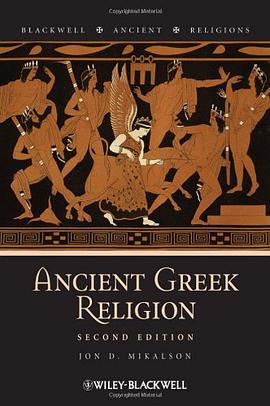
Ancient Greek Religion
Douban
Jon D. Mikalson
publishing house:
Wiley-Blackwell
2009
- 7
Ancient Greek Religion provides an introduction to the fundamental beliefs, practices, and major deities of Greek religion. Focuses on Athens in the classical period Includes detailed discussion of Greek gods and heroes, myth and cult, and vivid descriptions of Greek religion as it was practiced Ancient texts are presented in boxes to promote thought and discussion, and abundant illustrations help readers visualize the rich and varied religious life of ancient Greece Revised edition includes additional boxed texts and bibliography, an 8-page color plate section, a new discussion of the nature of Greek “piety,” and a new chapter on Greek Religion and Greek Culture

Deep Simplicity
Douban
John Gribbin
publishing house:
Random House
2005
- 4
Over the past two decades, no field of scientific inquiry has had a more striking impact across a wide array of disciplines–from biology to physics, computing to meteorology–than that known as chaos and complexity, the study of complex systems. Now astrophysicist John Gribbin draws on his expertise to explore, in prose that communicates not only the wonder but the substance of cutting-edge science, the principles behind chaos and complexity. He reveals the remarkable ways these two revolutionary theories have been applied over the last twenty years to explain all sorts of phenomena–from weather patterns to mass extinctions.
Grounding these paradigm-shifting ideas in their historical context, Gribbin also traces their development from Newton to Darwin to Lorenz, Prigogine, and Lovelock, demonstrating how–far from overturning all that has gone before–chaos and complexity are the triumphant extensions of simple scientific laws. Ultimately, Gribbin illustrates how chaos and complexity permeate the universe on every scale, governing the evolution of life and galaxies alike.
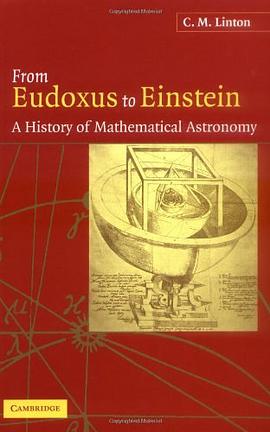
From Eudoxus to Einstein
Douban
Linton, C. M.
2004
- 9
Since humans first looked towards the heavens, they have attempted to predict and explain the motions of the sun, moon, and planets. This book describes the theories of planetary motion that have been developed through the ages, from the homocentric spheres of Eudoxus to Einstein's general theory of relativity. It emphasizes the interaction between progress in astronomy and in mathematics, demonstrating how the two have been inextricably linked since Babylonian times.

Galaxy Formation
Douban
Malcolm S. Longair
publishing house:
Springer
2008
- 1
Accounting for the enormous and amazing development cosmology has made in the past ten years, this long awaited second edition of Malcolm Longair's highly appreciated textbook has been extensively and thoroughly updated.It tells the story of modern astrophysical cosmology from the perspective of one of its most important and fundamental problems a " how did the galaxies come about? Longair uses this approach to introduce the whole of what may be called "classical cosmology." Moreover he describes how the study of the origin of galaxies and larger-scale structures in the Universe has provided us with unique and direct information about the physics of the very early Universe.The material is presented in an informal pedagogical manner. This includes a comprehensive introduction to relativistic astrophysics needed for the clarification of cosmological ideas.
From the Universe to the Elementary Particles
Douban
Ulrich Ellwanger
publishing house:
Springer
2012
- 1
10 Questions Science Can't Answer Yet; a Guide to the Scientific Wilderness
Douban
Michael Hanlon
publishing house:
Palgrave Macmillan
2007
- 5
Here are ten examples of the different kinds of mysteries scientists have yet to crack, some plausible theories and a few less likely ones. Find out why these questions, and others like them, remain, and when- or indeed whether- we might get some answers. Take a tour of how some of the big gaps in our knowledge are being probed and how much there is still to know.
Food Revolution
Douban
John Robbins
publishing house:
Conari Press
2010
- 11
John Robbins, the man who started the "food revolution" with the ground-breaking Diet for a New America, boldly posits that, collectively, our personal diet can save ourselves and the world. His latest book presents compelling new information regarding the fields of nutrition, heart disease and cancer, agribusiness, and bioengineering. It discusses the latest discoveries about the relationships between diet and longevity, aging, and vitality. Armed with powerful statistics, fascinating viewpoints, and incisive exposes, Robbins argues for adopting a vegetarian diet for personal well-being as well as for the well-being of the planet.
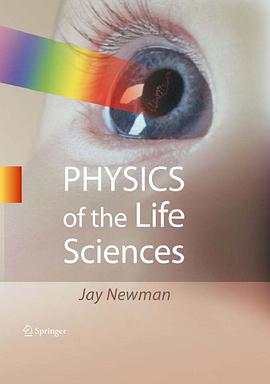
Physics of the Life Sciences
Douban
Jay Newman
publishing house:
Springer
2008
This textbook has its origins in a course that I began developing at Union College
in the mid-1980s to teach physics to life science students in a way that would interest
them and show the connections of fundamental physics to modern biology and
medicine. From my own research experiences and interests in biophysics, I know
that almost all areas of modern life sciences integrally involve physics in both
experimental techniques and in basic understanding of process or function.
However, I and many colleagues with whom I have spoken have been unhappy over
the years with published attempts to direct a textbook to this audience. Most such
texts are watered down engineering physics books with occasional added sections
on related biology topics that are easy to skip over or assign students to read on
their own.
As I set out to write this textbook, I had certain definite goals in mind. I wanted
to write a book that was truly directed at life science students, one that integrated
modern biology, biophysics, and medical techniques into the presentation of the material.
Believing in the less is more credo, I chose to omit certain standard topics that are
usually included in texts for this audience, while expanding on topics that have more
relevance to the life and biomedical sciences. From my experience teaching to these
students, I also wanted a book that would be shorter and could be fully covered in a
two-semester course. Although students at Union College and comparable institutions
taking this introductory course have all had some calculus, only algebra and trigonometry
are used in the main body of the text. At this level, I believe that calculus adds little
to the understanding of the material and can detract from focusing on the basic
physical ideas. However, I have sprinkled in optional boxed calculations that do use
some calculus where I felt they truly added to the discussion (averaging less than one
box per chapter). These “sidebars” can be omitted without any loss of continuity.
The order of topics for this text follows a more or less traditional sequence. An
exception to this is the presentation of one-dimensional mechanics through forces
and energy before introducing vectors and generalizing to motion in more than one
dimension. This allows students to focus on the physics concepts of kinematics,
forces, and energy without being distracted by the ideas of vector analysis.
Beyond the order of topics, the presentation of material is unique in that, wherever
possible, themes from biology or medicine are used to present the physics material. The
material speaks to life science students. Rather than optional sections at the end of occasional
chapters, life science themes are plentiful and integral to the text. The role of these
topics here is more fundamental, as can be gleaned from a list of some examples.
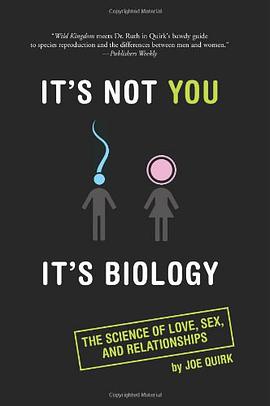
It's Not You, It's Biology.
Douban
Joe Quirk
publishing house:
Running Press
2008
- 9
At last, here’s what you should’ve learned in high school biology! This paperback edition is an Everyman’s humorous look at the real differencesbiological, historical, psychologicalbetween men and womenwith fun and provocative insight into what really drives behavior and interactions between men and women. Men talk about women to men. Women talk about men to women. Men and women talk to each other (or try to) about relationships. It’s Not You, It’s Biology provides insight, ammunition, snappy comebacks, and interesting cocktail party banter for everyone who ever wondered why we do what we do vis-a-vis the opposite sex. It’s Freakonomics for the Relationship-Challenged.
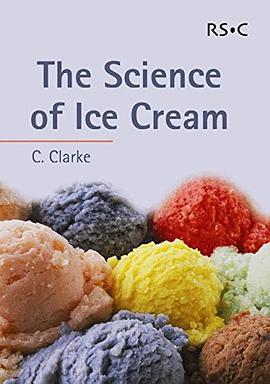
The Science of Ice Cream
Douban
Chris Clarke
publishing house:
Royal Society of Chemistry
2004
- 10
Ice cream as we recognize it today has been in existence for at least 300 years, though its origins probably go much further back in time. Though no one knows who invented ice cream. The first ice cream making machine was invented by Nancy Johnson, of Philadelphia, in the 1840s. The Science of Ice Cream begins with an introductory chapter on the history of ice cream. Subsequent chapters outline the physical chemistry underlying its manufacture, describe the ingredients and industrial production of ice cream and ice cream products respectively, detail the wide range of different physical and sensory techniques used to measure and assess ice cream, describe its microstructure (i.e. ice crystals, air bubbles, fat droplets and sugar solution), and how this relates to the physical properties and ultimately the texture that you experience when you eat it. Finally, some suggestions are provided for experiments relating to ice cream and ways to make ice cream at home or in a school laboratory. The Science of Ice Cream is ideal for undergraduate food science students as well as for people working in the ice cream industry. It is also accessible to the general reader who has studied science to A level and provides teachers with ideas for using ice cream to illustrate scientific principles.

Cooking for Geeks
Douban
Jeff Potter
publishing house:
O'Reilly Media
2010
- 8
Are you the innovative type, the cook who marches to a different drummer -- used to expressing your creativity instead of just following recipes? Are you interested in the science behind what happens to food while it's cooking? Do you want to learn what makes a recipe work so you can improvise and create your own unique dish?
More than just a cookbook, Cooking for Geeks applies your curiosity to discovery, inspiration, and invention in the kitchen. Why is medium-rare steak so popular? Why do we bake some things at 350 F/175 C and others at 375 F/190 C? And how quickly does a pizza cook if we overclock an oven to 1,000 F/540 C? Author and cooking geek Jeff Potter provides the answers and offers a unique take on recipes -- from the sweet (a "mean" chocolate chip cookie) to the savory (duck confit sugo).
This book is an excellent and intriguing resource for anyone who wants to experiment with cooking, even if you don't consider yourself a geek.
Initialize your kitchen and calibrate your tools
Learn about the important reactions in cooking, such as protein denaturation, Maillard reactions, and caramelization, and how they impact the foods we cook
Play with your food using hydrocolloids and sous vide cooking
Gain firsthand insights from interviews with researchers, food scientists, knife experts, chefs, writers, and more, including author Harold McGee, TV personality Adam Savage, chemist Hervé This, and xkcd