制造业
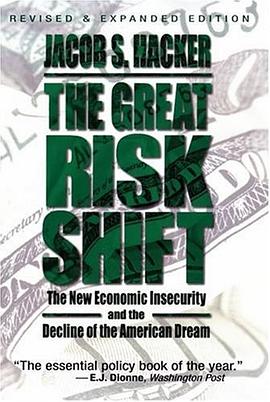
The Great Risk Shift
Douban
Jacob S. Hacker publishing house: Oxford University Press, USA 2008 - 1
America's leaders say the economy is strong and getting stronger. But the safety net that once protected us is fast unraveling. With retirement plans in growing jeopardy while health coverage erodes, more and more economic risk is shifting from government and business onto the fragile shoulders of the American family. In The Great Risk Shift , Jacob S. Hacker lays bare this unsettling new economic climate, showing how it has come about, what it is doing to our families, and how we can fight back. Behind this shift, he contends, is the Personal Responsibility Crusade, eagerly embraced by corporate leaders and Republican politicians who speak of a nirvana of economic empowerment, an "ownership society" in which Americans are free to choose. But as Hacker reveals, the result has been quite different: a harsh new world of economic insecurity, in which far too many Americans are free to lose. The book documents how two great pillars of economic security--the family and the workplace--guarantee far less financial stability than they once did. The final leg of economic support--the public and private benefits that workers and families get when economic disaster strikes--has dangerously eroded as political leaders and corporations increasingly cut back protections of our health care, our income security, and our retirement pensions. Blending powerful human stories, big-picture analysis, and compelling ideas for reform, this remarkable volume will hit a nerve, serving as a rallying point in the vital struggle for economic security in an increasingly uncertain world.
Read
Jan. 27, 2022
非常棒,把视角从单纯的不平等移到风险范式的转变。题外话,在比较视野下,美国的社会保障制度从各方面几乎都是最糟糕的,大量倾向于雇主而非雇员。其引申意义可以自己考虑一下。
制造业 美国 政治学
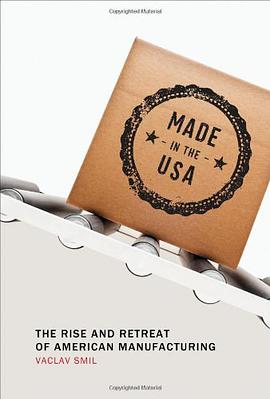
Made in the USA
Douban
Vaclav Smil publishing house: The MIT Press 2013 - 8
Read
Jan. 27, 2022
当成美国制造业的兴衰史读还不错。抓住了几个关键节点和事件。但作为理解制造业衰退的解释还不够(在这个问题上经学家出奇的天真)。
制造业 历史
America's Assembly Line
Douban
David E. Nye publishing house: MIT Press 2013 - 2
The assembly line was invented in 1913 and has been in continuous operation ever since. It is the most familiar form of mass production. Both praised as a boon to workers and condemned for exploiting them, it has been celebrated and satirized. (We can still picture Chaplin's little tramp trying to keep up with a factory conveyor belt.) In America's Assembly Line, David Nye examines the industrial innovation that made the United States productive and wealthy in the twentieth century. The assembly line -- developed at the Ford Motor Company in 1913 for the mass production of Model Ts -- first created and then served an expanding mass market. It inspired fiction, paintings, photographs, comedy, cafeteria layouts, and cookie-cutter suburban housing. It also transformed industrial labor and provoked strikes and union drives. During World War II and the Cold War, it was often seen as a bastion of liberty and capitalism. By 1980, Japan had reinvented the assembly line as a system of "lean manufacturing"; American industry reluctantly adopted this new approach. Nye describes this evolution and the new global landscape of increasingly automated factories, with fewer industrial jobs in America and questionable working conditions in developing countries. A century after Ford's pioneering innovation, the assembly line continues to evolve toward more sustainable manufacturing.
Read
Jan. 28, 2022
非常值得推荐。对于工业大生产的剖析非常透,当然,正如书的主题所说,主要围绕福特制和汽车行业展开,我个人感觉其代表性足够了。从历史的角度看,美国式的大规模理性化流水线其实挺短命的──依赖于卖方市场和廉价能源,这两个条件成立的时间可以自己算算。一旦跳出耐用品市场,在消费品领域便竞争不过欧洲、日本以及后来的中国。至于为什么如此,书里还有详细描述。
职业社会学 历史 制造业 技术史 经济史
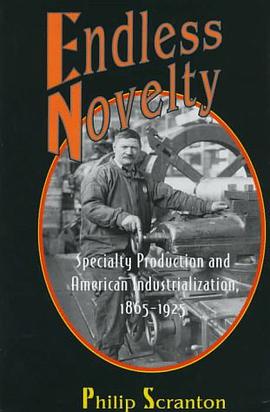
Endless Novelty
Douban
Scranton, Philip 1997 - 10
"A tremendously important book, one that attempts to redirect the thrust of scholarship in the area of business and economic history."--John N. Ingham, University of TorontoFlexibility, specialization, and niche marketing are buzzwords in the business literature these days, yet few realize that it was these elements that helped the United States first emerge as a global manufacturing leader between the Civil War and World War I. The huge mass production- based businesses--steel, oil, and autos--have long been given sole credit for this emergence. In Endless Novelty, Philip Scranton boldly recasts the history of this vital episode in the development of American business, known as the nation's second industrial revolution, by considering the crucial impact of trades featuring specialty, not standardized, production. Scranton takes us on a grand tour through American specialty firms and districts, where, for example, we meet printers and jewelry makers in New York and Providence, furniture builders in Grand Rapids, and tool specialists in Cincinnati. Throughout he highlights the benevolent as well as the strained relationships between workers and proprietors, the lively interactions among entrepreneurs and city leaders, and the personal achievements of industrial engineers like Frederic W. Taylor.Scranton shows that in sectors producing goods such as furniture, jewelry, machine tools, and electrical equipment, firms made goods to order or in batches, and industrial districts and networks flourished, creating millions of jobs. These enterprises relied on flexibility, skilled labor, close interactions with clients, suppliers, and rivals, and opportunistic pricing to generate profit streams.They built interfirm alliances to manage markets and fashioned specialized institutions--trade schools, industrial banks, labor bureaus, and sales consortia. In creating regional synergies and economies of scope and diversity, the approaches of these industrial firms represent the inverse of mass production.Challenging views of company organization that have come to dominate the business world in the United States, Endless Novelty will appeal to historians, business leaders, and to anyone curious about the structure of American industry.
Read
Jan. 28, 2022
打破了一个迷信,「第二次工业革命就是大生产和媒体革命」。很令人信服地例证了specialty manufacturing 是美国产业革命中同样重要的组成部分:火车头、传送带、金属加工设备、排版系统、装修、首饰等等。这是一套和流水线不同的经济逻辑。但有一个重要的问题没回答:这是一套「系统」 吗?一种生产方式?那这套系统和社会的其他部门(教育、社会保障)如何互动?面对进口冲击时又如何回应?btw,这本书的成书经过堪称传奇。
制造业 十九世纪 职业社会学 历史