当代中国
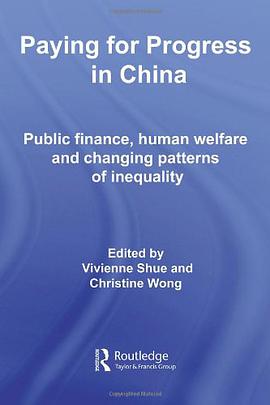
Paying for Progress in China
Douban
Vivienne Shue / Christine Wong publishing house: Routledge 2007 - 5
China’s stunning record of economic development since the 1970s has been marred by an increasingly obvious gap between the country’s ‘haves’ and its ‘have-nots’. While people living in some parts of the country have enjoyed dramatically improved conditions of life, those in other districts and regions have slipped ever further behind in terms of access to health, wealth, education, security and opportunity. Paying for Progress in China is a collection of essays which trace the causes of this growing inequality, using new data including surveys, interviews, newly available official statistics and in-depth fieldwork. Their findings expose the malfunctioning of China’s ‘broken’ intergovernmental fiscal system, which has exacerbated the disequalizing effects of emerging market forces. Whilst the government’s deliberately ‘pro-poor’ development policies have in recent years sought to reduce the gap between rich and poor, both markets, and also state institutions and policies, are continuing to create perverse equity outcomes across the country, confounding hopes for better-balanced and more inclusive growth in China. The interdisciplinary approach of this collection, incorporating work by economists, sociologists and political scientists, makes it a valuable resource for students of contemporary Chinese political economy and social development.
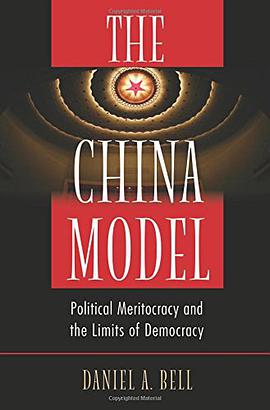
The China Model
Douban
Daniel A. Bell publishing house: Princeton University Press 2015 - 6
Westerners tend to divide the political world into "good" democracies and "bad" authoritarian regimes. But the Chinese political model does not fit neatly in either category. Over the past three decades, China has evolved a political system that can best be described as "political meritocracy." The China Model seeks to understand the ideals and the reality of this unique political system. How do the ideals of political meritocracy set the standard for evaluating political progress (and regress) in China? How can China avoid the disadvantages of political meritocracy? And how can political meritocracy best be combined with democracy? Daniel Bell answers these questions and more. Opening with a critique of "one person, one vote" as a way of choosing top leaders, Bell argues that Chinese-style political meritocracy can help to remedy the key flaws of electoral democracy. He discusses the advantages and pitfalls of political meritocracy, distinguishes between different ways of combining meritocracy and democracy, and argues that China has evolved a model of democratic meritocracy that is morally desirable and politically stable. Bell summarizes and evaluates the "China model"—meritocracy at the top, experimentation in the middle, and democracy at the bottom—and its implications for the rest of the world. A timely and original book that will stir up interest and debate, The China Model looks at a political system that not only has had a long history in China, but could prove to be the most important political development of the twenty-first century.
Read
Dec. 17, 2016
corruption, ossification, legitimacy 按照老赵的说法就是典型文科生思维,这三个轴不正交啊……
政治哲学 当代中国