研究方法
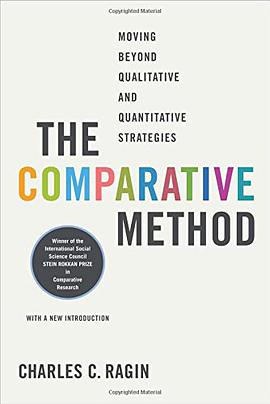
The Comparative Method
Douban
Charles C. Ragin
publishing house:
University of California Press
2014
- 7
Charles C. Ragin’s The Comparative Method proposes a synthetic strategy, based on an application of Boolean algebra, that combines the strengths of both qualitative and quantitative sociology. Elegantly accessible and germane to the work of all the social sciences, and now updated with a new introduction, this book will continue to garner interest, debate, and praise.

Data Analysis in Qualitative Research
Douban
Iddo Tavory
/
Stefan Timmermans
publishing house:
University of Chicago Press
From two experts in the field comes an accessible, how-to guide that will help researchers think more productively about the relation between theory and data at every stage of their work.
In Data Analysis in Qualitative Research, Iddo Tavory and Stefan Timmermans provide a how-to guide filled with tricks of the trade for researchers who hope to take excellent qualitative data and transform it into powerful scholarship. In their previous book, Abductive Analysis: Theorizing Qualitative Research, Timmermans and Tavory offered a toolkit for innovative theorizing in the social sciences. In this companion, they go one step further to show how to uncover the surprising revelations that lie waiting in qualitative data—in sociology and beyond.
In this book, they lay out a series of tools designed to help both novice and expert scholars see and understand their data in surprising ways. Timmermans and Tavory show researchers how to “stack the deck” of qualitative research in favor of locating surprising findings that may lead to theoretical breakthroughs, whether by engaging with theory, discussing research strategies, or walking the reader through the process of coding data. From beginning to end of a research project, Data Analysis in Qualitative Research helps social scientists pinpoint the most promising paths to take in their approach.
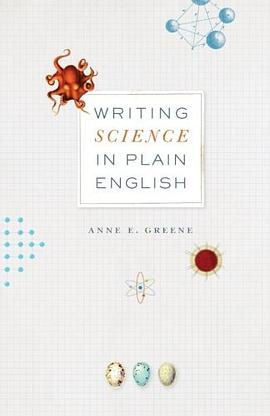
Writing Science in Plain English
Douban
Anne E. Greene
publishing house:
University Of Chicago Press
2013
- 5
Scientific writing is often dry, wordy, and difficult to understand. But, as Anne E. Greene shows in Writing Science in Plain English,writers from all scientific disciplines can learn to produce clear, concise prose by mastering just a few simple principles.
This short, focused guide presents a dozen such principles based on what readers need in order to understand complex information, including concrete subjects, strong verbs, consistent terms, and organized paragraphs. The author, a biologist and an experienced teacher of scientific writing, illustrates each principle with real-life examples of both good and bad writing and shows how to revise bad writing to make it clearer and more concise. She ends each chapter with practice exercises so that readers can come away with new writing skills after just one sitting.
Writing Science in Plain English can help writers at all levels of their academic and professional careers―undergraduate students working on research reports, established scientists writing articles and grant proposals, or agency employees working to follow the Plain Writing Act. This essential resource is the perfect companion for all who seek to write science effectively.

On Revision
Douban
William Germano
publishing house:
University of Chicago Press
2021
- 10
A trusted editor turns his attention to the most important part of writing: revision.
So you’ve just finished writing something? Congratulations! Now revise it. Because revision is about getting from good to better, and it’s only finished when you decide to stop. But where to begin? In On Revision, William Germano shows authors how to take on the most critical stage of writing anything: rewriting it.
For more than twenty years, thousands of writers have turned to Germano for his insider’s take on navigating the world of publishing. A professor, author, and veteran of the book industry, Germano knows what editors want and what writers need to know: Revising is not just correcting typos. Revising is about listening and seeing again. Revising is a rethinking of the principles from the ground up to understand why the writer is doing something, why they’re going somewhere, and why they’re taking the reader along with them.
On Revision steps back to take in the big picture, showing authors how to hear their own writing voice and how to reread their work as if they didn’t write it. On Revision will show you how to know when your writing is actually done—and, until it is, what you need to do to get it there.