
读过 Giving an Account of Oneself 🌕🌕🌕🌑🌑
第2章的注4里巴特勒主动提到了一个未被采用的区分,其来自德勒茲的morality与ethics:前者被说成是价值与判断的而指向着某种超越性;后者则为对存在样态之潜能的自问而指向着某种内在性。这一区分或许在本书这样黑格尔式的曲折——说,由于下面这些关系以及对它们作为自述/自我说明之基础的认识,即,自述/自我说明总是,面向他者、回应传唤、有着其前历史与前存在论、发生于具体的一个历史-社会环境、其不透明的认识中混杂着差异与断裂、支付着代价,所以我们或许可以在对(阿多诺指出的)以普遍性为特征的伦理暴力的批判——以外开辟另一个可能,即,作为,对治理与服从的先天拒绝=去屈从化(désassujettissement),的批判
Book
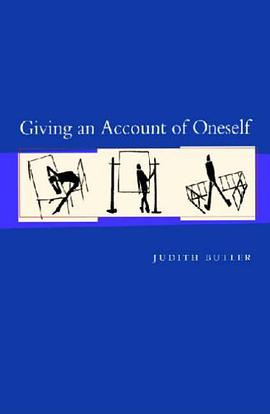
Giving an Account of Oneself
Douban GoodreadsWhat does it mean to lead a moral life?In her first extended study of moral philosophy, Judith Butler offers a provocative outline for a new ethical practice-one responsive to the need for critical autonomy and grounded in a new sense of the human subject.Butler takes as her starting point one's ability to answer the questions What have I done?and What ought I to do?She shows that these question can be answered only by asking a prior question, Who is this 'I' who is under an obligation to give an account of itself and to act in certain ways?Because I find that I cannot give an account of myself without accounting for the social conditions under which I emerge, ethical reflection requires a turn to social theory.In three powerfully crafted and lucidly written chapters, Butler demonstrates how difficult it is to give an account of oneself, and how this lack of self-transparency and narratibility is crucial to an ethical understanding of the human. In brilliant dialogue with Adorno, Levinas, Foucault, and other thinkers, she eloquently argues the limits, possibilities, and dangers of contemporary ethical thought.Butler offers a critique of the moral self, arguing that the transparent, rational, and continuous ethical subject is an impossible construct that seeks to deny the specificity of what it is to be human. We can know ourselves only incompletely, and only in relation to a broader social world that has always preceded us and already shaped us in ways we cannot grasp. If inevitably we are partially opaque to ourselves, how can giving an account of ourselves define the ethical act? And doesn't an ethical system that holds us impossibly accountable for full self-knowledge and self-consistency inflict a kind of psychic violence, leading to a culture of self-beratement and cruelty? How does the turn to social theory offer us a chance to understand the specifically social character of our own unknowingness about ourselves?In this invaluable book, by recasting ethics as a project in which being ethical means becoming critical of norms under which we are asked to act, but which we can never fully choose, Butler illuminates what it means for us as fallible creaturesto create and share an ethics of vulnerability, humility, and ethical responsiveness. Judtith Butler is the Maxine Elliot Professor of Rhetoric and Comparative Literature at the University of California, Berkeley. The most recent of her books are Precarious Life: The Power of Mourning and Violence and Undoing Gender.