读过 Reassembling the Social 🌕🌕🌕🌕🌑
挺好的,算是拉图尔自己对自己的一个充满戏谑的总结了。其实ANT现在看来也没多多么激进,无非是强调一个自下而上的动态视角,即便经常被乱用的给物以agency其实无非也只是强调objects matter。当然,考虑到ANT已经提出几十年了,也许这些我们视为理所当然的学界规律也是ANT发展和被接纳的结果。可以看出来拉图尔非常聪明,对同行的批评非常在点,但他似乎也在很多时候陷入了他提到其他人对STS的树稻草人式批评。我一直在很努力地想一个具体的、把什么东西丢给“social”就结束解释的社会学家,但最终也没想到什么实际的例子。
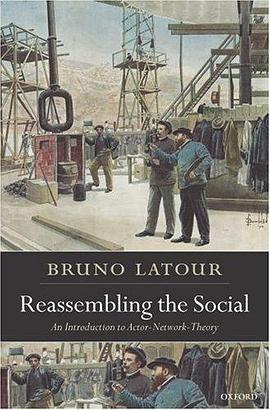
Book
Reassembling the Social Google Books Douban
author:
Bruno Latour
publishing house:
Oxford University Press, USA
2005
- 9
Reassembling the Social is a fundamental challenge from one of the world's leading social theorists to how we understand society and the 'social'. Bruno Latour's contention is that the word 'social' as used by Social Scientists has become laden with assumptions to the point where it has become a misnomer. When the adjective is applied to a phenomenon, it is used to indicate a stabilized state of affairs, a bundle of ties that in due course may be used to account for another phenomenon. Latour also finds the word used as if it described a type of material, in a comparable way to an adjective such as 'wooden' or 'steely'. Rather than simply indicating what is already assembled together, it is now used in a way that makes assumptions about the nature of what is assembled. It has become a word that designates two distinct things: a process of assembling: and a type of material, distinct from others. Latour shows why 'the social' cannot be thought of as a kind of material or domain, and disputes attempts to provide a 'social explanation' of other states of affairs. While these attempts have been productive (and probably necessary) in the past, the very success of the social sciences mean that they are largely no longer so. At the present stage it is no longer possible to inspect the precise constituents entering the social domain. Latour returns to the original meaning of 'the social' to redefine the notion and allow it to trace connections again. It will then be possible to resume the traditional goal of the social sciences, but using more refined tools. Drawing on his extensive work examining the 'assemblages' of nature, Latour finds it necessary to scrutinize thoroughly the exact content of what is assembled under the umbrella of Society. This approach, a 'sociology of associations' has become known as Actor-Network-Theory, and this book is an essential introduction both for those seeking to understand Actor-Network-Theory, or the ideas of one of its most influential proponents.