读过 Making It Count 🌕🌕🌕🌑🌑
对这本书的期待值还挺高,但读下来有点失望。书并不差,但和好似乎距离远了一点。第三四章最有意思,讨论了一些非常具体的本体论、认识论、方法论上的政治(但这些具体的方法带来的社会后果却没细讲,统统纳入完整统计后果中了),除此之外不像是科学史,像是普通的中国史在统计界的应用,因此很多章节对稍稍了解那段历史的人都都没什么新意和信息,很多段落都像是中文报告的翻译(也许有史料的价值?)。经常从对中央或者一些大政的概括突然就转到了地方上实施的成果,而这中间的最有意思的实施过程却都被略过了(不确定是不是因为没有资料),却在另外一些特别奇怪的地方描述详尽(比如某人的行程和教课内容)。标题中令人好奇的”statecraft“也在这种写作中被略过。理论上基本是顺着波特和哈金来讲,也提了曼,但都没什么新的贡献。
Book
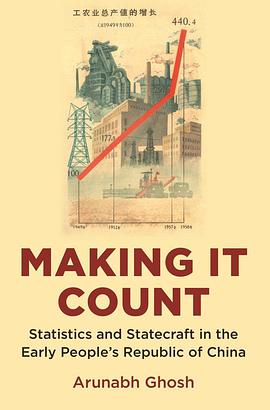
Making It Count
Douban
Arunabh Ghosh
publishing house:
Princeton University Press
2020
- 3
In 1949, at the end of a long period of wars, one of the biggest challenges facing leaders of the new People’s Republic of China was how much they did not know. The government of one of the world’s largest nations was committed to fundamentally reengineering its society and economy via socialist planning while having almost no reliable statistical data about their own country. Making It Count is the history of efforts to resolve this “crisis in counting.” Drawing on a wealth of sources culled from China, India, and the United States, Arunabh Ghosh explores the choices made by political leaders, statisticians, academics, statistical workers, and even literary figures in attempts to know the nation through numbers.
Ghosh shows that early reliance on Soviet-inspired methods of exhaustive enumeration became increasingly untenable in China by the mid-1950s. Unprecedented and unexpected exchanges with Indian statisticians followed, as the Chinese sought to learn about the then-exciting new technology of random sampling. These developments were overtaken by the tumult of the Great Leap Forward (1958–61), when probabilistic and exhaustive methods were rejected and statistics was refashioned into an ethnographic enterprise. By acknowledging Soviet and Indian influences, Ghosh not only revises existing models of Cold War science but also globalizes wider developments in the history of statistics and data.
Anchored in debates about statistics and its relationship to state building, Making It Count offers fresh perspectives on China’s transition to socialism.