a review of 誓言

Movie · Review
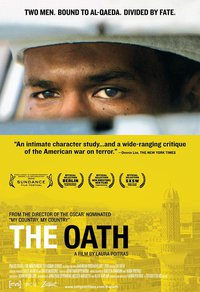
The Oath (2010)edit: there's an interview with poitras where she's specifically asked about the camera in the car. she responds by saying it's amazing because it shows how good of a liar abu jandal is. the interviewer (correctly) pushes back and asks several times basically 'don't you think you put this man in a bad situation, a dangerous situation, where he had to lie'...and poitras just cannot grasp it, she's just so damn proud of herself for showing that he knows how to lie. it's grotesque. original: can't claim to really understand what the point of all this is...in a way, it comes off initially impressive to have collected this series of interviews. and yet, i can't help but wonder whether this footage was collected ethically. there are too many hints that maybe this wasn't consensual. there's the camera in the car, the scene where he lies to his passenger about it being off. there's the scene where he clearly asks her to delete his previous footage and then she includes the entire clip, like a giant middle finger to this man who's life she could be endangering. there are countless scenes with him talking about how destitute he is now. was he at all compensated for his extensive time spent granting her access to his life? to his mind? it's interesting that a filmmaker who makes a film that on the surface critiques coercive interrogation tactics would...not hold herself to some more stringent ethics around interviewing? i'm also not really clear on what the messaging is? yeah, yeah, yeah documentaries are supposed to be "objective"...lolol, we are humans..."objective" is not a real thing, it does not exist within our brains. the narrative reminds me of the whitewashing of martin luther king jr.'s legacy. they wanna teach us all the time in school and on tv and on the radio that he was a devout supporter of "nonviolent" protest. anyone who knows anything knows that to be an erroneous narrative. in the same way, this film seems to be holding abu jandal up as like "one of the good ones". look, he found the truth. look, he doesn't carry a gun anymore. look, he works a job. look, he (kinda) denounces jihad. i don't know what i think about all this, but i certainly think this film is not "objective". completely wild that someone could watch this and think so. how to put a star rating on this? on one hand, i think questionable film making methods, i think, questionable ethics and politics. on the other hand, some of the interviews (like twenty five to thirty five percent) were really compelling. never thought i would lay eyes on something like that. i think on the merits, this deserves a lower rating, but the strength of some of the footage somewhat salvages it.