
读过 Deep Learning 🌕🌕🌕🌕🌗
去年十二月花了五百五十大洋买此书。名副其实的 A Visual Way,完全可视化理论教学!几乎没有数学公式。难度成功下降到了文科生也能读懂。虽然哆嗦但通俗易懂。也意外发现一些机器学习理论其实也没那么难。有得有失,有些理论在可视化后变得很好懂,但也有些理论也省去了数学推导,令人学得不踏实,所以这书只能快速入门用。不过也提供了不错的 references。
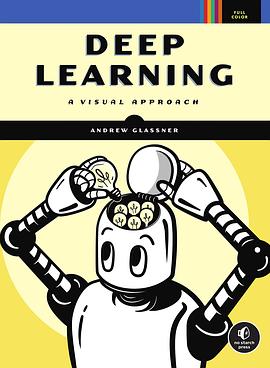
Book
Deep Learning Douban
author:
Andrew Glassner
publishing house:
No Starch Press
2021
- 6
A richly-illustrated, full-color introduction to deep learning that offers visual and conceptual explanations instead of equations. You'll learn how to use key deep learning algorithms without the need for complex math.
Ever since computers began beating us at chess, they've been getting better at a wide range of human activities, from writing songs and generating news articles to helping doctors provide healthcare.
Deep learning is the source of many of these breakthroughs, and its remarkable ability to find patterns hiding in data has made it the fastest growing field in artificial intelligence (AI). Digital assistants on our phones use deep learning to understand and respond intelligently to voice commands; automotive systems use it to safely navigate road hazards; online platforms use it to deliver personalized suggestions for movies and books - the possibilities are endless.
Deep Learning: A Visual Approach is for anyone who wants to understand this fascinating field in depth, but without any of the advanced math and programming usually required to grasp its internals. If you want to know how these tools work, and use them yourself, the answers are all within these pages. And, if you're ready to write your own programs, there are also plenty of supplemental Python notebooks in the accompanying Github repository to get you going.
The book's conversational style, extensive color illustrations, illuminating analogies, and real-world examples expertly explain the key concepts in deep learning, including:
• How text generators create novel stories and articles
• How deep learning systems learn to play and win at human games
• How image classification systems identify objects or people in a photo
• How to think about probabilities in a way that's useful to everyday life
• How to use the machine learning techniques that form the core of modern AI
Intellectual adventurers of all kinds can use the powerful ideas covered in Deep Learning: A Visual Approach to build intelligent systems that help us better understand the world and everyone who lives in it. It's the future of AI, and this book allows you to fully envision it.
Who Should Read This Book
You don’t need math or programming experience. You don’t need to be a computer whiz. You don’t have to be a technologist at all!
This book is for anyone with curiosity and a desire to look behind the headlines. You may be surprised that most of the algorithms of deep learning aren’t very complicated or hard to understand. They’re usually simple and elegant and gain their power by being repeated millions of times over huge databases.
In addition to satisfying pure intellectual curiosity, Glassner wrote this book for people who come face to face with deep learning, either in their own work or when interacting with others who use it. After all, one of the best reasons to understand AI is so we can use it ourselves! We can build AI systems now that help us do our work better, enjoy our hobbies more deeply, and understand the world around us more fully.
If you want to know how this stuff works, you’re going to feel right at home.
Ever since computers began beating us at chess, they've been getting better at a wide range of human activities, from writing songs and generating news articles to helping doctors provide healthcare.
Deep learning is the source of many of these breakthroughs, and its remarkable ability to find patterns hiding in data has made it the fastest growing field in artificial intelligence (AI). Digital assistants on our phones use deep learning to understand and respond intelligently to voice commands; automotive systems use it to safely navigate road hazards; online platforms use it to deliver personalized suggestions for movies and books - the possibilities are endless.
Deep Learning: A Visual Approach is for anyone who wants to understand this fascinating field in depth, but without any of the advanced math and programming usually required to grasp its internals. If you want to know how these tools work, and use them yourself, the answers are all within these pages. And, if you're ready to write your own programs, there are also plenty of supplemental Python notebooks in the accompanying Github repository to get you going.
The book's conversational style, extensive color illustrations, illuminating analogies, and real-world examples expertly explain the key concepts in deep learning, including:
• How text generators create novel stories and articles
• How deep learning systems learn to play and win at human games
• How image classification systems identify objects or people in a photo
• How to think about probabilities in a way that's useful to everyday life
• How to use the machine learning techniques that form the core of modern AI
Intellectual adventurers of all kinds can use the powerful ideas covered in Deep Learning: A Visual Approach to build intelligent systems that help us better understand the world and everyone who lives in it. It's the future of AI, and this book allows you to fully envision it.
Who Should Read This Book
You don’t need math or programming experience. You don’t need to be a computer whiz. You don’t have to be a technologist at all!
This book is for anyone with curiosity and a desire to look behind the headlines. You may be surprised that most of the algorithms of deep learning aren’t very complicated or hard to understand. They’re usually simple and elegant and gain their power by being repeated millions of times over huge databases.
In addition to satisfying pure intellectual curiosity, Glassner wrote this book for people who come face to face with deep learning, either in their own work or when interacting with others who use it. After all, one of the best reasons to understand AI is so we can use it ourselves! We can build AI systems now that help us do our work better, enjoy our hobbies more deeply, and understand the world around us more fully.
If you want to know how this stuff works, you’re going to feel right at home.