
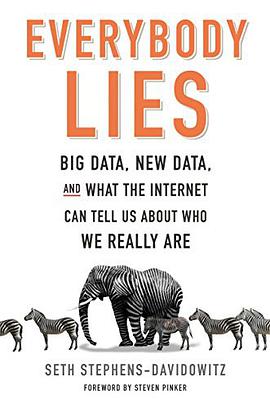
读过《Everybody Lies》 🌕🌕🌕🌕🌕
漫天大雨索性坐在车里把后半本书听完了。听完以后两个最好奇的点,一个是多了两分上清华/北大(或者复旦附中/华二/南外等棒棒高中)和少了两分没上这些学校的人往后的人生数据,另一个是豆瓣想避免被骂可不可以暗搓搓做A/B test……前半段靠轶事吸引public,后半部分开始讲random experiment和data analysis里面的一些基础概念辅以事实。因为跟某曾经做的东西很像,所以整本书听到很多熟悉的东西,虽然social context差别比较大。哎,现在经济学家的一个定义就是会爬数据的statistician啊!很多方向都有创意,我听了超开心的!
Book
Everybody Lies Douban Goodreads
author:
Seth Stephens-Davidowitz
publishing house:
Dey Street Books
2017
- 5
Foreword by Steven Pinker
Blending the informed analysis of The Signal and the Noise with the instructive iconoclasm of Think Like a Freak, a fascinating, illuminating, and witty look at what the vast amounts of information now instantly available to us reveals about ourselves and our world—provided we ask the right questions.
By the end of an average day in the early twenty-first century, human beings searching the internet will amass eight trillion gigabytes of data. This staggering amount of information—unprecedented in history—can tell us a great deal about who we are—the fears, desires, and behaviors that drive us, and the conscious and unconscious decisions we make. From the profound to the mundane, we can gain astonishing knowledge about the human psyche that less than twenty years ago, seemed unfathomable.
Everybody Lies offers fascinating, surprising, and sometimes laugh-out-loud insights into everything from economics to ethics to sports to race to sex, gender and more, all drawn from the world of big data. What percentage of white voters didn’t vote for Barack Obama because he’s black? Does where you go to school effect how successful you are in life? Do parents secretly favor boy children over girls? Do violent films affect the crime rate? Can you beat the stock market? How regularly do we lie about our sex lives and who’s more self-conscious about sex, men or women?
Investigating these questions and a host of others, Seth Stephens-Davidowitz offers revelations that can help us understand ourselves and our lives better. Drawing on studies and experiments on how we really live and think, he demonstrates in fascinating and often funny ways the extent to which all the world is indeed a lab. With conclusions ranging from strange-but-true to thought-provoking to disturbing, he explores the power of this digital truth serum and its deeper potential—revealing biases deeply embedded within us, information we can use to change our culture, and the questions we’re afraid to ask that might be essential to our health—both emotional and physical. All of us are touched by big data everyday, and its influence is multiplying. Everybody Lies challenges us to think differently about how we see it and the world.
Blending the informed analysis of The Signal and the Noise with the instructive iconoclasm of Think Like a Freak, a fascinating, illuminating, and witty look at what the vast amounts of information now instantly available to us reveals about ourselves and our world—provided we ask the right questions.
By the end of an average day in the early twenty-first century, human beings searching the internet will amass eight trillion gigabytes of data. This staggering amount of information—unprecedented in history—can tell us a great deal about who we are—the fears, desires, and behaviors that drive us, and the conscious and unconscious decisions we make. From the profound to the mundane, we can gain astonishing knowledge about the human psyche that less than twenty years ago, seemed unfathomable.
Everybody Lies offers fascinating, surprising, and sometimes laugh-out-loud insights into everything from economics to ethics to sports to race to sex, gender and more, all drawn from the world of big data. What percentage of white voters didn’t vote for Barack Obama because he’s black? Does where you go to school effect how successful you are in life? Do parents secretly favor boy children over girls? Do violent films affect the crime rate? Can you beat the stock market? How regularly do we lie about our sex lives and who’s more self-conscious about sex, men or women?
Investigating these questions and a host of others, Seth Stephens-Davidowitz offers revelations that can help us understand ourselves and our lives better. Drawing on studies and experiments on how we really live and think, he demonstrates in fascinating and often funny ways the extent to which all the world is indeed a lab. With conclusions ranging from strange-but-true to thought-provoking to disturbing, he explores the power of this digital truth serum and its deeper potential—revealing biases deeply embedded within us, information we can use to change our culture, and the questions we’re afraid to ask that might be essential to our health—both emotional and physical. All of us are touched by big data everyday, and its influence is multiplying. Everybody Lies challenges us to think differently about how we see it and the world.