Performative numbers and classifications

40 books  

Science and technology studies works that focus on numbers, classifications, and performativity.

Book

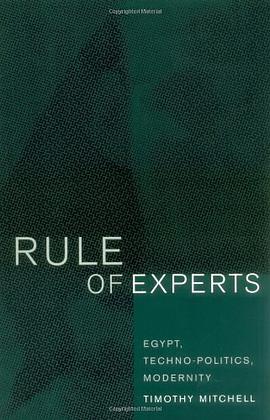
Rule of Experts Douban
author: Timothy Mitchell publishing house: University of California Press 2002 - 11
Can one explain the power of global capitalism without attributing to capital a logic and coherence it does not have? Can one account for the powers of techno-science in terms that do not merely reproduce its own understanding of the world?
Rule of Experts examines these questions through a series of interrelated essays focused on Egypt in the twentieth century. These explore the way malaria, sugar cane, war, and nationalism interacted to produce the techno-politics of the modern Egyptian state; the forms of debt, discipline, and violence that founded the institution of private property; the methods of measurement, circulation, and exchange that produced the novel idea of a national "economy," yet made its accurate representation impossible; the stereotypes and plagiarisms that created the scholarly image of the Egyptian peasant; and the interaction of social logics, horticultural imperatives, powers of desire, and political forces that turned programs of economic reform in unanticipated directions.
Mitchell is a widely known political theorist and one of the most innovative writers on the Middle East. He provides a rich examination of the forms of reason, power, and expertise that characterize contemporary politics. Together, these intellectually provocative essays will challenge a broad spectrum of readers to think harder, more critically, and more politically about history, power, and theory.
S: 后殖民视角下的经济学概念的谱系学、地图与国家建设、再造传统

Book

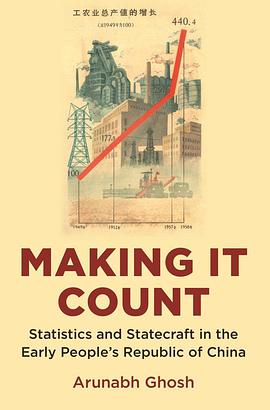
Making It Count Douban
author: Arunabh Ghosh publishing house: Princeton University Press 2020 - 3
In 1949, at the end of a long period of wars, one of the biggest challenges facing leaders of the new People’s Republic of China was how much they did not know. The government of one of the world’s largest nations was committed to fundamentally reengineering its society and economy via socialist planning while having almost no reliable statistical data about their own country. Making It Count is the history of efforts to resolve this “crisis in counting.” Drawing on a wealth of sources culled from China, India, and the United States, Arunabh Ghosh explores the choices made by political leaders, statisticians, academics, statistical workers, and even literary figures in attempts to know the nation through numbers.
Ghosh shows that early reliance on Soviet-inspired methods of exhaustive enumeration became increasingly untenable in China by the mid-1950s. Unprecedented and unexpected exchanges with Indian statisticians followed, as the Chinese sought to learn about the then-exciting new technology of random sampling. These developments were overtaken by the tumult of the Great Leap Forward (1958–61), when probabilistic and exhaustive methods were rejected and statistics was refashioned into an ethnographic enterprise. By acknowledging Soviet and Indian influences, Ghosh not only revises existing models of Cold War science but also globalizes wider developments in the history of statistics and data.
Anchored in debates about statistics and its relationship to state building, Making It Count offers fresh perspectives on China’s transition to socialism.
S: 新中国的统计建设(和少许的认识论冲突

Book

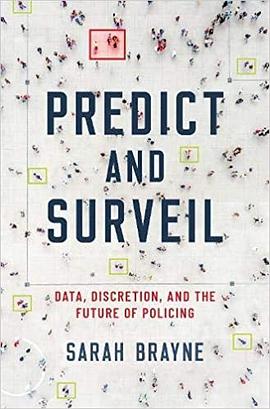
Predict and Surveil Douban
author: Sarah Brayne publishing house: Oxford University Press 2020 - 9
Includes never-published, first-hand accounts of how a massive law enforcement agency leverages big data technologies to expand surveillance in the name of objective, predictive policing
Provides a new understanding of the scope of police surveillance in today's digital world
Argues that the use of big data and algorithms by police widens the scope of the criminal justice system, results in massively increased surveillance, and reinforces stereotypes and discrimination
Reveals the collaboration between public law enforcement, private data brokers, and technology companies
S: Big data risk calculation in surveillance and policing

Book

The Economization of Life Douban
author: Michelle Murphy publishing house: Duke University Press 2017 - 5
What is a life worth? In the wake of eugenics, new quantitative racist practices that valued life for the sake of economic futures flourished. In The Economization of Life, Michelle Murphy provocatively describes the twentieth-century rise of infrastructures of calculation and experiment aimed at governing population for the sake of national economy, pinpointing the spread of a potent biopolitical logic: some must not be born so that others might live more prosperously. Resituating the history of postcolonial neoliberal technique in expert circuits between the United States and Bangladesh, Murphy traces the methods and imaginaries through which family planning calculated lives not worth living, lives not worth saving, and lives not worth being born. The resulting archive of thick data transmuted into financialized “Invest in a Girl” campaigns that reframed survival as a question of human capital. The book challenges readers to reject the economy as our collective container and to refuse population as a term of reproductive justice.
S: How economics performs population

Book

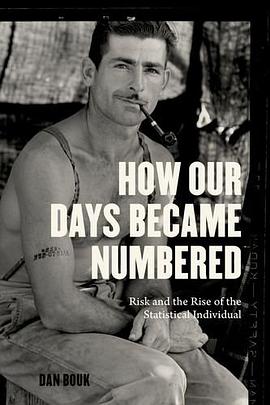
How Our Days Became Numbered Douban
author: Dan Bouk publishing house: University Of Chicago Press 2015 - 5
Long before the age of "Big Data" or the rise of today's "self-quantifiers," American capitalism embraced "risk"--and proceeded to number our days. Life insurers led the way, developing numerical practices for measuring individuals and groups, predicting their fates, and intervening in their futures. Emanating from the gilded boardrooms of Lower Manhattan and making their way into drawing rooms and tenement apartments across the nation, these practices soon came to change the futures they purported to divine.
How Our Days Became Numbered tells a story of corporate culture remaking American culture--a story of intellectuals and professionals in and around insurance companies who reimagined Americans' lives through numbers and taught ordinary Americans to do the same. Making individuals statistical did not happen easily. Legislative battles raged over the propriety of discriminating by race or of smoothing away the effects of capitalism's fluctuations on individuals. Meanwhile, debates within companies set doctors against actuaries and agents, resulting in elaborate, secretive systems of surveillance and calculation.
Dan Bouk reveals how, in a little over half a century, insurers laid the groundwork for the much-quantified, risk-infused world that we live in today. To understand how the financial world shapes modern bodies, how risk assessments can perpetuate inequalities of race or sex, and how the quantification and claims of risk on each of us continue to grow, we must take seriously the history of those who view our lives as a series of probabilities to be managed.
S: Quantification culture before big data

Book

Surveillance as Social Sorting Douban
author: David Lyon publishing house: Routledge 2002 - 10
This book examines some crucial aspects of surveillance processes with a view to showing what constitutes them, why the growth of surveillance is accelerating and what is really at stake personally and politically. It scrutinizes individual surveillance systems - CCTV, biometrics, intelligent transportation systems, smart cards, on-line profiling - and discusses their implications for our future. Surveillance as Social Sorting is a fascinating contribution to a relatively new field - surveillance studies.
S: Big data and surveillance

Book

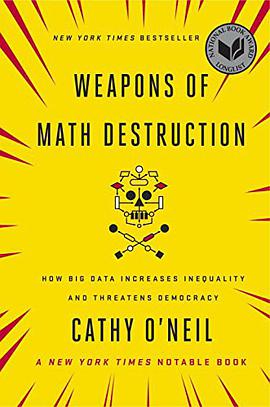
Weapons of Math Destruction: How Big Data Increases Inequality and Threatens Democracy Douban Goodreads Sukkertoppen Skybridge
Weapons of Math Destruction: How Big Data Increases Inequality and Threatens Democracy
★ 8.3 (7 ratings) author: Cathy O'Neil publishing house: Crown 2016 - 9 other title: Weapons of Math Destruction
We live in the age of the algorithm. Increasingly, the decisions that affect our lives--where we go to school, whether we can get a job or a loan, how much we pay for health insurance--are being made not by humans, but by machines. In theory, this should lead to greater fairness: Everyone is judged according to the same rules.
But as mathematician and data scientist Cathy O'Neil reveals, the mathematical models being used today are unregulated and uncontestable, even when they're wrong. Most troubling, they reinforce discrimination--propping up the lucky, punishing the downtrodden, and undermining our democracy in the process.

Book

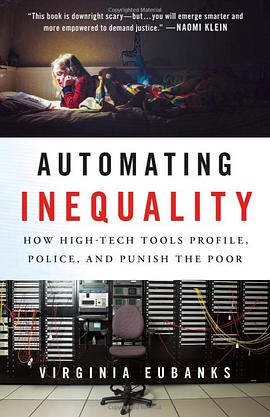
Automating Inequality Douban
author: Virginia Eubanks publishing house: St. Martin's Press 2018 - 1
A powerful investigative look at data-based discrimination―and how technology affects civil and human rights and economic equity
The State of Indiana denies one million applications for healthcare, foodstamps and cash benefits in three years―because a new computer system interprets any mistake as “failure to cooperate.” In Los Angeles, an algorithm calculates the comparative vulnerability of tens of thousands of homeless people in order to prioritize them for an inadequate pool of housing resources. In Pittsburgh, a child welfare agency uses a statistical model to try to predict which children might be future victims of abuse or neglect.
Since the dawn of the digital age, decision-making in finance, employment, politics, health and human services has undergone revolutionary change. Today, automated systems―rather than humans―control which neighborhoods get policed, which families attain needed resources, and who is investigated for fraud. While we all live under this new regime of data, the most invasive and punitive systems are aimed at the poor.
In Automating Inequality, Virginia Eubanks systematically investigates the impacts of data mining, policy algorithms, and predictive risk models on poor and working-class people in America. The book is full of heart-wrenching and eye-opening stories, from a woman in Indiana whose benefits are literally cut off as she lays dying to a family in Pennsylvania in daily fear of losing their daughter because they fit a certain statistical profile.
The U.S. has always used its most cutting-edge science and technology to contain, investigate, discipline and punish the destitute. Like the county poorhouse and scientific charity before them, digital tracking and automated decision-making hide poverty from the middle-class public and give the nation the ethical distance it needs to make inhumane choices: which families get food and which starve, who has housing and who remains homeless, and which families are broken up by the state. In the process, they weaken democracy and betray our most cherished national values.
This deeply researched and passionate book could not be more timely.
S: Calculation algorism, and big data

Book

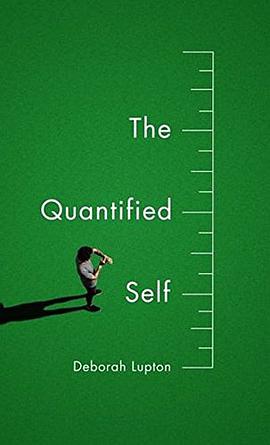
The Quantified Self Douban
author: Deborah Lupton publishing house: Polity 2016 - 4
With the advent of digital devices and software, self-tracking practices have gained new adherents and have spread into a wide array of social domains. The Quantified Self movement has emerged to promote 'self-knowledge through numbers'.
In this groundbreaking book Deborah Lupton critically analyses the social, cultural and political dimensions of contemporary self-tracking and identifies the concepts of selfhood and human embodiment and the value of the data that underpin them.
The book incorporates discussion of the consolations and frustrations of self-tracking, as well as about the proliferating ways in which people's personal data are now used beyond their private rationales. Lupton outlines how the information that is generated through self-tracking is taken up and repurposed for commercial, governmental, managerial and research purposes. In the relationship between personal data practices and big data politics, the implications of self-tracking are becoming ever more crucial.
S: Calculation algorism, and big data

Book

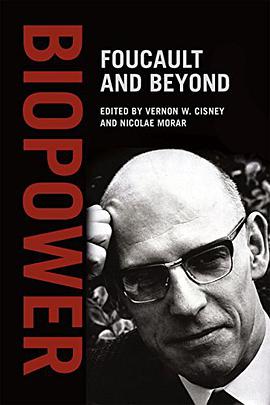
Biopower Douban
author: Vernon Cisney / Nicolae Morar publishing house: University of Chicago Press 2015
Michel Foucault’s notion of “biopower” has been a highly fertile concept in recent theory, influencing thinkers worldwide across a variety of disciplines and concerns. In The History of Sexuality: An Introduction, Foucault famously employed the term to describe “a power bent on generating forces, making them grow, and ordering them, rather than one dedicated to impeding them, making them submit, or destroying them.” With this volume, Vernon W. Cisney and Nicolae Morar bring together leading contemporary scholars to explore the many theoretical possibilities that the concept of biopower has enabled while at the same time pinpointing their most important shared resonances.
Situating biopower as a radical alternative to traditional conceptions of power—what Foucault called “sovereign power”—the contributors examine a host of matters centered on life, the body, and the subject as a living citizen. Altogether, they pay testament to the lasting relevance of biopower in some of our most important contemporary debates on issues ranging from health care rights to immigration laws, HIV prevention discourse, genomics medicine, and many other topics.
S: Governmentality and making subjectivity

Book

The Politics of Life Itself Douban
author: Nikolas Rose publishing house: Princeton University Press 2006 - 11
For centuries, medicine aimed to treat abnormalities. But today normality itself is open to medical modification. Equipped with a new molecular understanding of bodies and minds, and new techniques for manipulating basic life processes at the level of molecules, cells, and genes, medicine now seeks to manage human vital processes. The Politics of Life Itself offers a much-needed examination of recent developments in the life sciences and biomedicine that have led to the widespread politicization of medicine, human life, and biotechnology.</p>
Avoiding the hype of popular science and the pessimism of most social science, Nikolas Rose analyzes contemporary molecular biopolitics, examining developments in genomics, neuroscience, pharmacology, and psychopharmacology and the ways they have affected racial politics, crime control, and psychiatry. Rose analyzes the transformation of biomedicine from the practice of healing to the government of life; the new emphasis on treating disease susceptibilities rather than disease; the shift in our understanding of the patient; the emergence of new forms of medical activism; the rise of biocapital; and the mutations in biopower. He concludes that these developments have profound consequences for who we think we are, and who we want to be.</p>
S: Governmentality and making subjectivity

Book

Discipline & Punish Google Books Douban Goodreads
Surveiller et punir
★ 9.5 (12 ratings) author: Michel Foucault translator: Alan Sheridan publishing house: Vintage Books 1995 - 4 other title: Discipline and Punish
In this brilliant work, the most influential philosopher since Sartre suggests that such vaunted reforms as the abolition of torture and the emergence of the modern penitentiary have merely shifted the focus of punishment from the prisoner's body to his soul.
S: Governmentality and making subjectivity

Book

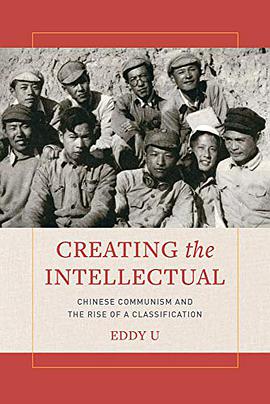
Creating the Intellectual Google Books Douban
author: Eddy U publishing house: University of California Press 2019 - 5
Creating the Intellectual redefines how we understand relations between intellectuals and the Chinese socialist revolution of the last century. Under the Chinese Communist Party, “the intellectual” was first and foremost a widening classification of individuals based on Marxist thought. The party turned revolutionaries and otherwise ordinary people into subjects identified as usable but untrustworthy intellectuals, an identification that profoundly affected patterns of domination, interaction, and rupture within the revolutionary enterprise. Drawing on a wide range of data, Eddy U takes the reader on a journey that examines political discourses, revolutionary strategies, rural activities, urban registrations, workplace arrangements, organized protests, and theater productions. He lays out in colorful detail the formation of new identities, forms of organization, and associations in Chinese society. The outcome is a compelling picture of the mutual constitution of the intellectual and the Chinese socialist revolution, the legacy of which still affects ways of seeing, thinking, acting, and feeling in what is now a globalized China.
S: Science and politics

Book

Hygienic Modernity Douban
★ 9.3 (7 ratings) author: Ruth Rogaski publishing house: University of California Press 2004 - 11
Placing meanings of health and disease at the center of modern Chinese consciousness, Ruth Rogaski reveals how hygiene became a crucial element in the formulation of Chinese modernity in the nineteenth and twentieth centuries. Rogaski focuses on multiple manifestations across time of a single Chinese concept, weisheng—which has been rendered into English as "hygiene," "sanitary," "health," or "public health"—as it emerged in the complex treaty-port environment of Tianjin. Before the late nineteenth century, weisheng was associated with diverse regimens of diet, meditation, and self-medication. Hygienic Modernity reveals how meanings of weisheng, with the arrival of violent imperialism, shifted from Chinese cosmology to encompass such ideas as national sovereignty, laboratory knowledge, the cleanliness of bodies, and the fitness of races: categories in which the Chinese were often deemed lacking by foreign observers and Chinese elites alike.
S: Science and politics

Book

Science in Action Douban
author: Bruno Latour publishing house: Harvard University Press 1988 - 10
Science and technology have immense authority and influence in our society, yet their working remains little understood. The conventional perception of science in Western societies has been modified in recent years by the work of philosophers, sociologists and historians of science. In this book Bruno Latour brings together these different approaches to provide a lively and challenging analysis of science, demonstrating how social context and technical content are both essential to a proper understanding of scientific activity. Emphasizing that science can only be understood through its practice, the author examines science and technology in action: the role of scientific literature, the activities of laboratories, the institutional context of science in the modern world, and the means by which inventions and discoveries become accepted. From the study of scientific practice he develops an analysis of science as the building of networks. Throughout, Bruno Latour shows how a lively and realistic picture of science in action alters our conception of not only the natural sciences but also the social sciences and the sociology of knowledge in general. This stimulating book, drawing on a wealth of examples from a wide range of scientific activities, will interest all philosophers, sociologists and historians of science, scientists and engineers, and students of the philosophy of social science and the sociology of knowledge.
S: Science and politics

Book

The Body Multiple Douban
author: Annemarie Mol publishing house: Duke University Press 2003 - 1
The Body Multiple is an extraordinary ethnography of an ordinary disease. Drawing on fieldwork in a Dutch university hospital, Annemarie Mol looks at the day-to-day diagnosis and treatment of atherosclerosis. A patient information leaflet might describe atherosclerosis as the gradual obstruction of the arteries, but in hospital practice this one medical condition appears to be many other things as well. From one moment, place, apparatus, specialty, or treatment to the next, a slightly different "atherosclerosis" is being discussed, measured, observed, or stripped away. Mol demonstrates that this multiplicity does not imply fragmentation. Instead, the disease is made to cohere through a range of tactics including transporting forms and files, making images, holding case conferences, and conducting doctor-patient conversations. The Body Multiple juxtaposes two distinct texts. Alongside Mol's analysis of her ethnographic material - interviews with doctors and patients; observations of medical examinations, consultations, and operations - runs a parallel text in which she reflects on the relevant literature. Mol draws on medical anthropology, sociology, feminist theory, philosophy, and science and technology studies to reframe such issues as the disease-illness distinction, subject-object relations, boundaries, difference, situatedness, and ontology. In dialogue with one another, Mol's two texts meditate on the multiplicity of reality-in-practice. Presenting philosophical reflections on the body and medical practice through vivid storytelling, The Body Multiple will be important to those in medical anthropology, philosophy, and the social study of science, technology, and medicine.
S: Practice and performativity

Book

Meeting the Universe Halfway Douban
author: Karen Barad publishing house: Duke University Press Books 2007 - 7
Meeting the Universe Halfway is an ambitious book with far-reaching implications for numerous fields in the natural sciences, social sciences, and humanities. In this volume, Karen Barad, theoretical physicist and feminist theorist, elaborates her theory of agential realism. Offering an account of the world as a whole rather than as composed of separate natural and social realms, agential realism is at once a new epistemology, ontology, and ethics. The starting point for Barad's analysis is the philosophical framework of quantum physicist Niels Bohr. Barad extends and partially revises Bohr's philosophical views in light of current scholarship in physics, science studies, and the philosophy of science as well as feminist, poststructuralist, and other critical social theories. In the process, she significantly reworks understandings of space, time, matter, causality, agency, subjectivity, and objectivity. In an agential realist account, the world is made of entanglements of "social" and "natural" agencies, where the distinction between the two emerges out of specific intra-actions. Intra-activity is an inexhaustible dynamism that configures and reconfigures relations of space-time-matter. In explaining intra-activity, Barad reveals questions about how nature and culture interact and change over time to be fundamentally misguided. And she reframes understanding of the nature of scientific and political practices and their "interrelationship." Thus she pays particular attention to the responsible practice of science, and she emphasizes changes in the understanding of political practices, critically reworking Judith Butler's influential theory of performativity. Finally, Barad uses agential realism to produce a new interpretation of quantum physics, demonstrating that agential realism is more than a means of reflecting on science; it can be used to actually do science.
S: Practice and performativity

Book

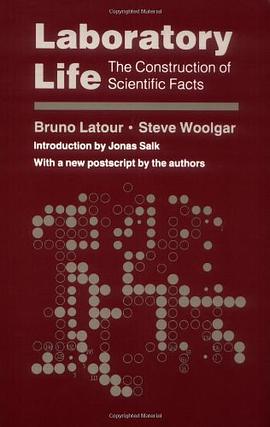
Laboratory Life Douban Goodreads
author: Bruno Latour / Steve Woolgar publishing house: Princeton University Press 1986 - 9 other title: Laboratory Life: The Construction of Scientific Facts
This highly original work presents laboratory science in a deliberately skeptical way: as an anthropological approach to the culture of the scientist. Drawing on recent work in literary criticism, the authors study how the social world of the laboratory produces papers and other "texts," and how the scientific vision of reality becomes that set of statements considered, for the time being, too expensive to change. The book is based on field work done by Bruno Latour in Roger Guillemin's laboratory at the Salk Institute and provides an important link between the sociology of modern sciences and laboratory studies in the history of science.
S: Practice and performativity
Reply Quote Sept. 6, 2026