
Performative numbers and classifications

40 books  

Science and technology studies works that focus on numbers, classifications, and performativity.

Book

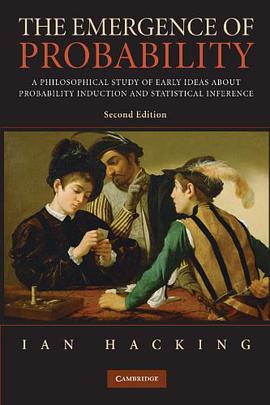
The Emergence of Probability Douban
author: Ian Hacking publishing house: 劍橋大學出版社 2006 - 7
Book Description
Historical records show that there was no real concept of probability in Europe before the mid-seventeenth century, although the use of dice and other randomizing objects was commonplace. Ian Hacking presents a philosophical critique of early ideas about probability, induction, and statistical inference and the growth of this new family of ideas in the fifteenth, sixteenth, and seventeenth centuries. The contemporary debates center around figures such as Pascal, Leibniz, and Jacques Bernoulli. Hacking invokes a wider intellectual framework involving the growth of science, economics, and the theology of the period. He argues that the transformations that made it possible for probability concepts to emerge have constrained all subsequent development of probability theory and determine the space within which philosophical debate on the subject is still conducted. First published in 1975, this edition includes a new introduction that contextualizes his book in light of new work and philosophical trends.
S: Statistics and quantification

Book

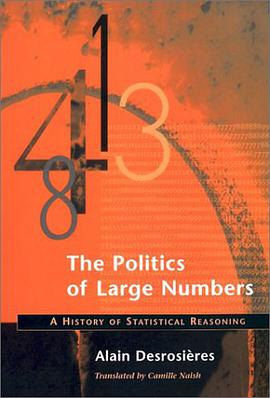
The Politics of Large Numbers Douban
author: Alain Desrosières translator: Camille Naish publishing house: Harvard University Press 2002 - 9
Statistics-driven thinking is ubiquitous in modern society. In this study of the history of statistics, which begins with probability theory in the 17th century, Alain Desrosieres shows how the evolution of modern statistics has been inextricably bound up with the knowledge and power of governments. He traces the complex reciprocity between modern governments and the mathematical artifacts that both dictate the duties of the state and measure its successes.
S: Statistics and quantification

Book

Trust in Numbers Douban
author: Theodore M. Porter publishing house: Princeton University Press 2000 - 8
This investigation of the overwhelming appeal of quantification in the modern world discusses the development of cultural meanings of objectivity over two centuries. How are we to account for the current prestige and power of quantitative methods? The usual answer is that quantification is seen as desirable in social and economic investigation as a result of its successes in the study of nature. Theodore Porter is not content with this. Why should the kind of success achieved in the study of stars, molecules, or cells be an attractive model for research on human societies? he asks. And, indeed, how should we understand the pervasiveness of quantification in the sciences of nature? In his view, we should look in the reverse direction: comprehending the attractions of quantification in business, government, and social research will teach us something new about its role in psychology, physics, and medicine.
Drawing on a wide range of examples from the laboratory and from the worlds of accounting, insurance, cost-benefit analysis, and civil engineering, Porter shows that it is "exactly wrong" to interpret the drive for quantitative rigor as inherent somehow in the activity of science except where political and social pressures force compromise. Instead, quantification grows from attempts to develop a strategy of impersonality in response to pressures from outside. Objectivity derives its impetus from cultural contexts, quantification becoming most important where elites are weak, where private negotiation is suspect, and where trust is in short supply.
S: Statistics and quantification

Book

The Empire of Chance: How Probability Changed Science and Everyday Life Douban Goodreads
author: Gerd Gigerenzer publishing house: 劍橋大學出版社 1990 - 11 other title: The Empire of Chance
This book tells how quantitative ideas of chance have transformed the natural and social sciences as well as everyday life over the past three centuries. A continuous narrative connects the earliest application of probability and statistics in gambling and insurance to the most recent forays into law, medicine, polling, and baseball. Separate chapters explore the theoretical and methodological impact on biology, physics, and psychology. In contrast to the literature on the mathematical development of probability and statistics, this book centers on how these technical innovations recreated our conceptions of nature, mind, and society.
S: Statistics and quantification

Book

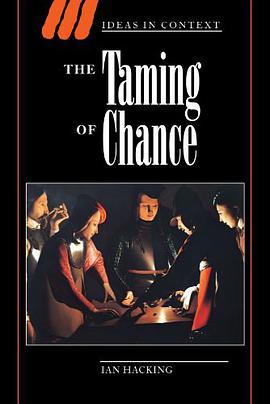
The Taming of Chance Douban
author: Ian Hacking publishing house: 劍橋大學出版社 1990 - 11
In this important new study Ian Hacking continues the enquiry into the origins and development of certain characteristic modes of contemporary thought undertaken in such previous works as his best selling Emergence of Probability. Professor Hacking shows how by the late nineteenth century it became possible to think of statistical patterns as explanatory in themselves, and to regard the world as not necessarily deterministic in character. Combining detailed scientific historical research with characteristic philosophic breath and verve, The Taming of Chance brings out the relations among philosophy, the physical sciences, mathematics and the development of social institutions, and provides a unique and authoritative analysis of the "probabilization" of the Western world.
S: Statistics and quantification

Book

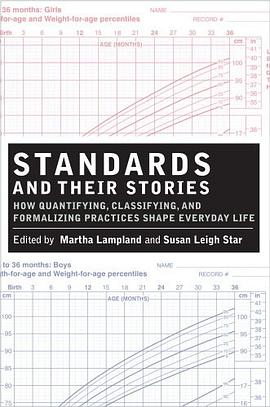
Standards and Their Stories Douban
author: Martha Lampland / Susan Leigh Star publishing house: Cornell University Press 2008
Standardization is one of the defining aspects of modern life, its presence so pervasive that it is usually taken for granted. However cumbersome, onerous, or simply puzzling certain standards may be, their fundamental purpose in streamlining procedures, regulating behaviors, and predicting results is rarely questioned. Indeed, the invisibility of infrastructure and the imperative of standardizing processes signify their absolute necessity. Increasingly, however, social scientists are beginning to examine the origins and effects of the standards that underpin the technology and practices of everyday life.Standards and Their Stories explores how we interact with the network of standards that shape our lives in ways both obvious and invisible. The main chapters analyze standardization in biomedical research, government bureaucracies, the insurance industry, labor markets, and computer technology, providing detailed accounts of the invention of "standard humans" for medical testing and life insurance actuarial tables, the imposition of chronological age as a biographical determinant, the accepted means of determining labor productivity, the creation of international standards for the preservation and access of metadata, and the global consequences of "ASCII imperialism" and the use of English as the lingua franca of the Internet.Accompanying these in-depth critiques are a series of examples that depict an almost infinite variety of standards, from the controversies surrounding the European Union's supposed regulation of banana curvature to the minimum health requirements for immigrants at Ellis Island, conflicting (and ever-increasing) food portion sizes, and the impact of standardized punishment metrics like "Three Strikes" laws. The volume begins with a pioneering essay from Susan Leigh Star and Martha Lampland on the nature of standards in everyday life that brings together strands from the several fields represented in the book. In an appendix, the editors provide a guide for teaching courses in this emerging interdisciplinary field, which they term "infrastructure studies," making Standards and Their Stories ideal for scholars, students, and those curious about why coffins are becoming wider, for instance, or why the Financial Accounting Standards Board refused to classify September 11 as an "extraordinary" event.
S: Boundaries and classification

Book

Sorting Things Out Douban
author: Geoffrey C. Bowker / Susan Leigh Star publishing house: The MIT Press 2000 - 8
What do a seventeenth-century mortality table (whose causes of death include "fainted in a bath," "frighted," and "itch"); the identification of South Africans during apartheid as European, Asian, colored, or black; and the separation of machine- from hand-washables have in common? All are examples of classification--the scaffolding of information infrastructures.In Sorting Things Out, Geoffrey C. Bowker and Susan Leigh Star explore the role of categories and standards in shaping the modern world. In a clear and lively style, they investigate a variety of classification systems, including the International Classification of Diseases, the Nursing Interventions Classification, race classification under apartheid in South Africa, and the classification of viruses and of tuberculosis.The authors emphasize the role of invisibility in the process by which classification orders human interaction. They examine how categories are made and kept invisible, and how people can change this invisibility when necessary. They also explore systems of classification as part of the built information environment. Much as an urban historian would review highway permits and zoning decisions to tell a city's story, the authors review archives of classification design to understand how decisions have been made. Sorting Things Out has a moral agenda, for each standard and category valorizes some point of view and silences another. Standards and classifications produce advantage or suffering. Jobs are made and lost; some regions benefit at the expense of others. How these choices are made and how we think about that process are at the moral and political core of this work. The book is an important empirical source for understanding the building of information infrastructures.
S: Boundaries and classification, sorting, medical practice

Book

Purity and Danger Douban
author: Mary Douglas publishing house: Routledge 2002 - 11
在线阅读本书
Mary Douglas is a central figure within British social anthropology. Studying under Evans-Pritchard at Oxford immediately after the war, she formed part of the group of anthropologists who established social anthropology's standing in the world of scholarship. Her works, spanning the second half of the twentieth century, have been widely read and her theories applied across the social sciences and humanities.
S: Boundaries and classification, center and margin, power and danger

Book

Primitive Classification Douban
author: Emil Durkheim / Marcel Mauss publishing house: University of Chicago Press 1963 - 6
In this influential work, first published in English in 1963, Durkheim and Mauss claim that the individual mind is capable of classification and they seek the origin of the 'classificatory function' in society. On the basis of an intensive examination of forms and principles of symbolic classification reported from the Australian aborigines, the Zuni and traditional China, they try to establish a formal correspondence between social and symbolic classification. From this they argue that the mode of classification is determined by the form of society and that the notions of space, time, hierarchy, number, class and other such cognitive categories are products of society. Dr Needham's introduction assesses the validity of Durkhiem and Mauss's argument, traces its continued influence in various disciplines, and indicates its analytical value for future researches in social anthropology.
S: Boundaries and classification

Book

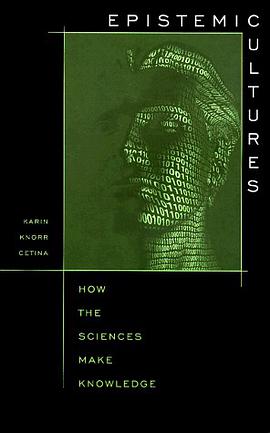
Epistemic Cultures Douban
author: Karin Knorr Cetina publishing house: Harvard University Press 1999 - 5
How does science create knowledge? Epistemic cultures, shaped by affinity, necessity and historical coincidence, determine how people know and what they know. This text compares two epistemic cultures, those in high energy physics and molecular biology. It highlights the diversity of these cultures of knowing and, in its depiction of their differences - in the meaning of the empirical, the enactment of object relations, and the fashioning of social relations - challenges the accepted view of unified science. Comtemporary Western societies are becoming "knowledge societies", which run on expert processes and systems epitomized by science and structured into all areas of social life. This work addresses questions about how such expert systems and processes work, what principles inform their cognitive and procedural orientations and whether their organization, structures and operations can be extended to other forms of social order.
S: Historical epistemology, epistemic cultures

Book

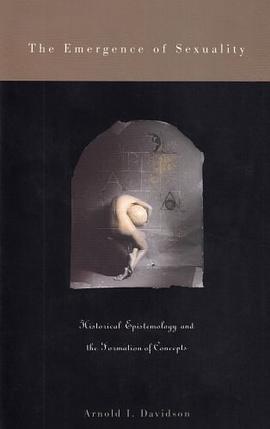
The Emergence of Sexuality Douban
author: Arnold I. Davidson publishing house: Harvard University Press 2004 - 3
In a book that moves between philosophy and history, and with lasting significance for both, Arnold Davidson elaborates a powerful new method for considering the history of concepts and the nature of scientific knowledge, a method he calls "historical epistemology." He applies this method to the history of sexuality, with important consequences for our understanding of desire, abnormality, and sexuality itself.
S: Historical epistemology, sexuality

Book

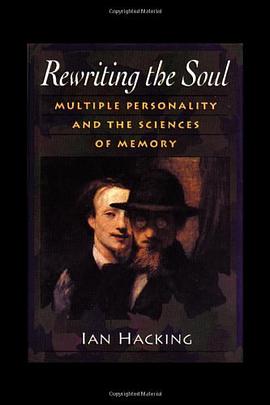
Rewriting the Soul Douban
author: Ian Hacking publishing house: Princeton University Press 1998 - 8
Twenty-five years ago one could list by name the tiny number of multiple personalities recorded in the history of Western medicine, but today hundreds of people receive treatment for dissociative disorders in every sizeable town in North America. Clinicians, backed by a grassroots movement of patients and therapists, find child sexual abuse to be the primary cause of the illness, while critics accuse the 'MPD' community of fostering false memories of childhood trauma.Here the distinguished philosopher Ian Hacking uses the MPD epidemic and its links with the contemporary concept of child abuse to scrutinize today's moral and political climate, especially our power struggles about memory and our efforts to cope with psychological injuries. What is it like to suffer from multiple personality? Most diagnosed patients are women: why does gender matter? How does defining an illness affect the behaviour of those who suffer from it? And, more generally, how do systems of knowledge about kinds of people interact with the people who are known about? Answering these and similar questions, Hacking explores the development of the modern multiple personality movement.He then turns to a fascinating series of historical vignettes about an earlier wave of multiples, people who were diagnosed as new ways of thinking about memory emerged, particularly in France, toward the end of the nineteenth century. Fervently occupied with the study of hypnotism, hysteria, sleepwalking, and fugue, scientists of this period aimed to take the soul away from the religious sphere. What better way to do this than to make memory a surrogate for the soul and then subject it to empirical investigation? Made possible by these nineteenth-century developments, the current outbreak of dissociative disorders is embedded in new political settings."Rewriting the Soul" concludes with a powerful analysis linking historical and contemporary material in a fresh contribution to the archaeology of knowledge. As Foucault once identified a politics that centers on the body and another that classifies and organizes the human population, Hacking has now provided a masterful description of the politics of memory: the scientizing of the soul and the wounds it can receive.
S: Historical epistemology, dynamic nominalism, looping effect, multiple personality

Book

The History of Sexuality, Vol. 1 Douban Goodreads Eggplant.place
Histoire de la sexualité 1 : La volonté de savoir
★ 9.1 (7 ratings) author: Michel Foucault translator: Robert Hurley publishing house: Vintage 1990 - 4 other title: The History of Sexuality, Volume 1: An Introduction
Michel Foucault offers an iconoclastic exploration of why we feel compelled to continually analyze and discuss sex, and of the social and mental mechanisms of power that cause us to direct the questions of what we are to what our sexuality is.
S: Historical epistemology

Book

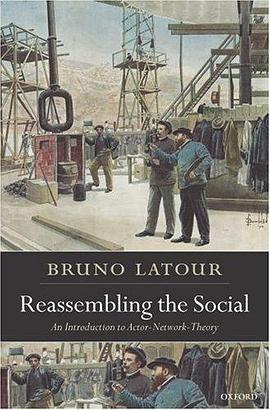
Reassembling the Social Google Books Douban
★ 9.6 (5 ratings) author: Bruno Latour publishing house: Oxford University Press, USA 2005 - 9
Reassembling the Social is a fundamental challenge from one of the world's leading social theorists to how we understand society and the 'social'. Bruno Latour's contention is that the word 'social' as used by Social Scientists has become laden with assumptions to the point where it has become a misnomer. When the adjective is applied to a phenomenon, it is used to indicate a stabilized state of affairs, a bundle of ties that in due course may be used to account for another phenomenon. Latour also finds the word used as if it described a type of material, in a comparable way to an adjective such as 'wooden' or 'steely'. Rather than simply indicating what is already assembled together, it is now used in a way that makes assumptions about the nature of what is assembled. It has become a word that designates two distinct things: a process of assembling: and a type of material, distinct from others. Latour shows why 'the social' cannot be thought of as a kind of material or domain, and disputes attempts to provide a 'social explanation' of other states of affairs. While these attempts have been productive (and probably necessary) in the past, the very success of the social sciences mean that they are largely no longer so. At the present stage it is no longer possible to inspect the precise constituents entering the social domain. Latour returns to the original meaning of 'the social' to redefine the notion and allow it to trace connections again. It will then be possible to resume the traditional goal of the social sciences, but using more refined tools. Drawing on his extensive work examining the 'assemblages' of nature, Latour finds it necessary to scrutinize thoroughly the exact content of what is assembled under the umbrella of Society. This approach, a 'sociology of associations' has become known as Actor-Network-Theory, and this book is an essential introduction both for those seeking to understand Actor-Network-Theory, or the ideas of one of its most influential proponents.
S: Historical epistemology

Book

Leviathan and the Air-Pump: Hobbes, Boyle, and the Experimental Life Douban Goodreads
author: Steven Shapin / Simon Schaffer publishing house: Princeton University Press 1989 - 10 other title: Leviathan and the Air-Pump
In the aftermath of the English Civil War, as people were groping for new forms of political order, Robert Boyle built an air-pump to do exper­iments. Does the story of Roundheads and Restoration have something to do with the origins of experimental sci­ence? Schaffer and Shapin believed it does.


Focusing on the debates between Boyle and his archcritic Thomas Hobbes over the air-pump, the authors proposed that "solutions to the problem of knowledge are solutions to the problem of social order." Both Boyle and Hobbes were looking for ways of establishing knowledge that did not decay into ad hominem attacks and political division. Boyle proposed the experiment as cure. He argued that facts should be manufactured by machines like the air-pump so that gentlemen could witness the experiments and produce knowledge that everyone agreed on. Hobbes, by contrast, looked for natural law and viewed experiments as the artificial, unreliable products of an exclusive guild.


The new approaches taken in Leviathan and the Air-Pump have been enormously influential on historical studies of science. Shapin and Schaffer found a moment of scientific revolution and showed how key scientific givens--facts, interpretations, experiment, truth--were fundamental to a new political order. Shapin and Schaffer were also innovative in their ethnographic approach. Attempting to understand the work habits, rituals, and social structures of a remote, unfamiliar group, they argued that politics were tied up in what scientists did, rather than what they said.
S: Foundational Theory

Book

Simians, Cyborgs, and Women Douban Goodreads Skybridge
author: Donna Haraway publishing house: Routledge 1990 - 12 other title: Simians, Cyborgs, and Women: The Reinvention of Nature
Donna Haraway analyses accounts, narratives, and stories of the creation of nature, living organisms, and cyborgs (cybernetic components); showing how deeply cultural assumptions penetrate into allegedly value-neutral medical research.
S: Foundational Theory

Book

Genesis and Development of a Scientific Fact Douban Goodreads Skybridge
author: Ludwik Fleck translator: Fred Bradley / Thaddeus J. Trenn publishing house: University Of Chicago Press 1981 - 8
Originally published in German in 1935, this monograph anticipated solutions to problems of scientific progress, the truth of scientific fact and the role of error in science now associated with the work of Thomas Kuhn and others. Arguing that every scientific concept and theory--including his own--is culturally conditioned, Fleck was appreciably ahead of his time. And as Kuhn observes in his foreword, "Though much has occurred since its publication, it remains a brilliant and largely unexploited resource."
"To many scientists just as to many historians and philosophers of science facts are things that simply are the case: they are discovered through properly passive observation of natural reality. To such views Fleck replies that facts are invented, not discovered. Moreover, the appearance of scientific facts as discovered things is itself a social construction, a "made" thing. A work of transparent brilliance, one of the most significant contributions toward a thoroughly sociological account of scientific knowledge."--Steven Shapin, "Science"
S: Foundational Theory

Book

The Sociology of Science Douban
author: Robert K. Merton publishing house: University Of Chicago Press 1979 - 9
"The exploration of the social conditions that facilitate or retard the search for scientific knowledge has been the major theme of Robert K. Merton's work for forty years. This collection of papers [is] a fascinating overview of this sustained inquiry. . . . There are very few other books in sociology . . . with such meticulous scholarship, or so elegant a style. This collection of papers is, and is likely to remain for a long time, one of the most important books in sociology."--Joseph Ben-David, "New York Times Book Review"
"The novelty of the approach, the erudition and elegance, and the unusual breadth of vision make this volume one of the most important contributions to sociology in general and to the sociology of science in particular. . . . Merton's Sociology of Science is a magisterial summary of the field."--Yehuda Elkana, "American Journal of Sociology"
"Merton's work provides a rich feast for any scientist concerned for a genuine understanding of his own professional self. And Merton's industry, integrity, and humility are permanent witnesses to that ethos which he has done so much to define and support."--J. R. Ravetz, "American Scientist"
"The essays not only exhibit a diverse and penetrating analysis and a deal of historical and contemporary examples, with concrete numerical data, but also make genuinely good reading because of the wit, the liveliness and the rich learning with which Merton writes."--Philip Morrison, "Scientific American"
"Merton's impact on sociology as a whole has been large, and his impact on the sociology of science has been so momentous that the title of the book is apt, because Merton's writings represent modern sociology of science more than any other single writer."--Richard McClintock, "Contemporary Sociology
"
S: Foundational Theory

Book

The Structure of Scientific Revolutions Douban Goodreads Goodreads Skybridge
The Structure of Scientific Revolutions
★ 9.1 (9 ratings) author: Thomas S. Kuhn publishing house: University Of Chicago Press 1996 - 4
Since the publication of this book in 1962, Kuhn's writings (and many of his ideas, such as "paradigm shift") have been highly influential in academic and popular discourse. This book is must-reading for anyone studying the history and philosophy of science specifically, or cultural or technological change generally.
Since Kuhn does not permit truth to be a criterion of scientific theories, he would presumably not claim his own theory to be true. But if causing a revolution is the hallmark of a superior paradigm, The Structure of Scientific Revolutions has been a resounding success.
S: Foundational Theory

Book

The Elementary Forms of the Religious Life Douban
Les formes élementaires de la vie religieuse
★ 10.0 (6 ratings) author: Emile Durkheim translator: Fields, Karen E. publishing house: Free Press 1995 - 6
"Karen Fields has given us a splendid new translation of the greatest work of sociology ever written, one we will not be embarrassed to assign to our students. In addition she has written a brilliant and profound introduction. The publication of this translation is an occasion for general celebration, for a veritable 'collective effervescence.' -- Robert N. Bellah "Co-author of "Habits of the Heart, " and editor of "Emile Durkheim on Morality and Society" "This superb new translation finally allows non-French speaking American readers fully to appreciate Durkheim's genius. It is a labor of love for which all scholars must be grateful." --Lewis A. Coser
S: Foundational Theory
Reply Quote Sept. 6, 2026