Keith Griffiths — Producer (12)

Movie

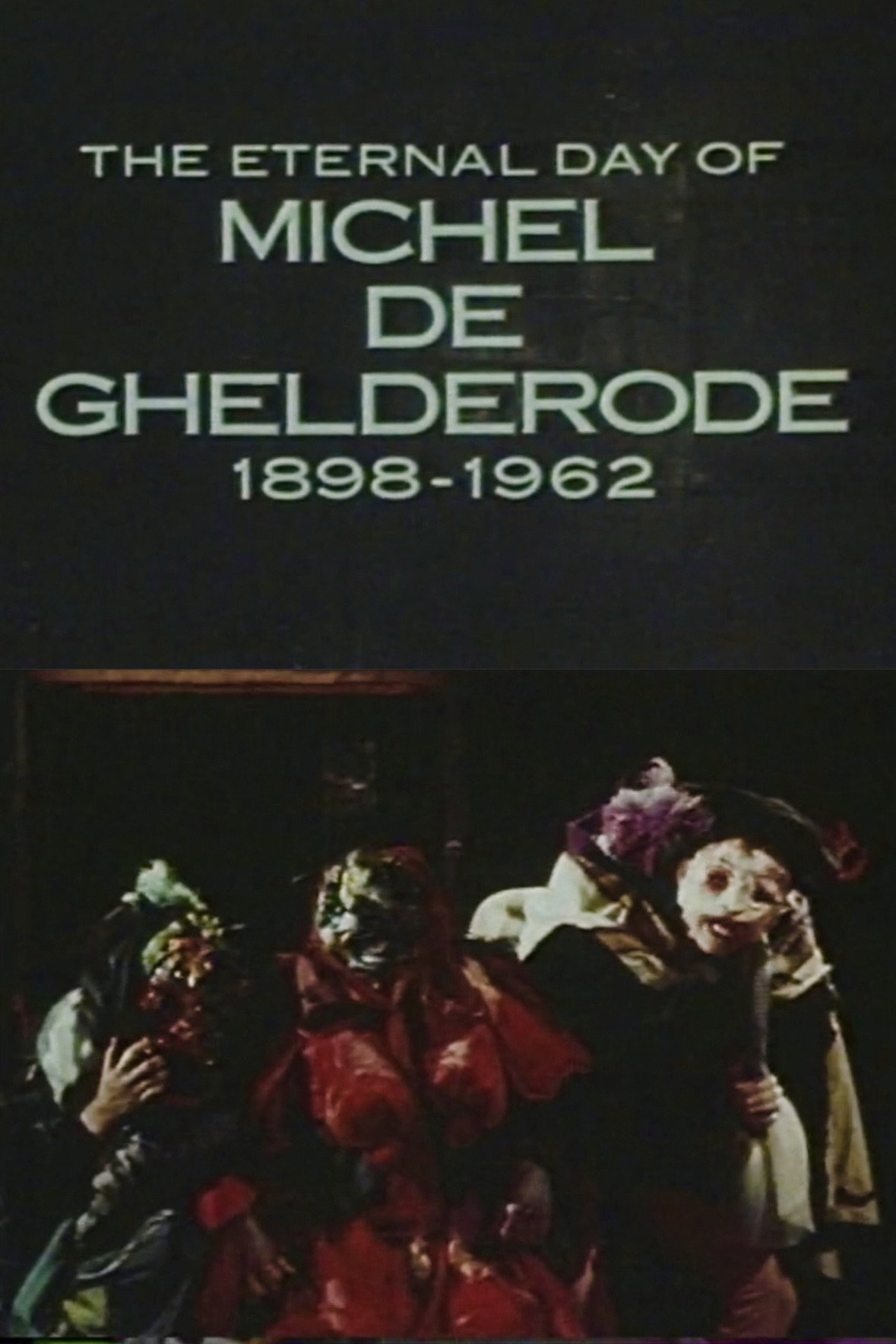
The Eternal Day of Michel de Ghelderode (1981) IMDb TMDB
The Eternal Day of Michel de Ghelderode
director: Timothy Quay / Keith Griffiths …
Using the tricks of the Flemish playwright's own trade--puppetry, masks, and a Breughelesque sense of bizarre carnival, the collaborators succeeded in bringing about a rich and sardonic humor lurking at the edge of the playwright's macabre, death-obsessed imagination in an allusive homage.

Movie

Robinson in Ruins (2010) WikiData IMDb TMDB Douban
Robinson in Ruins
other title: 废墟中的罗宾森
The eagerly awaited sequel to Patrick Keiller's London and Robinson in Space is a beautifully photographed cinematic essay on our current environmental and economic predicament, narrated by Vanessa Redgrave. Timely, provocative and studded with surreal humour, Robinson in Ruins reveals hidden histories and surprising visions (from the opium poppy fields of Oxfordshire to what seems to be a talking post box), making us consider the world around us afresh.

Movie

London (1994) WikiData IMDb TMDB Douban
London
director: 帕特里克·凯勒 actor: Paul Scofield
other title: 伦敦 / 런던
A psycho-geographic journey through London and its history, as undertaken by an unseen narrator and his companion, Robinson, at the time of the 1992 general election.

Movie

The Phantom Museum (2003) WikiData IMDb TMDB Douban
The Phantom Museum
director: 史蒂芬·奎 / 狄莫瑞·奎 actor: 史蒂芬·奎
other title: 幻影博物馆 / Random Forays Into the Vaults of Sir Henry Wellcome's Medical Collection …
The Phantom Museum was originally commissioned by the Wellcome Trust as a video installation for the British Museum exhibition Medicine Man: The Forgotten Museum of Henry Wellcome, which ran from June to November 2003. This provided an opportunity for the public to examine some of the rarer items in the extraordinary collection of American-born pharmaceutical pioneer Sir Henry Wellcome (1853-1936), who assembled over 125,000 medical artifacts, many of which are currently stored in London's Science Museum and normally viewable by appointment only.
Typically, the Quay Brothers' film consists more of a series of impressions of the Wellcome collection than a guided tour, their approach summed up by its subtitle 'Random Forays into Sir Henry Wellcome's Medical Collection'. A linking device (shot on grainy black-and-white Super 8 stock) involves a man clad in a black suit and white gloves ascending staircases, warlking along corridors, switching on lights and investigating rooms full of cabinets bearing tantalising labels ('Shrunken Heads - Scalp').
Interspersed with these are much sharper colour sequences, depicting various objects in Wellcome's collection. Sometimes they're displayed as static museum pieces, sometimes rotated, and occasionally animated. Many of the exhibits are explicitly sexualised, from the diagram demonstrating the use of a chastity belt (next to an example of the real thing) to tender Oriental sculptures of human lovemaking. Many of the collection's many dolls come apart to reveal their anatomically-correct innards - one female body has a baby in her walnut-sized womb, connected via an umbilical piece of string.
Prosthetic arms and legs abound, in one case attached to a live human body, while there are plenty of dead ones glimpsed in the collection's storerooms, their lipless mouths fixed in a permanent grin. If the film is often unsettling, this is less because of the Quays' proven feel for the uncanny than for the way the Wellcome collection itself inescapably exploits our most fundamental fears: of birth, sex, mutilation and death.
The Quays originally edited the film to pre-existing recordings of the music of Czech composer Zdenek Liska (previously featured in The Cabinet of Jan Svankmajer in 1984), but were unable to clear the necessary rights. In the final version, filmmaker-musician Gary Tarn provided a plangent semi-electronic accompaniment, occasionally interspersed with sound effects, notably in the shot of an old birthing chair and forceps being pressed into service on an invisible mother-to-be, whose baby can be heard crying as it emerges.

Movie

Rehearsals for Extinct Anatomies (1991) WikiData IMDb TMDB Douban
Rehearsals for Extinct Anatomies
director: 史蒂芬·奎 / 狄莫瑞·奎
other title: 过时的解剖彩排 / 演练失传的解剖 …
Stop-motion animated short film in which, among other things, a man made of wire looks malevolent.

Movie

Innocence of Memories (2015) WikiData IMDb TMDB Douban
Innocence of Memories
★ 7.0 (5 ratings) director: 格兰特·吉 actor: 潘多拉·科林 / Mehmet Ergen
other title: 纯真的记忆 / 纯真博物馆 …
Orhan Pamuk – Turkey's Nobel laureate for Literature – opens a museum in Istanbul. A museum that's a fiction: its objects trace a tale of doomed love in 1970's Istanbul. The film takes a tour of the objects as the starting point for a trip through love stories, landscapes and the chemistry of the city.

Movie

Stille Nacht III - Tales From Vienna Woods (1993) IMDb TMDB Douban
Stille Nacht III - Tales From Vienna Woods
director: 史蒂芬·奎 / 狄莫瑞·奎
other title: 寂静夜3:维也纳森林的传说 / Stille Nacht III …
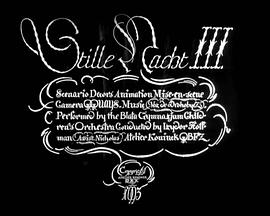
The third in the quartet of black-and-white films comprising the Quay Brothers' Stille Nacht cycle (the others being Dramolet, 1988, Are We Still Married?, 1992 and Can't Go Wrong Without You, 1993), Tales From Vienna Woods was also made with the intention of exploring imagery that they planned to develop further in their first feature Institute Benjamenta, which was then in limbo awaiting funds. In fact, so close were the short and the feature in terms of overall tone (despite the one being animated and the other live-action) that the former was subsequently recycled as the latter's theatrical trailer, in a slightly but not significantly modified form.
A clue to the film's purpose is embedded in a wreath adorning a pair of asymmetrical deer antlers: Ich bin im Tod erblüht ("in death have I blossomed" - for once, an onscreen translation is provided). This is followed by a sequence in which an animated severed hand explores a dusty archive of arcane exhibits, the central display of which consists of a table with multiple legs that's been suspended from the ceiling above a base of forest detritus, notably pine cones. As the camera circles slowly around to the front, we see that the table has been decorated with the same asymmetrical antlers, and at the back a pair of testicles can be glimpsed beneath the table top.
What the film is doing, in characteristically oblique form, is endlessly replaying the moment when the deer met its death: the film delicately but unmistakably implying (through the metaphorical use of pine cones) that it was shot in the testicles. From time to time, in the dead of night, the table regurgitates the bullet via a long-handled spoon that emerges from between its rear legs, intercut with images of the bullet emerging from the gun and commencing its journey to the target, slowed down to highlight every step.

Movie

This Unnameable Little Broom (1987) WikiData IMDb TMDB Douban
This Unnameable Little Broom
★ 8.0 (7 ratings) director: 狄莫瑞·奎 / 史蒂芬·奎
other title: 这种难以名状的小扫帚 / 이름 없는 작은 빗자루 …
Boasting the longest title in the Quays' entire output, this 1985 film is generally known as This Unnameable Little Broom, though the Quays themselves refer to it as Gilgamesh. It began life as a proposed hour-long Channel Four programme exploring aspects of the ancient Babylonian Epic of Gilgamesh, the oldest known surviving work of literature, which would combine puppet animation, dance sequences (courtesy of choreographer Kim Brandstrup) and live-action documentary elements. However, Channel Four were dubious about the project, and only agreed to fund a short animated sequence as a pilot - which is all that was ultimately made.
But even when divorced from the original planned context, This Unnameable Little Broom stands up very well on its own as a short parable of cruelty and oppression. The Gilgamesh character is portrayed as a childlike figure, seemingly welded permanently to a tricycle, with a grotesquely swollen head that, Picasso-like, simultaneously presents both a profile and a frontal view. His 'kingdom' is a box-like construction, seemingly suspended in mid-air, with a distant forest just out of reach.
At the start of the film, Gilgamesh sets various elaborate snares to lure Enkidu, the forest creature, into his domain. These range from conventional booby-traps to altogether more unsettling creations, notably the desk drawer containing what appears to be a detached, pulsing vagina (the Quays' typically oblique reference to the point in the original legend where Gilgamesh sends a prostitute to seduce Enkidu). Enkidu himself is a bird-like creature, partly made up of genuine animal skeletons, whose wide-eyed guilelessness proves his downfall.
The film had numerous inspirations besides the Gilgamesh legend. The frenzied viciousness that pervades the film was a tribute to Austrian writer Konrad Bayer, the design of Gilgamesh was sourced from artwork by Heinrich-Anton Müller, one of a trio of 'outsider artists' (the others being Friedrich Schröder-Sonnenstern and Adolf Wölfli) that the Quays originally intended to dedicate their film to, but shyness prevented them.
However, they weren't too shy to include a back-handed swipe in the title - 'Hunar Louse' is a satirical representation of Lunar House in Croydon, the headquarters of the Home Office's Immigration and Nationality Directorate, which called the Quays' visa status into question at the time they were making the film. Though this was alarming at the time, the experience helped fuel the paranoid, Kafkaesque atmosphere that pervades their film.
Movie

A Letter to Uncle Boonmee (2009) WikiData IMDb TMDB Douban
A Letter to Uncle Boonmee
★ 7.6 (21 ratings) director: 阿彼察邦·韦拉斯哈古 actor: Phetmongkol Chantawong / Kumgieng Jittamaat …
other title: 给布米叔叔的信 / 엉클 분미께 보내는 편지 …
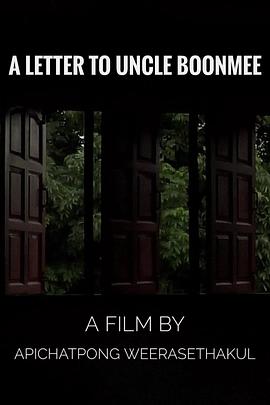
A few years ago I visited a temple near my home and a monk there gave me a little book called “A Man Who Can Recall His Past Lives.” In it, the monk wrote about Boonmee, who could recall his multiple lives in the cities of the northeast. In 2008, I wrote a screenplay inspired by the reincarnation of Boonmee, and started to travel in the region in search of his surviving offspring and relatives. I met his two sons who provided accounts of their father.
In Nabua in December 2008, I located several houses that I thought would be suitable as Uncle Boonmee’s house in the proposed feature film. This short film is a personal letter describing my Nabua to Uncle Boonmee.
The film is comprised of shots of the houses’ interiors in the evening. They are all deserted except one house with a group of young soldiers, played by some teens of Nabua. Two of them impersonate me by narrating the film.
- Apichatpong Weerasethakul

Movie

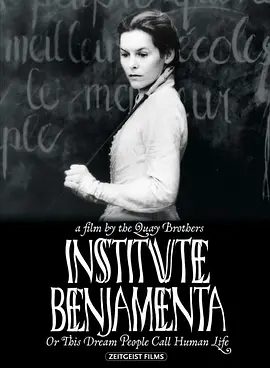
Institute Benjamenta, or This Dream People Call Human Life (1995) WikiData IMDb TMDB Douban
Institute Benjamenta, or This Dream People Call Human Life
director: 史蒂芬·奎 / 狄莫瑞·奎 actor: 马克·里朗斯 / 艾丽丝·克里奇 …
other title: 本杰明学院 / Institut Benjamenta oder Dieser Traum, den man menschliches Leben nennt …
Jakob arrives at the Institute Benjamenta (run by brother and sister Johannes and Lisa Benjamenta) to learn to become a servant. With seven other men, he studies under Lisa: absurd lessons of movement, drawing circles, and servility. He asks for a better room. No other students arrive and none leave for employment. Johannes is unhappy, imperious, and detached from the school's operation. Lisa is beautiful, at first tightly controlled, then on the verge of breakdown. There's a whiff of incest. Jakob is drawn to Lisa, and perhaps she to him. As winter sets in, she becomes catatonic. Things get worse; Johannes notes that all this has happened since Jakob came. Is there any cause and effect?