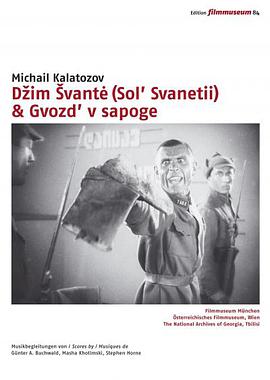
Mikhail Kalatozov — Director (8)

Movie

Their Kingdom (1928) IMDb TMDB
მათი სამეფო
other title: 他们的王国 / მათი სამეფო
The documentary Their Kingdom, co-directed in 1928 by Nutsa Gogoberidze and Mikhail Kalatozishvili (Kalatozov) for Soviet Georgia’s Cinema Trust, was considered lost until 2008, when there appeared a possibility that this important film – Georgia’s first documentary feature and Kalatozov’s directorial debut – had not disappeared irretrievably.

Movie

Moscow Music Hall (1946) IMDb TMDB
Киноконцерт к 25-летию Красной Армии
other title: 红军二十五周年电影音乐会 / Киноконцерт к 25-летию Красной Армии
A variety of Russian stars are presented in a revue that includes many traditional songs and dances

Movie

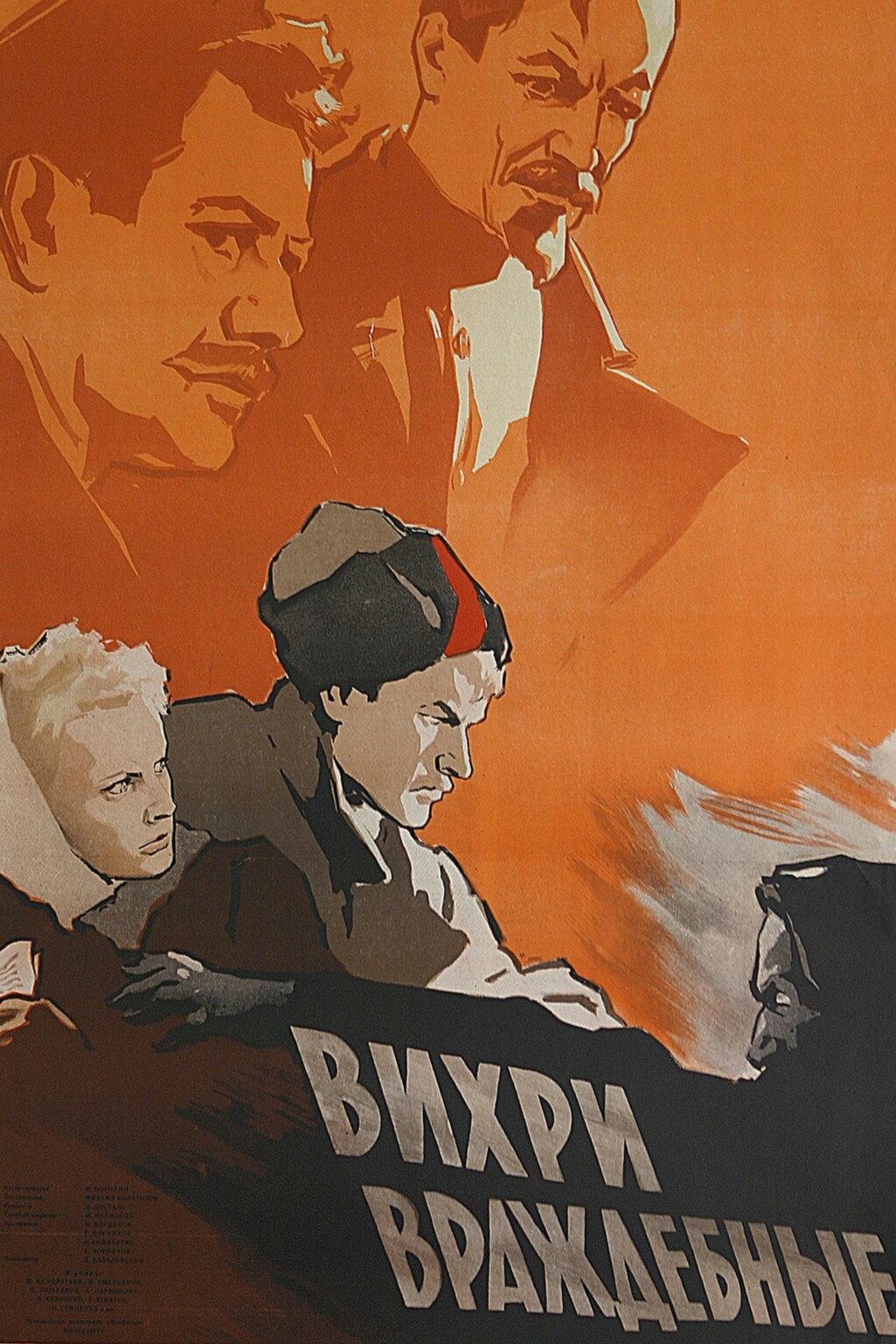
Hostile Whirlwinds (1956) WikiData IMDb TMDB
Вихри враждебные
other title: 敌对的旋风 / Вихри враждебные …
Observing the first years of the formation of Soviet power, about the life and work of Feliks Dzerzhinsky from 1918-1925; in July 1918, as a result of a revolt of the Left Socialist Revolutionaries, German ambassador Mirbach is killed. Feliks Dzerzhinsky alone goes to the headquarters of the Left Socialist Revolutionaries and Anarchists, he manages to persuade ordinary soldiers and sailors, participants in the rebellion, who are now cracking down on their leaders.

Movie

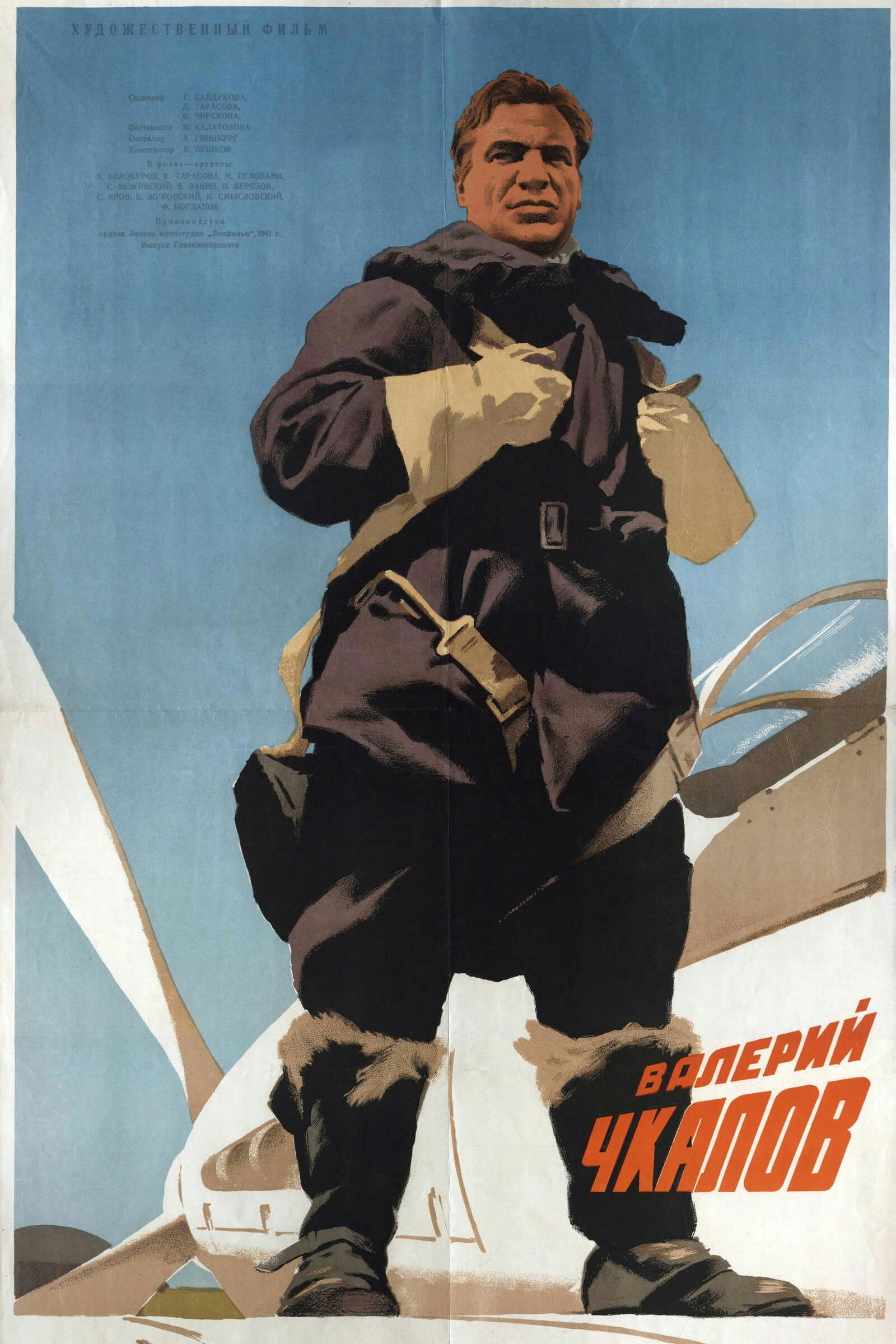
Wings of Victory (1941) WikiData IMDb TMDB
Валерий Чкалов
other title: Valeri Tchkalov / 胜利之翼 …
Based on the true story of Russian pilot Valeri Chkalov (1904 - 1938), who set several long-distance flight records. Chkalov and co-pilots Baidukov and Belyakov altogether had accomplished several nonstop long-distance flights. In June 1937, Chkalov set the world record, covering 12,000 kilometers in 63 hours of nonstop flight from Moscow to Vancouver, Washington, flying over the North Pole.

Movie

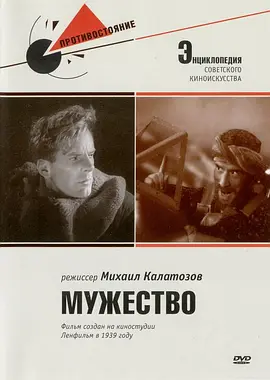
Courage (1939) Douban
Мужество
director: 米哈伊尔·卡拉托佐夫 actor: Oleg Zhakov / Dmitry Dudnikov …
other title: 勇气 / Мужество
Air scorcher - the pilot of the civilian air fleet Alexey Tomilin - once more decides not to tempt fate and the only fly in a straight line. Airport, where he works Tomilin, located near the border with Afghanistan. One day the hero gets the job to fly to the border area and send the packet to the order of the capture of a major saboteur, who crossed the border. Returning, Tomilin makes emergency landing near an abandoned home - and soon find themselves held hostage by the gang. The hero pretends to agree to transfer the saboteur abroad, and rely only on themselves and their experiences in air-ace-mertvopetlista ... ...

Movie

The First Echelon (1957) Douban
Первый эшелон
director: 米哈伊尔·卡拉托佐夫 actor: Vsevolod Sanayev / Sergei Romodanov …
other title: 第一梯队 / Первый эшелон …
卡拉托佐夫与乌鲁谢夫斯基的第一次合作, 片子感觉一般不如两年后的<雁南飞>好, 乌鲁谢夫斯基当时还没有完全形成后来著名的手持摄影+情绪摄影的风格, 但已有初步的实践.
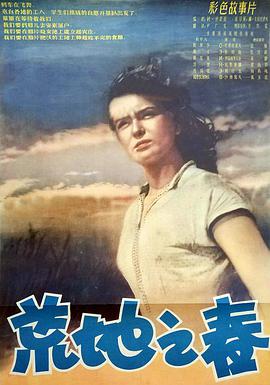
In one of the steppe regions of Kazakhstan arrives on a trip Komsomol youth squad. Severe spring frosts and flows of mud, debilitating work is not on specialty complicate the already difficult lives of arrivals. Against the backdrop of such a life is a touching romance Secretary Komsomol organization and traktoristki Anna ...
In 1954, the famous Soviet operator Yuri Ekelchiku suggested - the first of the Soviet operators - to hold experienced wide survey. The choice was an unusually happy: wide screen as if created specifically for Ekelchika on his constant desire "to go beyond the frame", "declared neobyatnoe". But the new format has brought new problems. Ekelchik obsessing looking for ways to feed the most expressive actor, checks with the possibility of shooting motion. Experiments and receive real goal - along with director Mikhail Kalatozov Ekelchik begins preparations for the shooting of the first Soviet widescreen movie "Tselina" by Nikolai Pogodin scenario. Unfortunately, the film had to withdraw a normal screen. But labor Ekelchika not gone and experienced shooting, and taken on a wide screen acting samples were carefully and with great benefit operators studied, followed by Ekelchikom absorb the new format. "The first echelon" (under the name of the film came out on the screen) again demonstrated the ability to change Ekelchika, finding new means of expression for new content. But the significance of the film in the development of carrier-art does not stop there. It's really, it seems, has not yet been assessed. The reason is that individual elements of synthetic art of cinema, as correctly noted art historian A. Kamensky, have "a certain autonomy development". She and manifested in the "first line" - went fine interpretation of a few more of scenario and director solutions. A film importance, place in the history of cinema is defined as a rule, the overall assessment. For Kalatozova (as, indeed, and for cinema in general) "The first echelon" had a transitional film: he began to get rid of this period malokartinya many canons and only naschupyval a style that has made his next movie - "The Cranes Are Flying" (1957) event not only the Soviet - of world cinema.


Sergei Urusevsky (1908 - 1974)
Sergei Urusevsky started as an painter and photographer studying under the great graphic artist Vladimir Favorsky at the Institute of Fine Art in Moscow. Bringing a pictorial tradition to cinema, Urusevsky started his career with Mark Donskoi on Selskaya uchitelnitsa (The Village Schoolteacher, 1947), Vsevolod Pudovkin on The Return of Vasili Bortnikov (1953), and Grigori Chukhari on Sorok pervyi (The Forty-First. 1956). Urusevsky also served during World War II as a cameraman on the front lines.
With The First Echelon he combined his marvelous visual sense with Kalatozov's breathtaking
technical skills — a partnership that made The Cranes are Flying, The Letter Never Sent and I am Cuba landmarks in the history of cinematography. Urusevsky and Yuri Ilyenko (cinematographer of Shadows of Forgotten Ancestors who also became a director) had profound
influence throughout the Soviet film industry — not since the 1920s had Soviet film style been acclaimed throughout the world. His poetic camerawork, no matter how daring, was always an organic search into the emotional possibilities of the script. In 1969 Urusevsky directed The Ambler's Race, adapted from the Kirghiz writer Chinghiz Aitmatov's short novel. Urusevsky followed this up with Sing Your Song, Poet (1971) based on the poems of Sergei Yesenin.
Urusevsky's other cinematography credits include The Land of the Blue Mountains, Alitet Leaves for the Hills, Cavalier of the Golden Star, and Lesson of Life.
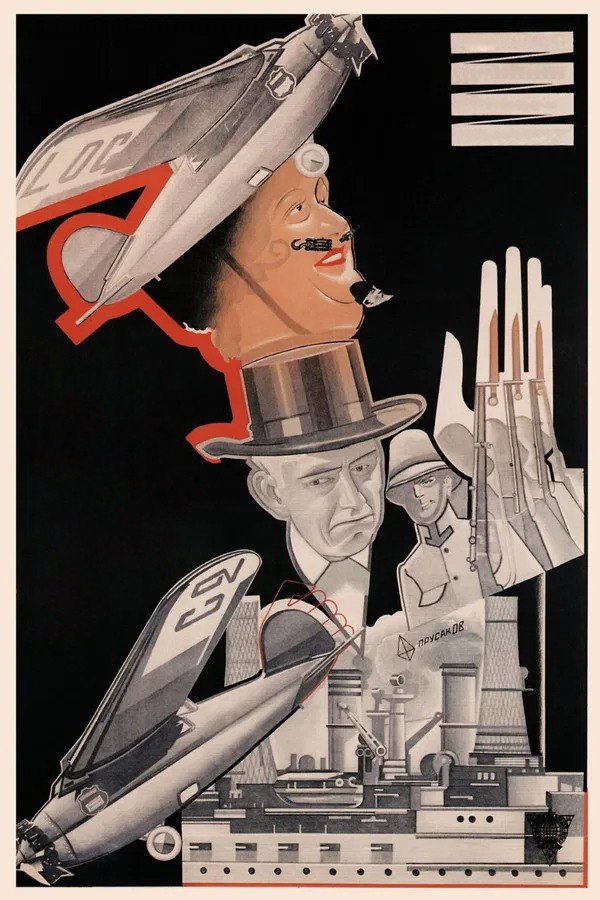

Movie

Nail in the Boot (1931) WikiData IMDb TMDB Douban
Гвоздь в сапоге
director: 米哈伊尔·卡拉托佐夫 actor: Aleqsandre Jaliashvili / Siko Palavandishvili …
other title: 皮靴里的钉子 / Гвоздь в сапоге …
Having naively assumed that Kalatozov without Urusevsky would be somewhat underwhelming, I was astounded to see the brilliance of the imagery and montage in his early silent works (both here and in Salt For Svanetia). The machine-gun editing is as exhilarating as anything I've seen, and would surely have Guy Maddin weeping tears of joy.
I've no idea what the film is actually about, but I believe it may well be a Russian paean to quality footwear (in the spirit of St. Hubbins). Either way, the lack of subtitles is entirely irrelevant, as this is a film where the inventiveness of the visual language is of paramount importance - indeed, it's so formally daring that it makes the vast majority of contemporary filmmaking seem utterly anaemic by way of comparison.

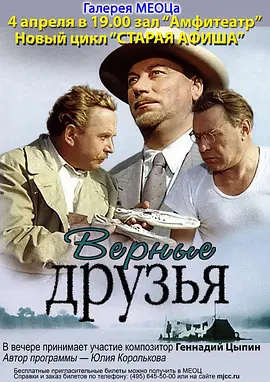
Movie

True Friends (1954) WikiData IMDb TMDB Douban
Верные Друзья
other title: 忠实的朋友 / Верные Друзья …
Alexander, Boris and Vasily are old friends, who now rarely see each other as they're busy with their professional life. They embark on long-planned voyage on a raft down the Volga river, which turns into a series of comical accidents but also strengthens their friendship.