James Benning — Director (20)

Movie

Chicago Loop (1976) IMDb TMDB
Chicago Loop
director: James Benning
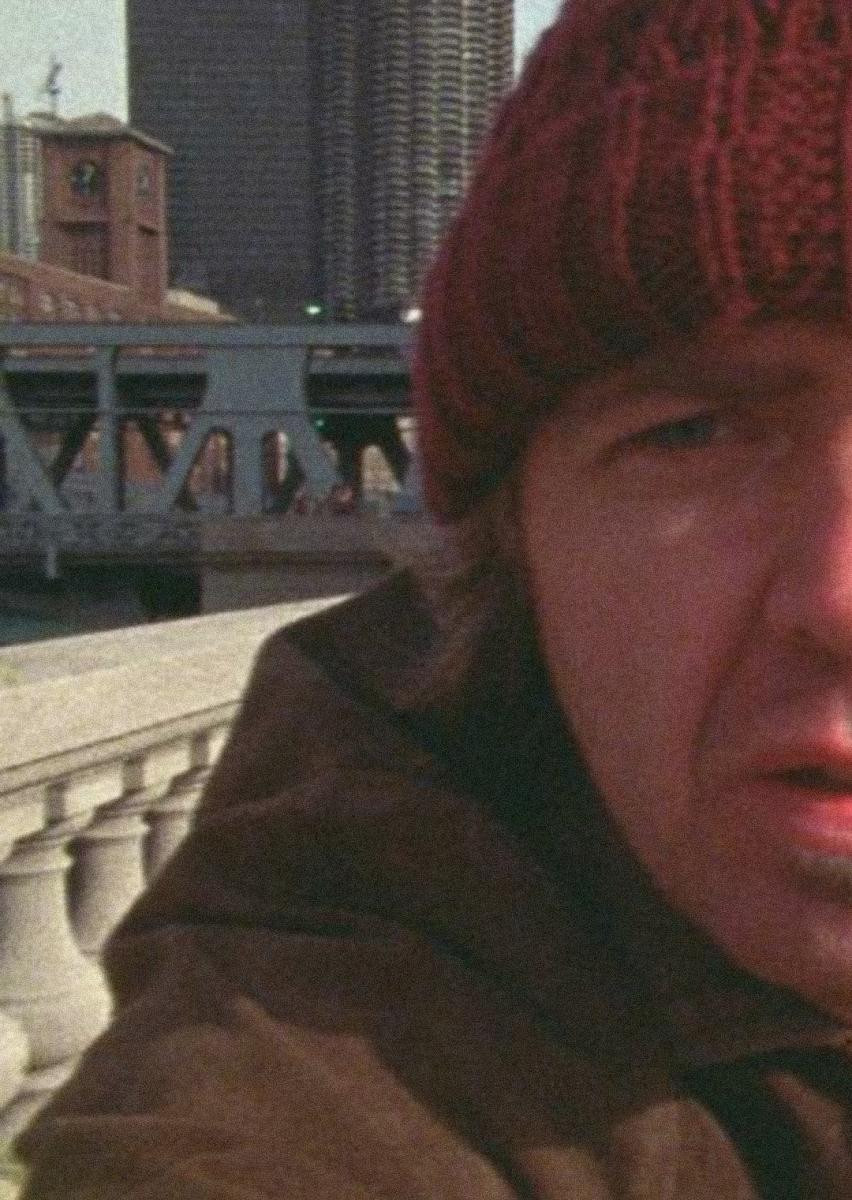
In three virtuosic sequences created entirely in-camera, Benning alternates contrary camera movements in a trio of Chicago locations with increasing rapidity to a point where they first fracture and then merge in the viewer’s eye. Preserved by the Academy Film Archive in partnership with Austrian Film Museum in 2013.

Movie

8½ x 11 (1974) IMDb TMDB
8½ x 11
director: James Benning
"Benning's landscape works, with their meticulous, reverential compositions, have been located in the history of American realist painting and photography, and also belong to the tradition of American nature writing...The formal elegance of the compositions somehow becomes surreal over time, as we look into, instead of at, the place. This tendency locates Benning in the history of experimental filmmakers concerned with interrogating visual perception." - Danni Zuvela

Movie

Little Boy (2025) IMDb TMDB Douban
Little Boy
director: 詹姆斯·班宁
other title: 小男孩 / 소년
A film looking at the past to warn about the future, from a little boy's point of view. A companion to ‘American Dreams (lost and found)’ (1984)

Movie

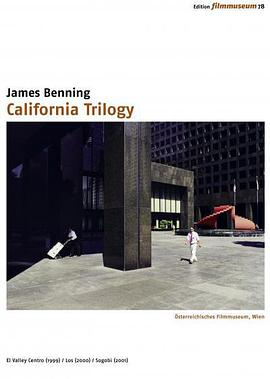
Los (2001) IMDb TMDB Douban
Los
director: 詹姆斯·班宁
other title: 洛杉矶 / 로스
Los Angeles is depicted in 35 stationary shots, each 2 1/2 minutes long, in this non-narrative film.
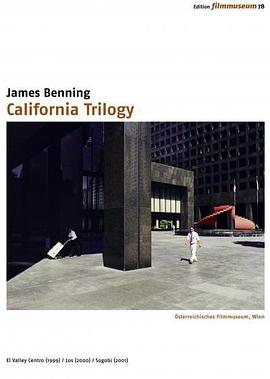
Nearing the completion of El Valley Centro, I began planning an urban companion piece, Los, that was to be a portrait of Los Angeles. It seemed logical, for the politics of water certainly run from the Valley to the City. Los would have the same structure as El Valley Centro and would look and listen with the same intensity. The two films would be connected with the last shot of El Valley Centro pumping water out of the Valley over Wheeler Ridge while the first shot of Los would show Mulholland’s first spillway (still in use) bringing water into LA.
James Benning, December 2001
Conceptual-art portrait of Los Angeles County, comprising 35 two-minute shots of streams, hills, buildings, factories, gardens, highways, rivers, cattle, trains, people, the ocean, a cemetery, the skyline, policemen, back streets, a jail, soccer players… Bennings’ camera remains static, and in the absence of commentary the only sounds we hear are whatever’s audible in each of these places: snatches of dialogue, distant background music, the rumble of cars and trains.
Benning has been one of American leading avant-garde film-makers for over 20 years, but remains barely known by the wider cinemagoing public, especially abroad – partly because he doesn’t allow his works to be available on video. And while Los is no-one’s idea of ‘commercial’ film-making, Benning’s low profile is an indictment of the timid policies of our supposedly adventurous arthouses: this is much too fascinating a use of film for it to be relegated to art galleries.
Los can be taken as 35 short movies, each of them saying something about the county, each of them posing some question about Benning’s technique, providing Viewing becomes an active, enthralling experience – even when there’s apparently ‘nothing happening’ on screen. It soon becomes clear that the timing, order and contents of each image has been very precisely calculated, and in many cases it’s what we can’t see that’s the ‘subject’ of the shot. The penultimate shot is of ‘homeless people’, and at one point an unseen passerby exclaims “What the f*ck are you lookin’ at, stupid motherf*cker?” But there are no answers – everything about the film is a matter of subjective interpretation, and every response is equally valid. Benning’s gaze transforms the whole of ‘greater’ Los Angeles into a vast work of art, in the process making it even ‘greater’ still – and this is only the central part of a projected ‘Southern California’ trilogy.
The film is full of engrossing incidental details, cross-references, tantalising clues that might mean everything or nothing. Early one we see a DKNY advertising billboard owned by a company named ‘Outdoor Systems’, and this phrase sums up Benning’s real subject – the human and natural processes that combine to form the bizarre anomaly we know as LA: a huge cloud of dust rising from a brush fire; the evening lights of cars zooming along a six-lane highway; the flight path of a landing jet-plane. This is a game with specific rules of form (the length and horizon-lines of each shot are similar) and content (each shot must contain some aspect of human activity; each shot must be outdoors) and, finally, memory test. We’re exposed to each of the images for so long, that by the end, when Benning brings up a series of captions identifying the locations of each, we can run through the whole movie again, in our mind.
Needless to say, Los won’t be to all tastes – in today’s market-oriented climate, such a project necessarily runs the risk of ‘pretentiousness’ accusations – but it’s surprising how quickly you adjust to the film’s unique rhythms, and this is a very straightforward, accessible kind of experimentalism. In terms of an artist using cinema to express himself, it dwarfs almost all this year’s ‘conventional’ releases: if any film of 2001 can possibly change the way its audiences think about and view their world, it’s James Benning’s mysterious, majestic, magical Los.

Movie

Sogobi (2002) IMDb TMDB Douban
Sogobi
director: 詹姆斯·班宁
other title: 索古比 / 소고비
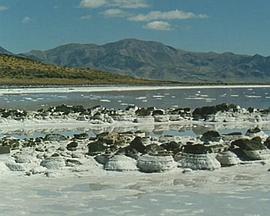
As soon as Los was completed I added Sogobi to make it a trilogy, the urban and rural portraits needed the Californian wilderness to put them in perspective. Following the same structure Sogobi would look and listen to that wilderness. The first shot of Sogobi would relate to the last shot of Los, and the last shot of Sogobi would return to the first shot of El Valley Centro, revealing its mystery. The entire trilogy would become an interrelated puzzle.

Movie

Casting a Glance (2007) WikiData IMDb TMDB Douban
Casting a Glance
director: 詹姆斯·班宁
other title: 一目了然
"Between May 2005 and January 2007 I made 16 trips to the Spiral Jetty, Robert Smithson’s monumental earthwork located on the Great Salt Lake, Utah. casting a glance maps the Jetty back onto its 37-year history. From morning to night, its allusive, shifting appearance may be the result of a passing weather system or simply the changing angle of the sun. Seasonal shifts and changes in water level alter salt crystal growth, the amount of algae in the water, and the presence of wildlife. Sounds may come from a navy jet, wildlife, lapping or splashing water, a visitor’s car radio, converging thunderstorms—or be a total silence..." James Benning

Movie

The United States of America (1975) WikiData IMDb TMDB Douban
The United States of America
other title: 美利堅合眾國(1975年電影)
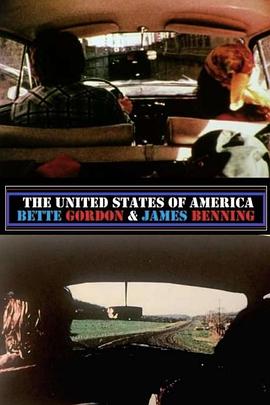
A true masterpiece of 70s cinema, more remarkable today than ever before. A conceptual bicentennial film dealing with spatial and temporal relationships between two travelers, their car, and the geographic, political, and social changes from New York to Los Angeles. The space within each frame is at the same time continuous and elliptical.

Movie

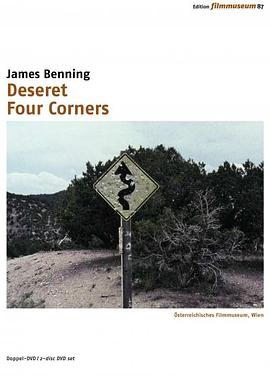
Four Corners (1997) IMDb TMDB Douban
Four Corners
other title: 四角地带
"Sometimes dreams are wiser than waking." These words, attributed to the Oglala Sioux medicine man Black Elk, are the final bit of text to appear in veteran filmmaker James Benning's FOUR CORNERS which uses a specific geographic location to pose larger questions about the United States. Here, the geographic and wholly imaginary place Four Corners, that favorite tourist destination where Colorado, New Mexico, Arizona and Utah meet, becomes a kind of theoretical ground zero, the site from which Benning can give voice to other, pointedly unofficial sort of spurious conspiracy (the history of the United States), but one in which each sound and each image hints at a story not yet fully told (the histories of the United States.)." - Manohla Dargis, LA Weekly

Movie

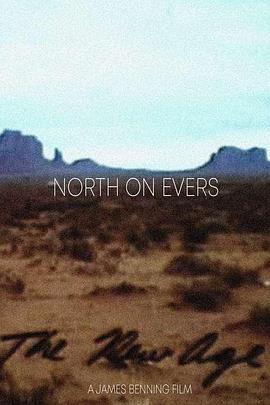
North on Evers (1992) IMDb TMDB Douban
North on Evers
director: 詹姆斯·班宁 actor: Willem Dafoe
In NORTH ON EVERS James Benning takes the road movie seriously, making his circular trip across the U.S. a marvelously photographed, intensely felt, and disturbing portrait of contemporary America. In many ways, this recent film is a departure of Benning’s earlier films which are characterized, at times, by extremely long, carefully planned takes and a minimal narrative approach. In NORTH ON EVERS, the shots are kept short with a narrative that is direct and detailed, like a diary or a long series of postcards to a friend. What this work shares with the other films is a dry wit and a deep interest in the American social landscape.

Movie

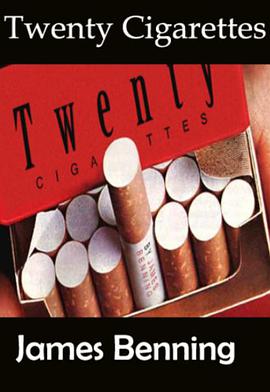
Twenty Cigarettes (2011) IMDb TMDB Douban
Twenty Cigarettes
other title: 二十支烟
Celebrated for his minimal, monumental landscape studies, James Benning turns to the intimacy of the portrait in his latest film, TWENTY CIGARETTES. Referencing Warhol’s screen tests, 1930s Hollywood glamour, and the disappearing cigarette break, the film captures 20 of Benning’s friends (including filmmaker Sharon Lockhart, cultural theorist Dick Hebdige, and book editor Janet Jenkins) satiating their smoke cravings. Each shot’s length is determined by the time it takes each subject to smoke a cigarette, and over the course of the film a dynamic range of personalities emerges out of an array of physical characteristics, distinctive settings, and personal relationships to the camera. (Amy Beste and Jessica Bardsley)

Movie

BNSF (2013) IMDb TMDB Douban
BNSF
director: 詹姆斯·班宁
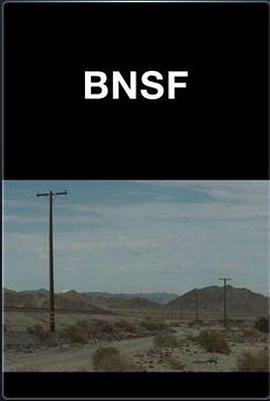
James Benning's latest is a three hour+ shot featuring light, clouds and the much anticipated return of a BNSF train. Only info about this on the net is that a recent intended screening was cancelled.

Movie

El Valley Centro (2000) IMDb TMDB Douban
El Valley Centro
director: 詹姆斯·班宁
other title: 中央谷地 / 엘 밸리 센트로
I began El Valley Centro in November of 1998; I was driving through the Great Central Valley looking for places to film. I wasn’t going to start shooting for at least six months; I wanted to just look and listen – to get to know the Valley well before I would make images. But almost immediately I came across an oil well fire with flames high into the sky. I returned home for my Bolex and Nagra. Determined that landscape is a function of time, I let a full roll of 16mm film (100 feet) run through the camera. At that moment I knew I would make a portrait of The Great Central Valley using 35 two and a half minute shots.
As its name suggests, the Great Central Valley – El Valley Centro in Spanish – runs long and wide down the middle of California, encompassing much of that vast state’s cultivated farmland. Benning’s film explores this vast area, his camera pausing for the allotted two and a half minutes before he cuts to another location, another vista presented for our absorption. There are no ‘actors’ as such, no ‘characters’, no ‘dialogue’ as we know it, no ‘narration’ as we know it, hardly any sounds, hardly any ‘real’ action.
But the audience soon realises that each of these apparent ‘absences’ is, in Benning’s hands, a plus. He forces us to concentrate our eyes and ears on what he shows us, and the attentive viewer will find their efforts more than amply rewarded. As well as slowly compiling a remarkable portrait of a remarkable place, Benning thrillingly redefines the basic syntax of film-making and film-watching. The effect is staggering – as one of Caspar David Friedrich’s contemporaries commented when seeing his painting ‘Monk by the Sea’ for the first time: “it is as if one’s eyelids had been cut off.”
The film begins with a shot of a lake, apparently draining away into what looks like a huge plughole. It’s an ideal starting point – we’re being drawn into Benning’s world as surely as the water is being drawn into that hole, and we’re aware that our eye is specifically being directed to a certain point on the screen. But the two and a half minutes for which this shot is projected gives us ample time to explore the peripheries, and this is also part of Benning’s grand design. This is equally true of the remaining 34 shots in the sequence – he shows us places where ‘nothing’ is apparently happening, but which he reveals as stages on which a drama unfolds: the ‘subject’ of the shot may be a series of tiny orange blobs in the distance (as in the sequence showing a penitentiary), but they’re enough. We can work out the rest for ourselves.
Benning works at the interface of mathematics and geography: the exact position of the camera is absolutely crucial – he’s faced with an infinite number of possibilities, and the essence of El Valley Centro lies in his process of selection. Timing is equally important – there’s no environment in the world where this kind of film can’t be made, provided the right two and a half minutes are chosen. Benning’s judgement is exceptional, and he’s also aided by some providential turns of fate, trains and cars coming into our out of shot at just the right time.
The most spectacular moment of serendipity comes during a shot of a large ship making its progress along a river – the river is invisible, all we can see is fields. Then, coming the other way, a smaller boat appears and passes in front of the ship. For a moment we’re disoriented – how can the water run both ways at once? Then we realise it’s more a matter of how the craft are being propelled. But while this activity is taking place on the water, a car appears – the road is as invisible as the channels – and zips along and out of sight. It’s a delightful moment of accidental choreography (just like a later shot of tumbleweeds skidding across a dusty scrubland, almost alive, like the corps in a Martian ballet.)
Benning himself calls the ship/boat/car scene ‘such a crowd-pleaser,’ ahere’s an unexpected strain of humour in the film – most overtly in the sequence showing a champion goat-tier, repeatedly catching, tying then letting go an increasingly befuddled-looking goat with her back squarely to camera. Once he’s established certain ‘rules’, Benning is able to have fun with his choice of images – on more than one occasion he has characters going about their work in the fields, slowly advancing towards the camera, closer and closer until they seem sure to collide. At the last minute, however, they turn back, never even acknowledging Benning’s presence. This is just as well – after just a few minutes inside the Benning world-view, the viewer’s eyes effectively become Benning’s camera: and if any of the figures in the landscape did look up and catch us staring, it would be impossible not to flinch and look guiltily away.
But the workers-in-the-field shots connect to Benning’s serious theme: he shows the Valley as a place of toil, of man’s incursion into the natural environment and, most of all, of ownership. After the final two-and-a-half-minute ‘action’ shot there’s a final section of equal length telling us where each sequence was filmed and, in most cases, which farming conglomerate owns the land. But Benning’s careful, patient approach invests so much in each scrap of landscape that he, too, becomes a kind of ‘owner’ – as do we, watching in the cinema as the indelible images burn into our minds.
As Chinatown famously shows us, water and power go hand in hand in California: one of the most fascinating of El Valley Centro’s shots shows the welcoming ‘gate’ above the road entering the city of Modesto, a neon slogan-board reading ‘Water wealth contentment health.’ The phrase takes on a savage irony in this kind of exhaustive geographical-political-social context: the film starts and ends with water, water flows through so many of the frames, its moneyed manipulators sequestered in offices far away from Benning’s prying lens. Modesto also happens to be George Lucas’s home town, the place he set his masterpiece American Graffiti – perhaps in homage, Benning’s Modesto shot also includes cars at night, the retro glow of neon, the excited voices of teenagers as they drive in and out of the frame. You have to strain to hear them, of course – but this is a film in which the buzzing of a fly becomes a major movie event. This is a film whose every single shot deserves a full-length essay of its own.

Movie

Natural History (2014) WikiData IMDb TMDB Douban
Natural History
director: 詹姆斯·班宁
other title: 自然史 / natural history
In 54 static shots, Benning provides a picture of the Natural History Museum in Vienna. With the exception of the first three shots, he chooses areas that are normally closed to the public: offices, store rooms and empty corridors. A characteristically meditative Benning, even though this time he chooses to stay indoors.

Movie

Deseret (1995) WikiData IMDb TMDB Douban
Deseret
director: James Benning actor: Fred Gardner
other title: 犹他州
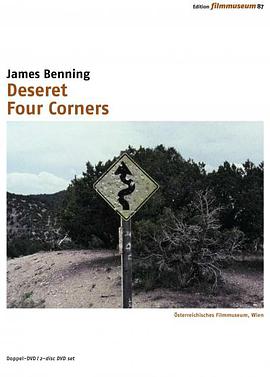
James Benning took the founding of the New York Times in 1851 as a departure point for his latest film, Deseret. In the best Benning tradition, Deseret unfolds magnificent landscapes captured with a stationary camera during a dozen-odd trips throughout the calendar year - deserts, plains of snow, lonely trails, trees in bloom, cemeteries, ruins, unfriendly rocks, empty settlers' houses, roads that seem to be leading nowhere, a few isolated human figures. Deseret's starkly composed images suggest a space haunted by the official history written back East in the Times. Benning collected 93 stories about Utah, boiled them down to a few lines and used a different shot to 'illustrate' each sentence. As we reach 1900, his black and white footage spectacularly turns to color. The stories told recount the loss of American innocence: from the woes and persecution of the Mormons, the fights with the Indians...
Written by Anonymous

Movie

13 Lakes (2006) WikiData IMDb TMDB Douban
13 Lakes
★ 7.6 (5 ratings) director: 詹姆斯·班宁
other title: 十三湖 / 十三座湖
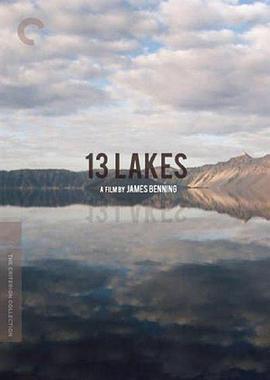
"'13 Lakes' is a formal film of astonishing beauty. It is a structural film that tells a story. But its story is ephemeral, and the attempt to grasp it immediately multiplies its transience. This is how '13 Lakes' tells a story about landscape, its virginity, and its culturalization. It reports that landscape is a function of time. It tells Benning's travels across the United States, from west to east, from south to north, and back. Journeys create difference and are an instrument for placing a gaze into a social perspective. Thus, a story slowly unfolds of seeing and the gaze, that of Benning as well as of the audience. Beyond that, '13 Lakes' narrates that a camera was placed and set in operation at a particular time and place. It is a film of witnessing, not a film of observation, not a documentation. A documentary film explores a theme, argues, tries to persuade. In contrast, '13 Lakes' is a reflective film that is its own theme. If it adduces arguments, they consist of a strictly followed set of arithmetic rules. '13 Lakes' is the story of a method brought to its logical conclusion. With optimal efficiency and maximum effect, this method produces a new cinematic form in which structure and narrative do not exclude each other, but mutually overlap and even determine each other. Benning thus succeeds in articulating the necessary relationship between a method, a medium, an idea of nature, and his own person. The result is a cinematic aesthetic that, in this radicalized form, activates a political aspect based in method. '13 Lakes' is thus a political film whose politics consist in method." Martin Beck

Movie

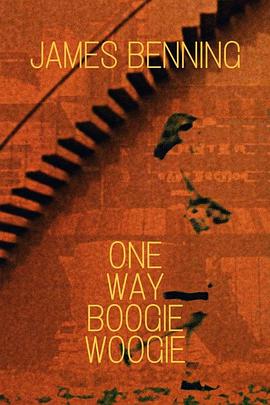
One Way Boogie Woogie (2006) IMDb TMDB Douban
One Way Boogie Woogie
director: James Benning
other title: 布吉伍吉单程路
Sixty one-minute shots with no camera movement. This tension between painterly and cinematic space is not only experienced as an intellectual contrast but is also felt as a dialectic between permanence and impermanence.

Movie

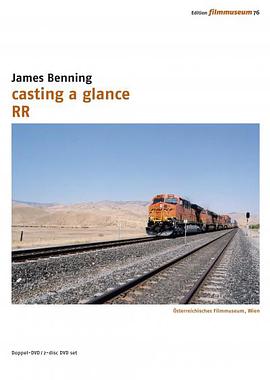
RR (2007) WikiData IMDb TMDB Douban
RR
director: 詹姆斯·本宁
other title: 美国铁路
In 1895, the first film audience ever reportedly ran screaming from the theater during the Lumiere brothers’ The Arrival of a Train. The audience thought that an actual oncoming train was hurtling towards them, unfamiliar as they were with the screen and projector that produced the moving image. Although today’s moviegoers may be more comfortable with train footage, James Benning’s RR promises a unique kind of cinematic experience for audiences. Structured around the deceptively simple visual motif of a train crossing a series of static shots, it presents a visually stunning portrait of the role of railroads in American history and culture.
“Benning has an incredible formal eye, able to place his 16mm camera in the absolute perfect spot and capture the landscape.” —Daily Plastic

Movie

small roads (2011) IMDb TMDB Douban
small roads
director: 詹姆斯·班宁
other title: 小路 / 소로 …
1. Hollister Ranch Rd (Pacific Ocean)
2008 Nissan Frontier pickup, white
2. Hot Springs Rd
1993 Ford F150 pickup, white, w/trailer, hauling two 1994 Suzuki
Samurai jeeps, red, black
3. California Hwy 155
2008 Dodge Ram 3500 pickup, gray, w/horse trailer
4. East Myer Rd
1987 Freightliner COE semi truck, green, w/double flatbed trailers
5. California Hwy 43 (SFBN train)
1996 Dodge Neon, white
1997 Chevrolet Silverado pickup, red
1991 Pontiac Sunbird, light blue
6. Lancaster Rd
woman walking
2001 BMW M Series, black
7. Tulare County Rd 208
no vehicles
8. California Hwy 190
2002 Ford F250 pickup, light gray
9. Trona Rd
2008 Toyota Solara, cream
2002 Toyota Corolla, black
2008 Ford F250 pickup, silver
1995 Winnebago camper, white
10. Mountain View St (Searles Valley Minerals, Inc)
man walking
no vehicles
11. California Hwy 178
no vehicles
12. Badwater Rd
2004 Chevrolet Tahoe, black
2001 Toyota Sequoia, green
13. Arizona Hwy 85
2003 Ford F350 pickup, black
2009 Lincoln MKX, black
2008 Ford F150 (Border Patrol) pickup, white
2009 Ford F150 (Border Patrol) pickup, white

14. White Sands Rte 10
2008 Toyota Tundra pickup, black
15. Texas Ranch Rd 1
1992 Ford F150 pickup, white
16. Missouri Hwy 19
no vehicles
17. Mississippi Old US 80
1994 GMC 1500 pickup, green
2004 Ford Expedition, red, w/boat and trailer
18. Arkansas US 165
2005 Chevrolet Express, tan
2004 GMC Sierra pickup, white
2002 Nissan Altima, salmon
2000 Cadillac Deville, black
2009 Cadillac DTS, pink
2006 Chevrolet Malibu, white
2003 Chevrolet Silverado pickup, white
19. Louisiana Hwy 596
no vehicles
20. Illinois Hwy 107
2005 Ford Fusion, blue
1998 Dodge Neon, black
2004 Chrysler Town & Country, red
21. Illinois County Hwy 3
no vehicles
22. Wisconsin County Trunk GGG
2005 Yamaha RD350, red
23. Wisconsin County Hwy K (Mack Lake)
2005 Ford Taurus, white
24. Minnesota US 12
2005 Chevrolet Colorado pickup, green, w/boat and trailer
2006 Peterbilt semi milk tanker, blue
25. South Dakota Hwy 1806 (Missouri River)
no vehicles
26. Nebraska Hwy 2
2006 Chevrolet Equinox, black
27. Hayden Fork Rd
2000 Ford Ranger pickup, red, w/canoe
2007 Honda Civic, blue
28. Wyoming US Hwy 89 (Grand Tetons)
2000 Peterbilt Semi flatbed, red
1988 Ford F350 flatbed, blue, w/trailer hauling logs
2002 Chevrolet Silverado pickup, white
29. Utah Hwy 150
1982 Chevrolet C10 pickup, gray
1995 Peterbilt Semi, white, w/double liquid tankers
1998 Chevrolet Silverado pickup, maroon
1998 Ford F250 pickup, tan, w/trailer
30. Hanksville Rd
2008 Ford F150 (Utah State Police) pickup, tan
31. Utah Hwy 24
no vehicles
32. Utah Hwy 12
no vehicles
33. Boulder/Escalante Rd
2008 Mazda 6, white
2009 Ford Mustang convertible, red
2010 Chrysler PT Cruiser, black
2000 Volvo dump truck Tri-Axle, white w/trailer hauling backhoe
34. Kolob Reservoir Rd
no vehicles
35. Morning Star Mine Rd
2008 Mercedes C Class, black
36. North Amboy Rd
no vehicles
37. Sierra Hwy
1995 Ford F350 flatbed truck, white
2004 Freightliner semi, white
38. Great Western Divide Hwy
2002 Harley-Davidson Road King, blue
39. Parker Pass Rd
1982 GMC 1500 pickup, yellow
40. Mogal Rd
2002 Kenworth semi fuel-tanker, white & yellow
41. Walker Pass Rd
1996 Isuzu garbage truck, white
42. Graces Rd (North Kern State Prison)
no vehicles
43. Old Stage Rd
2007 Peterbilt semi w/double gravel hoppers, white
44. California Mt 50
2006 Ford 500, blue
45. Forest Rte 23S03
no vehicles
46. Rocking K
1997 International snowplow, white
47. Generals Hwy (Giant Sequoia National Forest)
2006 Dodge Stratus, silver
Movie

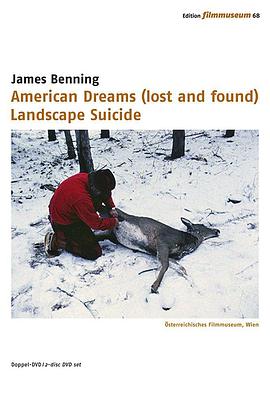
Landscape Suicide (1987) WikiData IMDb TMDB Douban
Landscape Suicide
★ 8.2 (12 ratings) director: 詹姆斯·班宁 actor: Rhonda Bell / Elion Sucher
other title: 静态自杀 / 랜드스케이프 수어사이드 …
Benning continues his examination of Americana in this film through the stories of two murderers. Ed Gein was a Wisconsin farmer and multiple murderer who taxidermied his victims in the 1950s. Bernadette Protti was a California teenager who stabbed a friend to death over an insult in 1984.