Edwin Stratton Porter — Director (67)

Movie

Scarecrow Pump (1904) WikiData IMDb TMDB
Scarecrow Pump
director: Edwin S. Porter
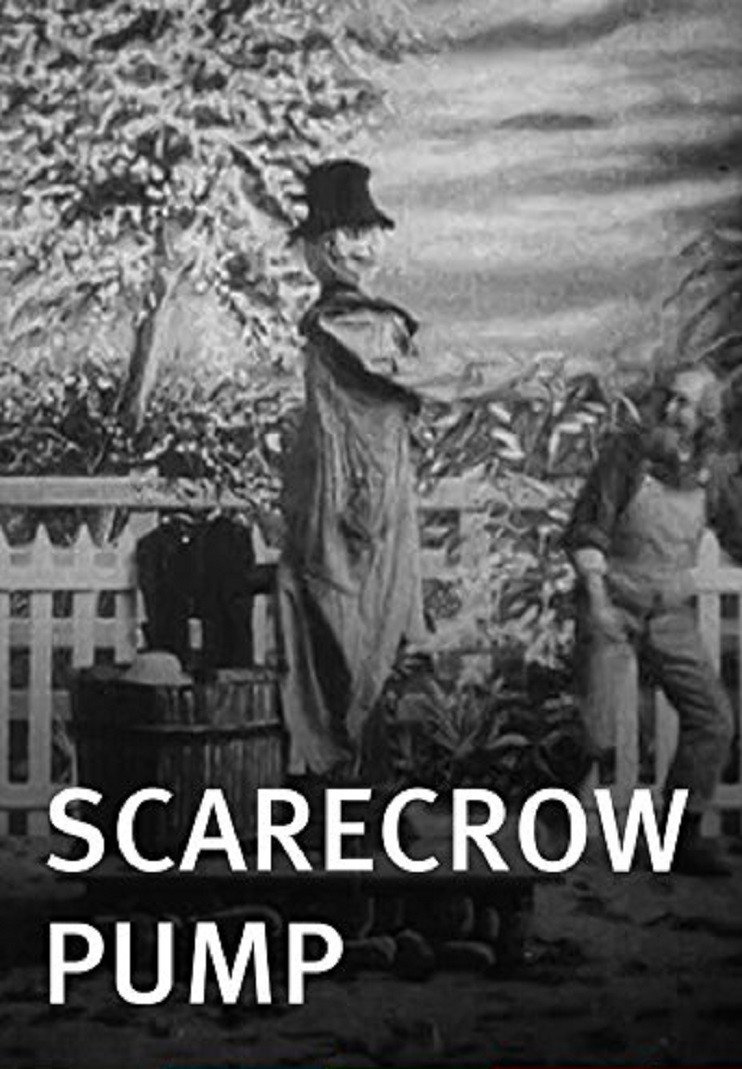
A pump stands outside a farmhouse, just inside a picket fence. A boy comes out of the house and dresses up the pump handle and its post as a scarecrow, so that he can play a practical joke on a drunken acquaintance when he passes by. The boy then hides and waits for him, but things do not turn out quite as he planned.

Movie

Love by the Light of the Moon (1901) WikiData IMDb TMDB
Love by the Light of the Moon
director: Edwin S. Porter
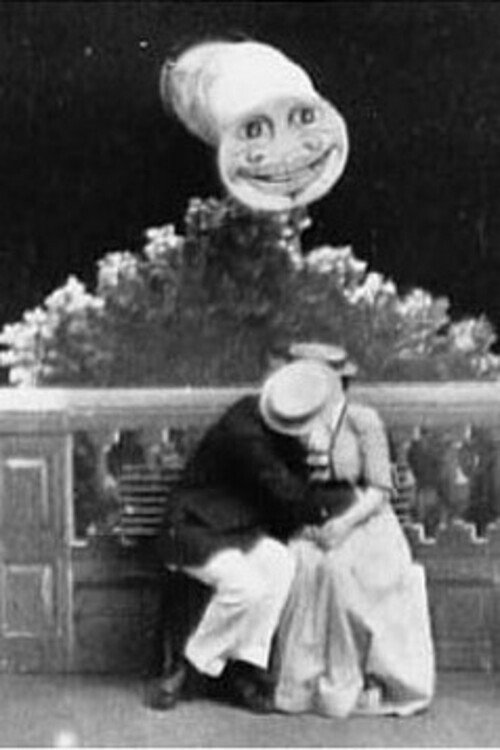
It shows a garden wall in the background. Two lovers appear and lean over the garden gate where the moon throws a shadow upon the ground. The young man invites the young lady to a settee, when the moon's face brightens into a very pronounced grin. As the pair begin love making, the moon winks one eye and then the other, and, finally, as the lovers become more interested, the moon comes down from the sky with a grin on his face as large as an old-fashioned apple pie.

Movie

Babies Rolling Eggs (1902) WikiData IMDb TMDB
Babies Rolling Eggs
director: Edwin S. Porter
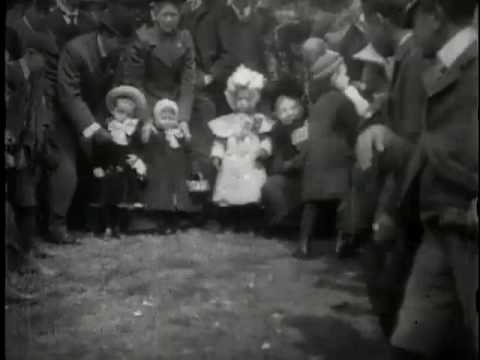
The Washington Star of April 1st, 1900, gave the following account of the ceremony: "Over 40,000 women and children passed through the White House Gates to-day during the hours set apart for the great National show of Egg Rolling, and when the President stepped on the south front gallery at 4:15 P.M., at least 20,000 were within the grounds. The Marine Band rendered a programme of popular music. The President's children entertained at least fifty young friends during the day with a view of the egg rolling from the balcony, but none of them mingled with the great throng, preferring to view the panorama from the distance. They were much amused with the antics of the great crowd of children, who were of all colors and from every walk of life."

Movie

The Twentieth Century Tramp; or, Happy Hooligan and His Airship (1902) WikiData IMDb TMDB
The Twentieth Century Tramp; or, Happy Hooligan and His Airship
A comic picture that defies description. It depicts the Twentieth Century up-to-date tramp flying over the chimney tops of New York City in the latest improved flying machine. Weary Willie has the indispensible tin can hanging from his waist and he waves his hands to his friends as he flies along. He passes over the top of the Equitable Life building and other New York sky scrapers. He flies over the East River and clears the top of the Brooklyn Bridge, and appears to be making his way toward Staten Island. When he is about in the centre of the river, his flying machine explodes, and like the unfortunate McGinty, down goes Weary William.

Movie

The Old Maid Having Her Picture Taken (1901) IMDb TMDB
The Old Maid Having Her Picture Taken
director: Edwin S. Porter actor: Gilbert Saroni
An old maid is walking about the studio while the photographer is getting his camera ready. She first looks at a hanger, which immediately falls from the wall, not being able to stand her gaze. Then she looks at the clock, and her face causes it to fall to the floor with a crash. She then walks over to the mirror, which suddenly cracks in several places. The photographer then poses her. Just as he is to press the button the camera explodes with a great puff of smoke, completely destroying the camera and demolishing the studio. The picture finishes up with the old maid tipping back in her chair and losing her balance, displaying a large quantity of fancy lace goods. Cross-dressed Gilbert Saroni reprises the role of the old maid.

Movie

Another Job for the Undertaker (1901) WikiData IMDb TMDB
Another Job for the Undertaker
director: Edwin S. Porter
Shows a bedroom in a hotel. On the wall of the room is a conspicuous sign "Don't blow out the gas." A hayseed enters the room, accompanied by a bellboy. The boy deposits the Rube's bag and umbrella, turns a somersault, and vanishes through the door. The Rube then removes his hat and coat and places them upon the table. They immediately vanish. He then blows out the gas. The scene then instantly changes to a funeral procession, headed by Reuben's hearse, and followed by the carriages of his country friends. Strictly up-to-date picture. (Edison Catalog, 1901)

Movie

The Mystic Swing (1900) WikiData IMDb TMDB
The Mystic Swing
director: Edwin S. Porter
The professor shows his power to Mephisto by mysteriously placing a young lady in a swing. Mephisto then shows his power by making the young lady disappear from the swing, to the surprise of the professor. The professor makes another mystic pass and produces a second young lady then in the swing, and also a skeleton.

Movie

The Martyred Presidents (1901) WikiData IMDb TMDB
The Martyred Presidents
director: Edwin S. Porter
This film is difficult to classify. It opens on a scene showing a mourner with bowed head sitting in front of what appears to be a tombstone. Shortly afterwards, the face of Abraham Lincoln and then of two other presidents, Garfield and McKinley, can be seen on the monument and then they disappear. There is a figure huddled at the foot of a statue of Justice, as if asking forgiveness.

Movie

Coney Island at Night (1905) WikiData IMDb TMDB
Coney Island at Night
director: Edwin S. Porter
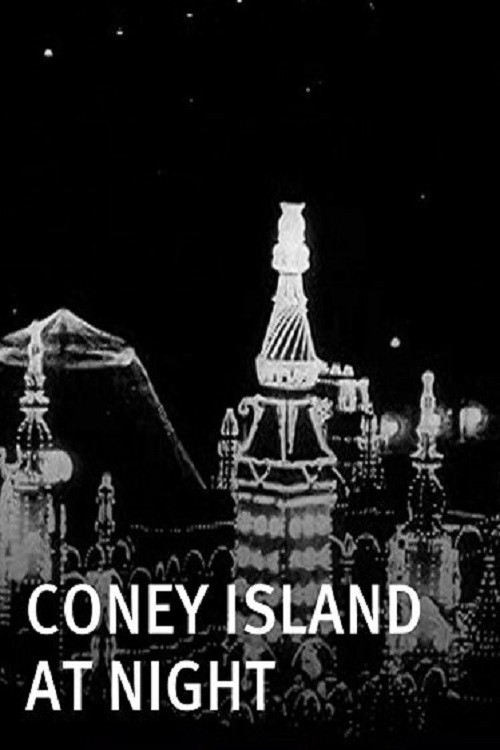
A panorama of Coney Island, taken at night: the camera sweeps across the scene from a vantage point well above the area. It then moves in for closer views of Dreamland and Luna Park.

Movie

Faust and Marguerite (1900) WikiData IMDb TMDB
Faust and Marguerite
director: Edwin S. Porter
Marguerite is seated in front of the fireplace, Faust standing by her side. Mephistopheles enters and offers his sword to Faust, commanding him to behead the fair Marguerite. Faust refuses, whereupon Mephistopheles draws the sword across the throat of the lady and she suddenly disappears and Faust is seated in her place.

Movie

Three American Beauties (1906) IMDb TMDB Douban
Three American Beauties
director: 埃德温·鲍特 actor: Blanche Dayo
In this color-tinted short, we first see a close-up of a red rose, perfectly formed. Then, we see the rose held by a young woman who is wearing a bright yellow dress. She's the second beauty. Behind her is a slow dissolve to the US flag, tinted in red, white, and blue, blowing in the wind. Behind the flag is a star-lit sky.

Movie

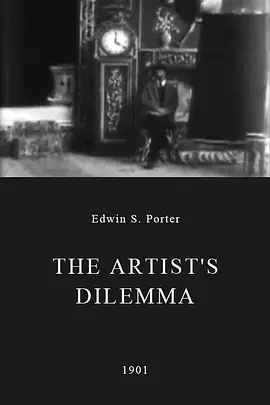
The Artist's Dilemma (1901) WikiData IMDb TMDB Douban
The Artist's Dilemma
other title: 艺术家的困境 / The Artist's Dilemma; or, What He Saw in a Nightmare
In the artist's studio, he asleep in his chair. A large old fashioned clock opens and a young lady comes out and awaking the artist, requests him to paint her picture. While the artist is executing the work a clown comes from the clock, takes in the situation and begins to make love to the lady. The artist detects him and compels him to desist his love making. He continues to paint. The clown becomes interested and asks the artist to allow him to paint the picture, and begins smearing a whitewash brush over the canvas, and a most perfect image of the young lady appears. The image then steps down from the frame, joins the young lady in the studio, and the figures, each a perfect counterpart of the other begin to dance to the great astonishment of the artist. The clown waves his hand causing the figures of the two girls to merge into one. The artist then assumes his seat and awakens in shock. The film was a Vitagraph production, but later acquired and copyrighted by the Edison Company.