Mary Ellen Bute — Director (7)

Movie

Rhythm in Light (1934) WikiData IMDb TMDB
Rhythm in Light
director: Mary Ellen Bute / Ted Nemeth …
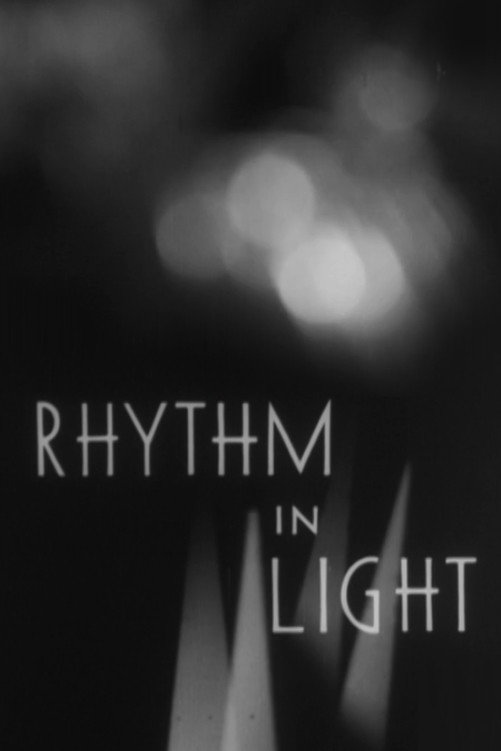
Screen titles introduce the film as a modern artist's impressions of what goes on in the mind while listening to music. Grieg's "Peer Gynt Suite" accompanies images of common objects and abstract forms photographed in soft focus and through prisms: rings, pyramids, the staff of musical notes, and floating lights are all seen in multiple images, sometimes as if through a kaleidoscope, other times as if in animation. Images appear and patterns move across the screen. Sparklers celebrate at the film's end.

Movie

Tarantella (1940) WikiData IMDb TMDB Douban
Tarantella
other title: 塔兰泰拉 / Synchromy No. 9 …
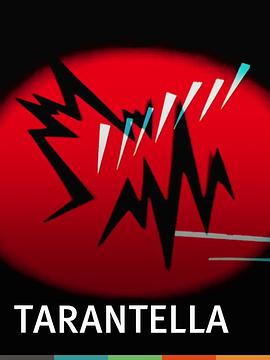
Abstract animation illustrates Edwin Gerschefski's modernist composition. Two dots - one blue and one orange - appear most often, sometimes large, sometimes small, sometimes overlapping. When the sounds become more staccato, so do the images: wavy lines become squiggles, short nail-like lines go across the screen in rows. The result is a visual representation of abstract music, lively and spirited in spite of its link to a dance composed to sweat out the poisons of a spider bite.

Movie

Synchromy No.4: Escape (1937) WikiData IMDb TMDB Douban
Escape (Synchronomy No. 4)
director: Mary Ellen Bute / Bill Nemeth / Ted Nemeth
other title: Synchromy No.4 / Escape …
Mary Ellen Bute's first color film tells a story in abstraction of an orange/red triangle imprisioned behind a grid of vertical and horizontal lines uner a sky-blue expanse, perhaps representing freedom. J.S Bach's Toccata (in D Minor) adds dramatic tension to the visual variable in motion. -Cecile Starr

Movie

Dada (1936) IMDb TMDB Douban
Dada
other title: 达达
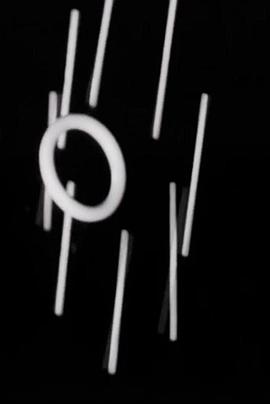
A (barely) two minute short is that it was made specially for a Paramount newsreel segment on Bute and Nemeth making films in their teensy New York apartment. Paramount apparently never got round to including the filmmakers in any newsreel, but their own film survived in the Bute-Nemeth Archive. (weirdwildrealm.com) To the rhythm of music that sounds a bit like a Busby Berkeley tune, lines and circles appear against a black background. Then triangles, in groups. Black and white squares move in tandem. Sparkling forms turn in kaleidoscopic patterns. Then cubes appear, white against the background, bouncing; a yin and yang rotate a few times before the film ends with an quick burst of scattering light.

Movie

Spook Sport (1940) WikiData IMDb TMDB Douban
Spook Sport
director: Mary Ellen Bute / Norman McLaren / Ted Nemeth
other title: 幽异舞动
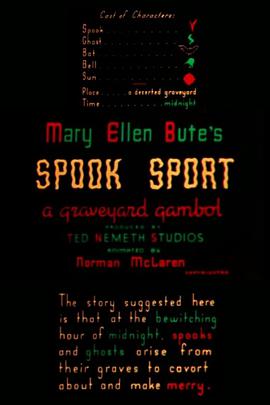
It's midnight in a graveyard. The principal characters are spooks, ghosts, bats, bells, and, at the end, the sun. As midnight strikes, 12 spooks appear, then two ghosts. They move to the music's rhythm. Against the black night, they are blue and yellow. Bats appear as does a xylophone of bones. Mist rises, spooks swirl. A bell tolls. The sky turns light blue, the ghosts' dance slows. Then black night returns bringing intimations of frenzy. Bones play snare drums; spooks peek out of square graves. Scary faces appear. Frenetic movement takes over. A rooster crows and all return to earth as the sun's light appears.

Movie

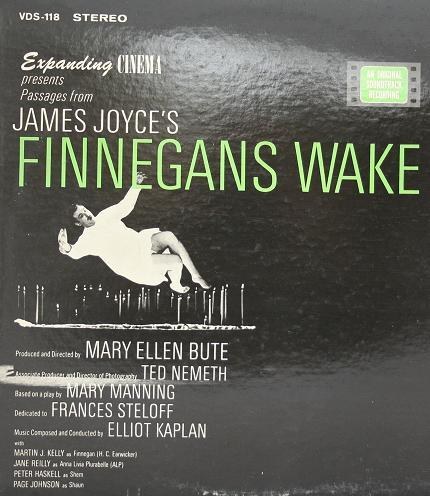
Passages from James Joyce's Finnegans Wake (1966) WikiData IMDb TMDB Douban
Finnegans Wake
other title: 芬尼根守灵夜 / Finnegans Wake …
Passages from James Joyce's Finnegans Wake 1965 16mm film 90mins
This was the first attempt to cinematize the works of Irish author James Joyce. Based more on a stage adaptation by Mary Manning than the Joyce novel itself, the film concentrates on Dublin pubkeeper Finnegan (Martin J. Kelly), who while in the throes of inebriation has a vision of his own death. As the bemused Finnegan lies in his coffin, his friends gather for his wake. The "corpse" tries to cut through the keening and platitudes by probing the innermost thoughts of those closest to him. The surprising aspect of this film is that so much of its difficult text works on screen--a tribute to the loving care of scripter/director/ editor Mary Ellen Bute, who, while preparing this film spent her waking hours picking the brains and burrowing through the resource materials of the James Joyce Society.
Although director Mary Ellen Bute’s highly regarded Finnegans Wake (aka Passages from Finnegans Wake) is a unique film that is likely to baffle anyone unfamiliar with James Joyce, it cannot be dismissed merely as a literary exercise. The director was right in claiming that her film was “not a translation of the book but a reaction to it”. It is actually based on a stage play by Mary Manning, who was also responsible for the screenplay. Joyce’s elliptical rhetoric and intricate punning, which might be considered a formidable barrier to the filming of this most opaque of his works, proved to be an attraction to Bute, whose enthusiasm for the ‘visual’ and ‘kinetic’ quality of his language led her to the surprising but well-judged move of running subtitles from the original text to support the dialogue.
Visual music pioneer Mary Ellen Bute's final film was also her first feature film. James Joyce's classic story of Irish tavern-keeper who dreams of attending his own wake is brought to the screen with a sparkling energy which highlights its maker's career-long exploration of kinetic abstract animation. Perhaps best described as a 'film poem,' Passages from Finnegans Wake was the first attempt to 'cinematize' the works of James Joyce, featuring the author's highly original language spoken by characters and presented as text on screen.