Deborah Stratman — Director (11)

Movie

Immortal, Suspended (2013) Douban
director: Deborah Stratman
The idea of suspension is evoked on shifting registers - as levitation, cessation, anticipation, preservation - and located in sites whose identities slip as we track through a space within a space. Filmed on location at the Freer/Sackler Smithsonian Museum of Asian Art. Written by Anonymous

Movie

Last Things (2023) Douban
Last Things
director: Deborah Stratman
other title: 残存之物
Last Things est un projet de film en 16mm basé sur deux nouvelles de J.-H. Rosny considéré comme fondateur de la science-fiction, nouvelles qui trouvent de singuliers échos dans notre contemporain. Le film puise dans un réseau associatif de réflexions autour des notions d’évolution et d’extinction. Il s’écrit et se développe à travers une méthode de recherche filmée spécifique mise en place depuis des années par Deborah Stratman. A travers la fiction spéculative, cette recherche permet une lecture de phénomènes géologiques et de monuments choisis, datant de différentes époques, à différentes échelles, sur différents territoires.

Movie

Hacked Circuit (2014) Douban
director: Deborah Stratman
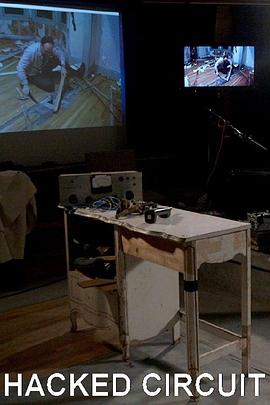
Synopsis: A single-shot, choreographed portrait of the Foley process, revealing multiple layers of fabrication and imposition. The circular camera path moves us inside and back out of a Foley stage in Burbank, CA. While portraying sound artists at work, typically invisible support mechanisms of filmmaking are exposed, as are, by extension and quotation, governmental violations of individual privacy.
The scene being foleyed is the final sequence from The Conversation where Gene Hackman's character Harry Caul tears apart his room searching for a 'bug' that he suspects has been covertly planted. The look of Caul's apartment as he tears it apart mirrors the visual chaos of the Foley stage. This mirroring is also evident in the dual portraits of sonic espionage expert Caul and Foley artist Gregg Barbanell, for whom professionalism is marked by an invisibility of craft. And in the doubling produced by Hackman's second appearance as a surveillance hack, twenty-four years later in Enemy of the State.
These filmic quotations ground Hacked Circuit, evoking paranoia, and a sense of conviction alongside a lack of certainty about what is visible. The complication of the seen, the known, the heard and the undetectable provides thematic parallels between the stagecraft of Foley and a pervasive climate of government surveillance.
*Foley is the art of reproducing sound effects for cinema in real time. Its purpose is to complement or reproduce sounds created on set at the time of filming (aka field recording). Most films use a combination of foley and field recording. While watching a film clip, the Foley artist produces incidental non-dialogue sounds in sync with the action, e.g. footsteps, keys dropping, fabric rustling, glass breaking, doors closing, etc. The work of a good Foley artist goes undetected by the audience.
Movie

Optimism (2018) Douban
director: Deborah Stratman
Draw down the sun. Dig up the gold.
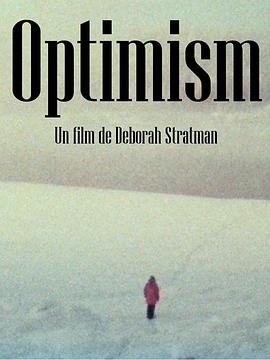
The urge to relieve a winter valley of permanent shadow and find gold in alluvial gravel is part of a long history of desire and extraction in the far Canadian north. Cancan dancers, curlers, smelters, former city officials, and a curious cliff-side mirrored disc congregate to form a town portrait. Shot on location in Dawson City, Yukon Territory.

Movie

These Blazeing Starrs! (2011) Douban
director: Deborah Stratman
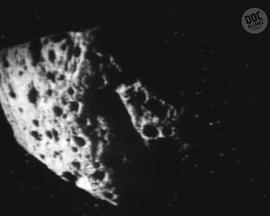
Since comets have been recorded, they’ve augured disaster: catastrophe, messiahs, upheaval and end times. A short film about these meteoric ice-cored fireballs and their historic ties to divination that combines imagery of 15th-18th century European broadsides with NASA Jet Propulsion Laboratory footage.
…These Blazeing Starrs! juxtaposes a modern empirical desire to probe and measure against older methods, when star gazers were translators, explicating the sky more intuitively for predictions of human folly. Comets are now understood as time capsules harboring elemental information about the formation of our solar system. Today we smash rockets into them to read spectral signatures. In a sense, they remain oracles - it’s just the manner of divining which has changed.

Movie

From Hetty To Nancy (1997) WikiData IMDb TMDB Douban
From Hetty to Nancy
director: Deborah Stratman
other title: From Hetty to Nancy
Travel journal entries weave a narrative that counterpoises the austere Icelandic ‘frontier' landscape with the banalities of travel circumstances.
The stoic beauty the Icelandic landscape forms a backdrop for a series of witty and caustic letters written at the turn of the century by a woman named Hetty as she treks with her companion Masie, four school girls and their school marm. The film juxtaposes Hetty's ironic cataloguing of the petty social interactions of her companions as they endure discomfort and boredom with historic accounts of catastrophes that reveal the Icelandic people subject to the awesome forces of nature.

Movie

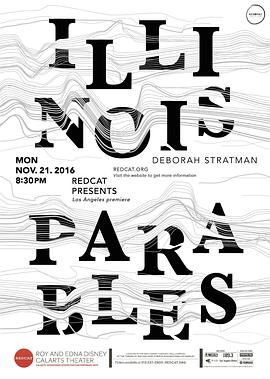
The Illinois Parables (2016) Douban
The Illinois Parables
director: Deborah Stratman
other title: 伊利诺伊寓言
An experimental documentary comprised of regional vignettes about faith, force, technology and exodus. Eleven parables relay histories of settlement, removal, technological breakthrough, violence, messianism and resistance, all occurring somewhere in the state of Illinois. But the state is a structural ruse, and its histories are allegories that ask what belief might teach us about nationhood. In our desire to understand the inscrutable, whom do we end up blaming or endorsing?

Movie

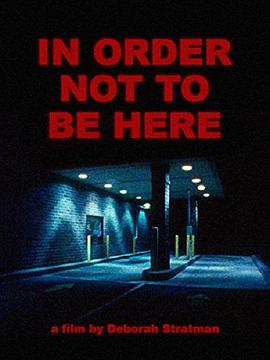
In Order Not to Be Here (2002) IMDb TMDB Douban
In Order Not to Be Here
director: Deborah Stratman actor: Joaquin De La Puente
other title: 为了不在这里
Images of suburban surveillance and violence that push up against the limits of the real.
An uncompromising look at the ways privacy, safety, convenience and surveillance determine our environment. Shot entirely at night, the film confronts the hermetic nature of white-collar communities, dissecting the fear behind contemporary suburban design. An isolation-based fear (protect us from people not like us). A fear of irregularity (eat at McDonalds, you know what to expect). A fear of thought (turn on the television). A fear of self (don’t stop moving). By examining evacuated suburban and corporate landscapes, the film reveals a peculiarly 21st century hollowness… an emptiness born of our collective faith in safety and technology. This is a new genre of horror movie, attempting suburban locations as states of mind.
Original electronic music by Kevin Drumm.
——SMz

Movie

Vever (2019) Douban
director: Deborah Stratman
other title: for Barbara
三位电影制作者的跨代约束,他们寻求替代他们固有的权力结构的可能性。每个女人都像伸出援助之手一样,把目光延伸到她不在的主题上。韦弗(为芭芭拉)成长于玛雅德伦和芭芭拉汉默的废弃电影项目。1975年,在一个摩托车旅行锤的最远点被击中,来到危地马拉,在1950年代的海地,德伦思考了失败、遭遇和开始。
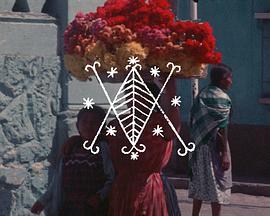
vever是海地伏都教中用来调用一个LOA或上帝的象征性绘画。
A cross-generational binding of three filmmakers seeking alternative possibilities to the power structures they are inherently part of. Each woman extends her gaze like an offered hand to a subject she is outside of. Vever (for Barbara) grew out of the abandoned film projects of Maya Deren and Barbara Hammer. Shot at the furthest point of a motorcycle trip Hammer took to Guatemala in 1975, and laced through with Deren’s reflections on failure, encounter, and initiation in 1950s Haiti.
A vever is a symbolic drawing used in Haitian Voodoo to invoke a Loa, or god.