托尔金研究

Flora of Middle-Earth
Douban
Walter S. Judd
/
Graham A. Judd
publishing house:
Oxford University Press
2017
- 8
Few settings in literature are as widely known or celebrated as J.R.R. Tolkien's Middle-Earth. The natural landscape plays a major role in nearly all of Tolkien's major works, and readers have come to view the geography of this fictional universe as integral to understanding and enjoying Tolkien's works. And in laying out this continent, Tolkien paid special attention to its plant life; in total, over 160 plants are explicitly mentioned and described as a part of Middle-Earth. Nearly all of these plants are real species, and many of the fictional plants are based on scientifically grounded botanic principles.
In Flora of Middle Earth: Plants of Tolkien's Legendarium, botanist Walter Judd gives a detailed species account of every plant found in Tolkien's universe, complete with the etymology of the plant's name, a discussion of its significance within Tolkien's work, a description of the plant's distribution and ecology, and an original hand-drawn illustration by artist Graham Judd in the style of a woodcut print. Among the over three-thousand vascular plants Tolkien would have seen in the British Isles, the authors show why Tolkien may have selected certain plants for inclusion in his universe over others, in terms of their botanic properties and traditional uses. The clear, comprehensive alphabetical listing of each species, along with the visual identification key of the plant drawings, adds to the reader's understanding and appreciation of the Tolkien canon.
Elvish Dictionary Sindarin-English English-Sindarin
Douban
Ambar Eldaron
publishing house:
CreateSpace Independent Publishing Platform
2015
- 3
Elvish Dictionary Quenya-English English-Quenya
Douban
Ambar Eldaron
publishing house:
CreateSpace Independent Publishing Platform
2015
- 3
Elvish Verb Chart - Quenya
Douban
Ambar Eldaron
publishing house:
CreateSpace Independent Publishing Platform
2015
- 3
Pedin Edhellen English Royal
Douban
Thorsten Renk
publishing house:
CreateSpace Independent Publishing Platform
2015
- 3

Quetin i lambë Eldaiva English Royal
Douban
Thorsten Renk
publishing house:
CreateSpace Independent Publishing Platform
2015
- 3
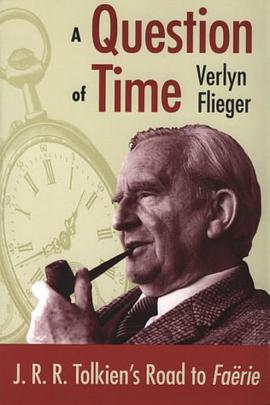
There Would Always Be a Fairy-Tale
Douban
Verlyn Flieger
publishing house:
The Kent State University Press
2017
- 11

J.R.R. Tolkien
Google Books Douban
Humphrey Carpenter
publishing house:
HarperCollins
2016
- 10
The original authorised biography, and the only one written by an author who actually met J.R.R. Tolkien, reissued to mark Tolkien’s 125th Anniversary.
In more than 40 years since Tolkien’s death in September 1973, millions have read The Hobbit, The Lord of the Rings and The Silmarillion and become fascinated about the very private man behind the books.
Born in Bloemfontein in January 1892, John Ronald Reuel Tolkien was orphaned in childhood, brought up in near-poverty and almost thwarted in adolescent romance. He served in the First World War, surviving the Battle of the Somme, where he lost some of his closest friends, and returned to academic life, achieving high repute as a scholar and university teacher, eventually becoming Merton Professor of English at Oxford.
Then suddenly his life changed dramatically. One day while marking essay papers he found himself writing ‘In a hole in the ground there lived a hobbit’ – and worldwide renown awaited him.
Humphrey Carpenter was given unrestricted access to all Tolkien’s papers, and interviewed his friends and family. From these sources he follows the long and painful process of creation that produced The Hobbit, The Lord of the Rings and The Silmarillion and offers a wealth of information about the life and work of the twentieth century’s most cherished author.
A Secret Vice
DoubanThe first ever critical study of Tolkien’s little-known essay, which reveals how language invention shaped the creation of Middle-earth and beyond, to George R R Martin’s Game of Thrones.
J.R.R. Tolkien’s linguistic invention was a fundamental part of his artistic output, to the extent that later on in life he attributed the existence of his mythology to the desire to give his languages a home and peoples to speak them. As Tolkien puts it in ‘A Secret Vice’, ‘the making of language and mythology are related functions’’.
In the 1930s, Tolkien composed and delivered two lectures, in which he explored these two key elements of his sub-creative methodology. The second of these, the seminal Andrew Lang Lecture for 1938–9, ‘On Fairy-Stories’, which he delivered at the University of St Andrews in Scotland, is well known. But many years before, in 1931, Tolkien gave a talk to a philological society entitled ‘A Hobby for the Home’, where he unveiled for the first time to a listening public the art that he had both himself encountered and been involved with since his earliest childhood: ‘the construction of imaginary languages in full or outline for amusement’.
This talk would be edited by Christopher Tolkien for inclusion as ‘A Secret Vice’ in The Monsters and the Critics and Other Essays and serves as the principal exposition of Tolkien’s art of inventing languages. This new critical edition, which includes previously unpublished notes and drafts by Tolkien connected with the essay, including his ‘Essay on Phonetic Symbolism’, goes some way towards re-opening the debate on the importance of linguistic invention in Tolkien’s mythology and the role of imaginary languages in fantasy literature.
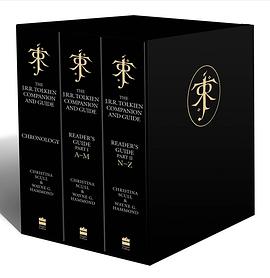
The J.R.R. Tolkien Companion and Guide
Douban
Wayne G. Hammond
/
Christina Scull
publishing house:
HarperCollins
2017
- 9
https://wayneandchristina.wordpress.com/2016/10/04/tolkien-companion-and-guide-2nd-ed/
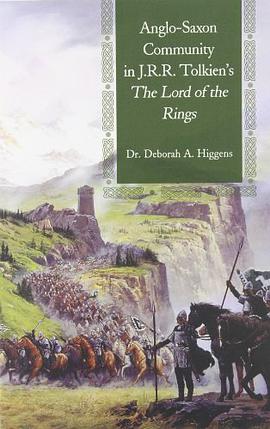
Anglo-Saxon Community in J.R.R. Tolkien's the Lord of the Rings
Douban
Deborah a. Higgens
publishing house:
Oloris Publishing
2014
- 3
Understanding The Lord of the Rings
Douban
Zimbardo, Rose A. (EDT)/ Isaacs, Neil David (EDT)
publishing house:
Houghton Mifflin
2004
- 5
When first published, The Lord of the Rings stood far from the mainstream: no one had seen anything like it for decades. Tolkien's almost stridently antimodern tale needed valiant defenders, vocal admirers who understood its sources and relished its monumental scale. While such champions of modernism as Edmund Wilson mocked Tolkien's archaic structure and language, W. H. Auden -- a great modernist poet in his own right -- rose to his defense with a spirited essay on the true nature of the Hero Quest. Edmund Fuller's essay collected here discusses the nature of the fairy tale, returning to the roots of the term to remove the treacle of Disney and restore the value of realistic enchantment. Tolkien's friend C. S. Lewis takes up the question of why, if you have a serious comment to make about real life, you would drape it in a never-never land of your own. He shrewdly argues that it is because real life does have mythic and heroic qualities -- in abundance. This collection also includes, among others, essays by Marion Zimmer Bradley, Verlyn Flieger, Paul Kocher, Jane Chance, and each of the editors, as well as a brand-new essay by Tom Shippey that shows us how to process all this vast learning, adding to it the many delights of the film versions of Tolkien's epic masterpiece, so we can relish his achievement all the more.
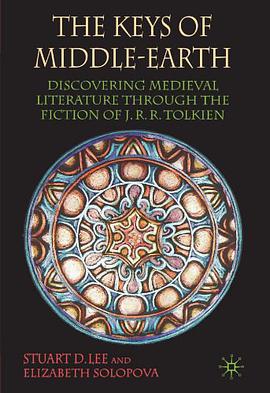
The Keys of Middle-Earth
Douban
Stuart Lee
/
Elizabeth Solopova
publishing house:
Palgrave Macmillan
2006
- 3
The Keys of Middle-Earth introduces the reader to the world of medieval literature through the fiction of J.R.R. Tolkien. Using key episodes in The Hobbit and The Lord of the Rings, readers are taken back to the works of Old, Middle English and Old Norse literature that so influenced Tolkien. The original texts are presented with helpful new translations to help the reader approach the medieval poems and tales, and introductory essays draw on recent scholarship and Tolkien's own unpublished notes.
Tolkien, Race and Cultural History
Douban
Fimi, Dimitra
2010
- 9
Tolkien, Race and Cultural History, in paperback for the first time, explores the evolution of Tolkien's mythology by examining how it changed as a result of Tolkien's life story and contemporary cultural and intellectual history. The book considers Tolkien's creative writing as an ever-developing 'legendarium': an interconnected web of stories, poems and essays, from his early poems in the 1910s to his latest writings in the early 1970s. Consequently, the book is not restricted to a discussion of Tolkien's best-known works only (The Hobbit, The Lord of the Rings and The Silmarillion) but examines the whole corpus of his legendarium, including the 12-volume History of Middle-earth series, which has received little attention from critics. This new approach and scope brings to light neglected aspects of Tolkien's imaginative vision and addresses key features of Tolkien's creativity: the centrality of the Elves and the role of linguistic invention in his legendarium, as well as race and material culture in Middle-earth.
Languages, Myths and History
Douban
Elizabeth Solopova
publishing house:
North Landing Books
2009
- 6
Roots and Branches
Douban
Tom, Shippey
publishing house:
Walking Tree Publishers
2007
- 4
Professor Tom Shippey is best known for his books 'The Road to Middle-earth' and 'J.R.R. Tolkien. Author of the Century'. Yet they are not the only contributions of his to Tolkien studies. Over the years, he has written and lectured widely on Tolkien-related topics. Unfortunately, many of his essays, though still topical, are no longer available. The current volume unites for the first time a selection of his older essays together with some new, as yet unpublished articles.

Perilous and Fair
Douban
Janet Brennan Croft
publishing house:
Mythopoeic Press, The
2015
- 1
Since the earliest scholarship on The Lord of the Rings and The Silmarillion, critics have discussed how the works of J. R. R. Tolkien seem either to ignore women or to place them on unattainable pedestals. To remedy such claims that Tolkien’s fiction has nothing useful or modern to say about women, Perilous and Fair focuses critical attention on views that interpret women in Tolkien’s works and life as enacting essential, rather than merely supportive roles.
Perilous and Fair includes seven classic articles as well as seven new examinations of women in Tolkien’s works and life. These fourteen articles bring together perspectives not only on Tolkien’s most commonly discussed female characters—Éowyn, Galadriel, and Lúthien—but also on less studied figures such as Nienna, Yavanna, Shelob, and Arwen. Among others, the collection features such diverse critical approaches and methods as literary source study, historical context, feminist theory, biographical investigation, close-reading textual analysis, Jungian archetypes, and fanfiction reader-response.