托尔金研究
Interrupted Music
Douban
Verlyn Flieger publishing house: Kent State University Press 2005 - 4
The content of Tolkien's Mythology, the Silmarillion, has been the subject of considerable exploration and analysis for many years, but the logistics of its development have been mostly ignored and deserve closer investigation. Nineteenth-and twentieth-century scholars understood the term "mythology as a gathering of song and story that derived from and described an identifiable world. Tolkien made a continuous effort over several years to construct a comprehensive mythology, to include not only the stories themselves but also the storytellers, scribes, and bards who were the offspring of his thought. In "Interrupted Music Flieger attempts to illuminate the structure of Tolkien's work, allowing the reader to appreciate its broad, overarching design and its careful, painstaking construction. She endeavors to "follow the music from its beginning as an idea in Tolkien's mind through to his final but never-implemented mechanism for realizing that idea, for bringing the voices of his story to the reading public. "In addition, Flieger reviews attempts at myth-making in the history of English literature by Spenser, Milton, and Blake as well as by Joyce and Yeats. She reflects on the important differences between Tolkien and his predecessors and even more between Tolkien and his contemporaries. This in-depth study will fascinate those interested in Tolkien and fantasy literature.
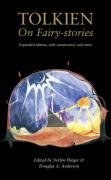
Tolkien On Fairy-Stories
Douban Goodreads
Verlyn Flieger / Douglas A. Anderson publishing house: HarperCollins 2014 - 8
J.R.R. Tolkien's On Fairy-stories is his most-studied and most-quoted essay, an exemplary personal statement of his own views on the role of imagination in literature, and an intellectual tour de force vital for understanding Tolkien's achievement in writing The Lord of the Rings . Contained within is an introduction to Tolkien's original 1939 lecture and the history of the writing of On Fairy-stories, with previously unseen material. Here, at last, Flieger and Anderson reveal the extraordinary genesis of this seminal work and discuss how the conclusions that Tolkien reached during the composition of the essay would shape his writing for the rest of his life.
The Ring of Words
Douban
Peter Gilliver / Jeremy Marshall … publishing house: Oxford University Press, USA 2006 - 5
The Ring of Words describes the powerful and unique relationship between Tolkien's creative use of language in his fictional works and his professional work on the Oxford English Dictionary. Tolkien's earliest employment was as an assistant on the staff of the OED, and he later said that he had 'learned more in those two years than in any other equal part of [his] life'. Here three authors, themselves senior editors of the OED, engage directly with Tolkien's language and his fictional world. Two discursive sections explore Tolkien as a lexicographer and his creativity as a word user and creator; while the main section of the book is made up of individual 'word studies' which explore words found in Tolkien's fiction in terms of their origins, development, and significance in his fictional world. Words such as 'hobbit', 'attercop', 'precious', 'Smeagol', and 'waybread' are explored in fascinating detail. The Ring of Words offers a new and unexplored angle on the creative world of one of our most famous and well-loved writers, presenting new archive material for the first time.
Tolkien on Fairy-Stories
Douban
Verlyn Flieger / Douglas A. Anderson publishing house: HarperCollins Publishers Ltd 2007 - 10
A new expanded edition of Tolkien's most famous, and most important essay, which defined his conception of fantasy as a literary form, and which led to the writing of The Lord of the Rings. Accompanied by a critical study of the history and writing of the text. J.R.R. Tolkien's "On Fairy-stories" is his most-studied and most-quoted essay, an exemplary personal statement of his views on the role of imagination in literature, and an intellectual tour de force vital for understanding Tolkien's achievement in the writing of The Lord of the Rings. "On Fairy-stories" comprises about 18,000 words. What is little-known is that when Tolkien expanded the essay in 1943, he wrote many more pages of his views that were originally condensed into or cut from the published version. An estimate is difficult, but these unpublished passages perhaps amount to half again as much writing as the essay itself. These passages contain important elaborations of his views on other writers, and their publication represents a significant addition to Tolkien studies. Included in this new critical study of the work are: / An introductory essay setting the stage for Tolkien's 1939 lecture (the origin of the essay) and placing it within a historical context. / A history of the writing of 'On Fairy-stories', beginning with coverage of the original lecture as delivered, and continuing through to first publication in 1947. / The essay proper as published in corrected form in Tree and Leaf (1964). / Commentary on the allusions in the text, and notes about the revisions Tolkien made to the text as published in Tree and Leaf. / Important material not included in the essay as published, with commentary by the editors. Contained within "On Fairy-stories" are the roots of the tree of tales that bore such glittering fruit in Tolkien's published and unpublished work. Here, at last, Flieger and Anderson reveal through literary archaeology the extraordinary genesis of this seminal work and discuss, in their engaging commentary, how what Tolkien discovered during the writing of the essay would shape his writing for the rest of his life.
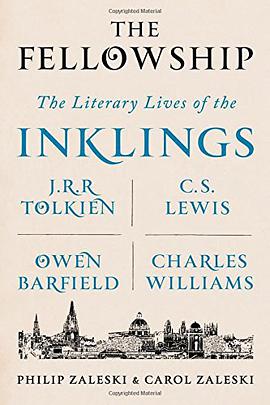
The Fellowship
Douban
Philip Zaleski / Carol Zaleski publishing house: Farrar, Straus and Giroux 2015 - 6
C. S. Lewis is the 20th century's most widely read Christian writer and J.R.R. Tolkien its most beloved mythmaker. For three decades, they and their closest associates formed a literary club known as the Inklings, which met every week in Lewis's Oxford rooms and in nearby pubs. They discussed literature, religion, and ideas; read aloud from works in progress; took philosophical rambles in woods and fields; gave one another companionship and criticism; and, in the process, rewrote the cultural history of modern times. In The Fellowship, Philip and Carol Zaleski offer the first complete rendering of the Inklings' lives and works. The result is an extraordinary account of the ideas, affections and vexations that drove the group's most significant members. C. S. Lewis accepts Jesus Christ while riding in the sidecar of his brother's motorcycle, maps the medieval and Renaissance mind, becomes a world-famous evangelist and moral satirist, and creates new forms of religiously attuned fiction while wrestling with personal crises. J.R.R. Tolkien transmutes an invented mythology into gripping story in The Lord of the Rings, while conducting groundbreaking Old English scholarship and elucidating, for family and friends, the Catholic teachings at the heart of his vision. Owen Barfield, a philosopher for whom language is the key to all mysteries, becomes Lewis's favorite sparring partner, and, for a time, Saul Bellow's chosen guru. And Charles Williams, poet, author of "supernatural shockers," and strange acolyte of romantic love, turns his everyday life into a mystical pageant. Romantics who scorned rebellion, fantasists who prized reality, wartime writers who believed in hope, Christians with cosmic reach, the Inklings sought to revitalize literature and faith in the twentieth century's darkest years-and did so in dazzling style.
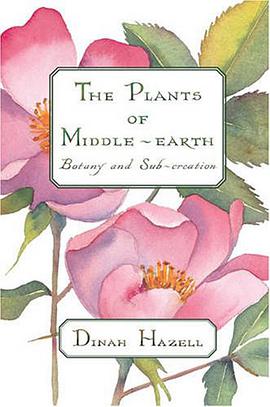
The Plants of Middle-earth
Douban
Dinah Hazell publishing house: Kent State University Press 2006
"This is a very nice book about important items in Middle-earth. Apart from some typical middle-earth plants like elanor, athelas and mallorn, all the flora from Middle-earth can be found in your average plant determination book. They help you feel at home in Middle-earth. Dinah Hazell explores this aspect of Tolkiens world. She links the plants also to biographical information on Tolkien, to other authors well-known by Tolkien like William Morris and William Shakespeare, to old literature, and to British folklore. The book has five chapters. The first is about the names of female hobbits, which are all related to plants (Rosie and Lily Cotton, e.g.). The second chapter takes you on a botanical trip from Frodo's garden to the crossroads. Ithilien gets a chapter of its own, as it has a very detailed description of its mediterranean vegetation. Also woods and trees get their own chapter. The last chapter is on destruction and recovery, both symbolised by botanical life. The destruction of plants is one of the dominant manifestations of evil (the Two Trees, Isengard, rowan trees in Fangorn). The book has beautifull illustrations, b/w drawings and watercolours. One point of criticism is that Dinah Hazell only talks about plants in The Lord of the Rings. She refers to other books, but she did not take the time to reread even The Hobbit on extra botanical information, let alone Unfinished Tales or HoME. And that is a pity".
Read
Jan. 19, 2015
这书实在应该改名,重复/重述原著太多(尤其是后两章),对植物本身的说明和研究太少,而且插图特别少,起不到给人直观印象的作用。此外,还有不少原著知识性的错误——有些可能是笔误,但能把Old Man Willow误成Treebeard,也差得太远了……
托尔金研究 J.R.R.托尔金
Tolkien
Douban
Joseph Pearce publishing house: Ignatius Press 2001
J.R.R. Tolkien's The Lord of the Rings took first place in a recent nationwide British poll to find the greatest book of the century. He may be the most popular writer of our age, but Tolkien is often misunderstood. This major new study of his life, his character and his work reveals the facts and confronts the myths. It explores the background to the man and the culture in which he wrote. Tolkien: Man and Myth observes the relationships that the master writer had with his closest literary colleagues. It reveals his unique relationship with C.S. Lewis, the writer of the Narnia books, and the roots of their estrangement. In this original book about a leading literary life, Joseph Pearce enters the world created by Tolkien in the seven books published during his lifetime. He explores the significance of Middle Earth and what it represented in Tolkien's thinking. Myth, to him, was not a leap from reality but a leap into reality.
Arda Reconstructed
Douban
Kane, Douglas Charles 2011 - 6
Douglas C. Kane reveals a tapestry woven by Christopher Tolkien from different portions of his father's work that is often quite mind-boggling, with inserts that seemed initially to have been editorial inventions shown to have come from some remote portion of Tolkien's vast body of work. He demonstrates how material that was written over the course of more than thirty years was merged together to create a single, coherent text. He also makes a frank appraisal of the material omitted and invented by Christopher Tolkien and how these omissions and insertions may have distorted his father's vision of what he considered-even more than The Lord of the Rings-to be his most important work. It is a fascinating portrait of a unique collaboration that reached beyond the grave. Kane documents the changes, omissions, and additions and traces how the disparate source materials were used to create what is in essence a composite work. He compares the published text with the source texts contained in the volumes of The History of Middle-earth as well as other works and identifies patterns of major and minor changes made to these source materials that resulted in the reconstruction of the finished text. He also cites the works of some of the most important Tolkien scholars, including Tom Shippey, Verlyn Flieger, Christina Scull, Wayne Hammond, Charles Noad, and David Bratman in an attempt to understand and explain why these changes may have been made.
Read
June 1, 2013
给四星主要是为了参考价值——作者把Silm正文中几乎每段都列了详细的各版原稿出处参考,需要查阅非常方便。只论作者对编辑的意见,那我实在没发现多少能跟他心有戚戚的地方。如有兴趣,我的读书笔记在此:
托尔金研究 J.R.R.托尔金
J.R.R. Tolkien
Douban
Shippey, T. A. 2001 - 5
Recent polls have consistently declared that J.R.R. Tolkien is "the most influential author of the century" and THE LORD OF THE RINGS is "the book of the century." In support of these claims, Tom Shippey, the prominent medievalist and scholar of fantasy, now presents us with a fascinating companion to the works of J.R.R. Tolkien, focusing in particular on THE HOBBIT, THE LORD OF THE RINGS, and THE SILMARILLION. The core of the book consists of three chapters that examine THE LORD OF THE RINGS as a linguistic and cultural map, as a twisted web of story, and as a response to the meaning of myth. Shippey presents a unique argument to explain the nature of evil and gives readers a compelling insight into the complicated interweaving of many strands as the narrative moves between characters and into the remarkable skill behind the construction of such a rich and complex story. Other chapters examine THE HOBBIT, explaining the hobbits' anachronistic relationship to the heroic world of Middle-earth; the fundamental importance of THE SILMARILLION to Tolkien's canon; and an illuminating look at FARMER GILES OF HAM, LEAF BY NIGGLE, and other lesser-known works in connection to Tolkien's life. With a clear and accessible style, Shippey offers a new approach to Tolkien, to fantasy, and to the importance of language in literature. He demonstrates how THE HOBBIT, THE LORD OF THE RINGS, and THE SILMARILLION form part of a live and continuing tradition of storytelling that can trace its roots back through Grimms' FAIRIY TALES to BEOWULF. J.R.R. TOLKIEN: AUTHOR OF THE CENTURY not only gives readers a deeper understanding of Tolkien and his work, but also serves as a learned and entertaining introduction to some of the finest and most influential works of fantasy ever written.
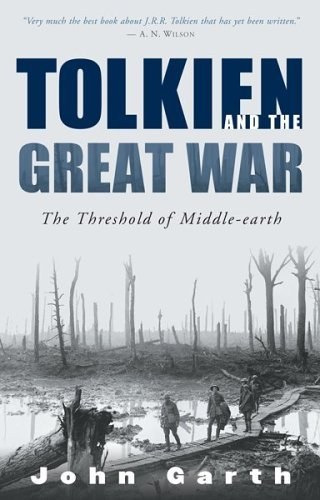
Tolkien and the Great War
Douban
John Garth publishing house: Houghton Mifflin 2005 - 1
"Very much the best book about J.R.R. Tolkien that has yet been written." -- A.N. Wilson "A highly intelligent book ... Garth displays impressive skills both as researcher and writer." -- Max Hastings "It is a strange story that Garth tells, but he tells it clearly and compellingly." -- Tom Shippey "Somewhere, I think, Tolkien is nodding in appreciation." -- Charles Matthews, San Jose Mercury News "Gripping from start to finish and offers important new insights." - Library Journal "A labor of love in which journalist Garth combines a newsman's nose for a good story with a scholar's scrupulous attention to detail... Brilliantly argued." -- Daily Mail "Insight into how a writer turned academia into art, how deeply friendship supports and wounds us, and how the death and disillusionment that characterized World War I inspired Tolkien's lush saga." - Detroit Free Press "To be caught in youth by 1914 was no less hideous an experience than in 1939 . . . by 1918 all but one of my close friends were dead." So J.R.R. Tolkien responded to critics who saw The Lord of the Rings as a reaction to the Second World War. Tolkien and the Great War tells for the first time the full story of how he embarked on the creation of Middle-earth in his youth as the world around him was plunged into catastrophe. This biography reveals the horror and heroism that he experienced as a signals officer in the Battle of the Somme and introduces the circle of friends who spurred his mythology into life. It shows how, after two of these brilliant young men were killed, Tolkien pursued the dream they had all shared by launching his epic of good and evil. This is the first substantially new biography of Tolkien since 1977, meticulously researched and distilled from his personal wartime papers and a multitude of other sources. John Garth argues that the foundation of tragic experience in the First World War is the key to Middle-earth's enduring power. Tolkien used his mythic imagination not to escape from reality but to reflect and transform the cataclysm of his generation. While his contemporaries surrendered to disillusionment, he kept enchantment alive, reshaping an entire literary tradition into a form that resonates to this day.
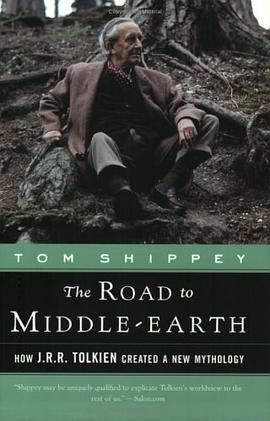
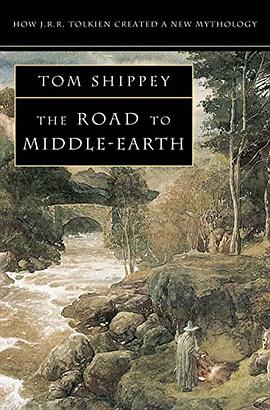
The Road to Middle-earth
Douban
Tom Shippey publishing house: Houghton Mifflin 2003 - 6
The Road to Middle-earth, Tom Shippey"s classic work, now revised in paperback, explores J.R.R. Tolkien"s creativity and the sources of his inspiration. Shippey shows in detail how Tolkien"s professional background led him to write The Hobbit and how he created a timeless charm for millions of readers. Examining the foundation of Tolkien"s most popular work, The Lord of the Rings, Shippey also discusses the contribution of The Silmarillion and Unfinished Tales to Tolkien"s great myth cycle, showing how Tolkien"s more "difficult" books can be fully appreciated. He goes on to examine the remarkable twelve-volume History of Middle-earth, written by Tolkien"s son and literary heir Christopher Tolkien, which traces the creative and technical processes by which Middle-earth evolved.
Tolkien and the Great War
Douban
Garth, John publishing house: HarperCollins 2004 - 7
A new biography exploring J.R.R. Tolkien's wartime experiences and their impact on his life and his writing of The Lord of The Rings. "To be caught in youth by 1914 was no less hideous an experience than in 1939 ! by 1918 all but one of my close friends were dead." So J.R.R. Tolkien responded to critics who saw The Lord of the Rings as a reaction to the Second World War. Tolkien and the Great War tells for the first time the full story of how he embarked on the creation of Middle-earth in his youth as the world around him was plunged into catastrophe. This biography reveals the horror and heroism that he experienced as a signals officer in the Battle of the Somme and introduces the circle of friends who spurred his mythology to life. It shows how, after two of these brilliant young men were killed, Tolkien pursued the dream they had all shared by launching his epic of good and evil. John Garth argues that the foundation of tragic experience in the First World War is the key to Middle-earth's enduring power. Tolkien used his mythic imagination not to escape from reality but to reflect and transform the cataclysm of his generatuion. While his contemporaries surrendered to disillusionment, he kept enchantment alive, reshaping an entire literary tradition into a form that resonates to this day. This is the first substantially new biography of Tolkien since 1977, meticulously researched and distilled from his personal wartime papers and a multitude of other sources.
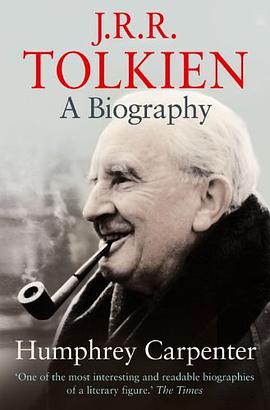
J.R.R.Tolkien
Douban
Carpenter, Humphrey 1998 - 1
The original authorised biography, and the only one written by an author who actually met J.R.R. Tolkien, reset and reissued in B format . In nearly 40 years since Tolkien's death in September 1973, millions have read The Hobbit, The Lord of the Rings and The Silmarillion and become fascinated about the very private man behind the books. Born in Bloemfontein in January 1892, John Ronald Reuel Tolkien was orphaned in childhood, brought up in near-poverty and almost thwarted in adolescent romance. He served in the First World War, surviving the Battle of the Somme, where he lost some of his closest friends, and returned to academic life, achieving high repute as a scholar and university teacher, eventually becoming Merton Professor of English at Oxford. Then suddenly his life changed dramatically. One day while marking essay papers he found himself writing 'In a hole in the ground there lived a hobbit' -- and worldwide renown awaited him. Humphrey Carpenter was given unrestricted access to all Tolkien's papers, and interviewed his friends and family. From these sources he follows the long and painful process of creation that produced The Hobbit, The Lord of the Rings and The Silmarillion and offers a wealth of information about the life and work of the twentieth century's most cherished author.
The Road to Middle-earth
Douban
Tom Shippey publishing house: HarperCollins 2005 - 1
The Road to Middle-earth is a fascinating and accessible exploration of J.R.R.Tolkien's creativity and the sources of his inspiration. Tom Shippey shows in detail how Tolkien's professional background led him to write The Hobbit and how he created a timeless charm for millions of readers. He discusses the contribution of The Silmarillion and Unfinished Tales to Tolkien's great myth-cycle, showing how Tolkien's more 'difficult' works can be read enjoyably and seriously by readers of his earlier books, and goes on to examine the remarkable 12-volume History of Middle-earth by Tolkien's son and literary heir Christopher Tolkien, which traces the creative and technical processes through which Middle-earth evolved. The core of the book, however, concentrates on The Lord of the Rings as a linguistic and cultural map, as a twisted web of a story, and as a response to the inner meaning of myth and poetry. Professor Tom Shippey taught at Oxford, overlapping chronologically with Professor Tolkien and teaching the same syllabus, giving him an intimate familiarity with the poems and the languages which formed the main stimulus to Tolkien's imagination. By following in his footsteps, The Road to Middle-earth offers a new approach to Tolkien, to fantasy, and to the importance of language in literature.
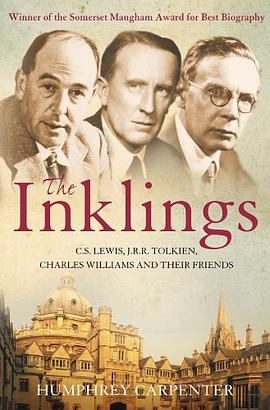
The Inklings
Douban
Humphrey Carpenter publishing house: HARPER COLLINS 1 PAP 2006 - 1
Critically acclaimed, award-winning biography of CS Lewis, JRR Tolkien and the brilliant group of writers to come out of Oxford during the Second World War. C.S. Lewis, J.R.R. Tolkien and their friends were a regular feature of the Oxford scenery in the years during and after the Second World War. They drank beer on Tuesdays at the 'Bird and Baby', and on Thursday nights they met in Lewis' Magdalen College rooms to read aloud from the books they were writing; jokingly they called themselves 'The Inklings'. C.S. Lewis and J.R.R. Tolkien first introduced The Screwtape Letters and The Lord of the Rings to an audience in this company and Charles Williams, poet and writer of supernatural thrillers, was another prominent member of the group. Humphrey Carpenter, who wrote the acclaimed biography of J.R.R. Tolkien, draws upon unpublished letters and diaries, to which he was given special access, in this engrossing story.