J.R.R.托尔金
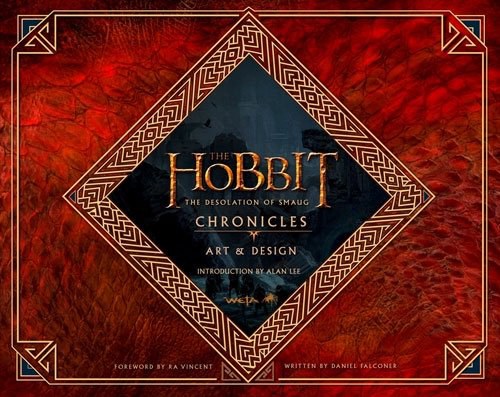
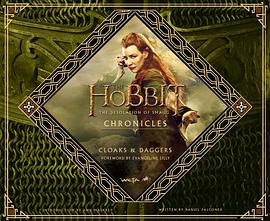
The Hobbit: The Desolation Of Smaug: Chronicles: Art & Design
Douban
Daniel Falconer / Weta Workshop publishing house: HarperCollins 2013
The ultimate celebration of the second Hobbit movie reveals the full creative vision of the art and design teams with more than 1,000 exclusive images and photos, including designs and concepts that never made it to the big screen. The Hobbit: The Desolation of Smaug Chronicles – Art & Design explores and celebrates the creative vision of the second film in Academy Award-winning filmmaker Peter Jackson’s trilogy adaptation of The Hobbit by J.R.R Tolkien. This lavish volume follows Bilbo, Gandalf and Thorin’s Company of Dwarves eastward, through hitherto unseen regions of Middle-earth, on their quest to reclaim the lost realm of Erebor from the Dragon Smaug. Exploring the design and development of the environments, cultures, creatures and artefacts encountered by the characters, it is filled with more than 1,000 stunning images of conceptual art, supplementary photographs and detailed commentary provided by the film’s cast and crew. As a bonus feature, unique to this book, there is a special fold-out replica of the portrait of the Master of Lake-town, played by Stephen Fry, exactly as it appears in the film. Compiled by Weta Workshop senior concept designer Daniel Falconer, this is the third book in The Hobbit: Chronicles series and it has been created in full collaboration with key members of the production’s creative team to ensure the most comprehensive and authentic film companion possible.
The Hobbit: An Unexpected Journey: Chronicles: Art & Design
Douban
Weta Workshop; Falconer, Daniel 2012
The ultimate celebration of the first Hobbit movie reveals the full creative vision of the art and design teams with more than 1,000 exclusive images and photos, including designs and concepts that never made it to the big screen. The Hobbit: An Unexpected Journey Chronicles - Art & Design is packed with more than 1,000 images of concept artwork, photographs and development paintings by the artists working behind the scenes to bring Middle-earth to life, each of whom provides detailed and entertaining commentary that reveals the story behind the vision. As a bonus feature unique to this book, there is a special fold-out map printed in glow-in-the-dark ink and a three-page fold-out replica of Bilbo's contract. Compiled by Weta Workshop senior concept designer Daniel Falconer, this is the first in a series of lavish hardback books written and designed by the award-winning team at Weta, who are working closely with the production team to guarantee that these books will be bursting with insider information and stunning visual imagery.
A Tolkien Compass
Douban
Jared Lobdell 2003 - 2
This guide to travels in Middle-Earth includes an original chapter by Tolkien himself, explaining the meaning and origin of the names in Lord of the Rings. Can hobbits be psychoanalyzed? Does Tolkien’s Christianity shine through his imitations of pagan legends? Do his books offer a useful guide to everyday life? These and many more questions are addressed in the eleven chapters of this book. Contributors analyze Gollum’s character transformation, the psychological journey of Bilbo, the regime set up by Saruman at the end of Lord of the Rings and its parallels to fascism, the books’ narrative technique, and Tolkien’s rich use of myth and symbol. This is an insightful book that will appeal to both old and new Tolkien fans.
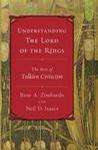
Understanding The Lord of the Rings
Douban
Zimbardo, Rose A. (EDT)/ Isaacs, Neil David (EDT) publishing house: Houghton Mifflin 2004 - 5
When first published, The Lord of the Rings stood far from the mainstream: no one had seen anything like it for decades. Tolkien's almost stridently antimodern tale needed valiant defenders, vocal admirers who understood its sources and relished its monumental scale. While such champions of modernism as Edmund Wilson mocked Tolkien's archaic structure and language, W. H. Auden -- a great modernist poet in his own right -- rose to his defense with a spirited essay on the true nature of the Hero Quest. Edmund Fuller's essay collected here discusses the nature of the fairy tale, returning to the roots of the term to remove the treacle of Disney and restore the value of realistic enchantment. Tolkien's friend C. S. Lewis takes up the question of why, if you have a serious comment to make about real life, you would drape it in a never-never land of your own. He shrewdly argues that it is because real life does have mythic and heroic qualities -- in abundance. This collection also includes, among others, essays by Marion Zimmer Bradley, Verlyn Flieger, Paul Kocher, Jane Chance, and each of the editors, as well as a brand-new essay by Tom Shippey that shows us how to process all this vast learning, adding to it the many delights of the film versions of Tolkien's epic masterpiece, so we can relish his achievement all the more.
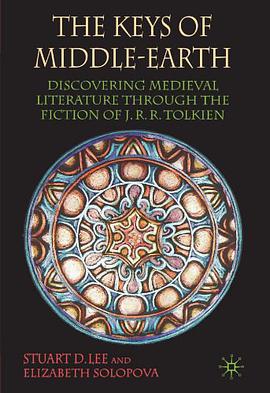
The Keys of Middle-Earth
Douban
Stuart Lee / Elizabeth Solopova publishing house: Palgrave Macmillan 2006 - 3
The Keys of Middle-Earth introduces the reader to the world of medieval literature through the fiction of J.R.R. Tolkien. Using key episodes in The Hobbit and The Lord of the Rings, readers are taken back to the works of Old, Middle English and Old Norse literature that so influenced Tolkien. The original texts are presented with helpful new translations to help the reader approach the medieval poems and tales, and introductory essays draw on recent scholarship and Tolkien's own unpublished notes.
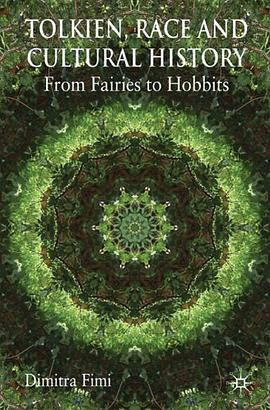
Tolkien, Race and Cultural History
Douban
Fimi, Dimitra 2010 - 9
Tolkien, Race and Cultural History, in paperback for the first time, explores the evolution of Tolkien's mythology by examining how it changed as a result of Tolkien's life story and contemporary cultural and intellectual history. The book considers Tolkien's creative writing as an ever-developing 'legendarium': an interconnected web of stories, poems and essays, from his early poems in the 1910s to his latest writings in the early 1970s. Consequently, the book is not restricted to a discussion of Tolkien's best-known works only (The Hobbit, The Lord of the Rings and The Silmarillion) but examines the whole corpus of his legendarium, including the 12-volume History of Middle-earth series, which has received little attention from critics. This new approach and scope brings to light neglected aspects of Tolkien's imaginative vision and addresses key features of Tolkien's creativity: the centrality of the Elves and the role of linguistic invention in his legendarium, as well as race and material culture in Middle-earth.
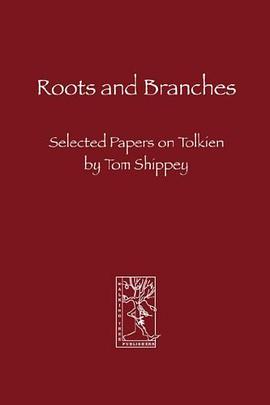
Roots and Branches
Douban
Tom, Shippey publishing house: Walking Tree Publishers 2007 - 4
Professor Tom Shippey is best known for his books 'The Road to Middle-earth' and 'J.R.R. Tolkien. Author of the Century'. Yet they are not the only contributions of his to Tolkien studies. Over the years, he has written and lectured widely on Tolkien-related topics. Unfortunately, many of his essays, though still topical, are no longer available. The current volume unites for the first time a selection of his older essays together with some new, as yet unpublished articles.
Perilous and Fair
Douban
Janet Brennan Croft publishing house: Mythopoeic Press, The 2015 - 1
Since the earliest scholarship on The Lord of the Rings and The Silmarillion, critics have discussed how the works of J. R. R. Tolkien seem either to ignore women or to place them on unattainable pedestals. To remedy such claims that Tolkien’s fiction has nothing useful or modern to say about women, Perilous and Fair focuses critical attention on views that interpret women in Tolkien’s works and life as enacting essential, rather than merely supportive roles. Perilous and Fair includes seven classic articles as well as seven new examinations of women in Tolkien’s works and life. These fourteen articles bring together perspectives not only on Tolkien’s most commonly discussed female characters—Éowyn, Galadriel, and Lúthien—but also on less studied figures such as Nienna, Yavanna, Shelob, and Arwen. Among others, the collection features such diverse critical approaches and methods as literary source study, historical context, feminist theory, biographical investigation, close-reading textual analysis, Jungian archetypes, and fanfiction reader-response.
Interrupted Music
Douban
Verlyn Flieger publishing house: Kent State University Press 2005 - 4
The content of Tolkien's Mythology, the Silmarillion, has been the subject of considerable exploration and analysis for many years, but the logistics of its development have been mostly ignored and deserve closer investigation. Nineteenth-and twentieth-century scholars understood the term "mythology as a gathering of song and story that derived from and described an identifiable world. Tolkien made a continuous effort over several years to construct a comprehensive mythology, to include not only the stories themselves but also the storytellers, scribes, and bards who were the offspring of his thought. In "Interrupted Music Flieger attempts to illuminate the structure of Tolkien's work, allowing the reader to appreciate its broad, overarching design and its careful, painstaking construction. She endeavors to "follow the music from its beginning as an idea in Tolkien's mind through to his final but never-implemented mechanism for realizing that idea, for bringing the voices of his story to the reading public. "In addition, Flieger reviews attempts at myth-making in the history of English literature by Spenser, Milton, and Blake as well as by Joyce and Yeats. She reflects on the important differences between Tolkien and his predecessors and even more between Tolkien and his contemporaries. This in-depth study will fascinate those interested in Tolkien and fantasy literature.