
J.R.R.托尔金


Beowulf
Douban
J. R. R. Tolkien
translator:
[英国] J. R. R. 托尔金
/
[英国] 克里斯托弗·托尔金(编辑)
publishing house:
HarperCollins
2014
- 5
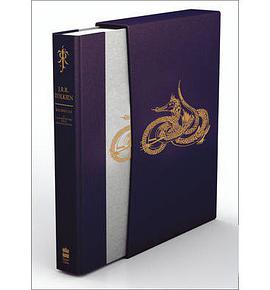
The translation of Beowulf by J.R.R. Tolkien was an early work, very distinctive in its mode, completed in 1926: he returned to it later to make hasty corrections, but seems never to have considered its publication.
This edition is twofold, for there exists an illuminating commentary on the text of the poem by the translator himself, in the written form of a series of lectures given at Oxford in the 1930s; and from these lectures a substantial selection has been made, to form also a commentary on the translation in this book.
From his creative attention to detail in these lectures there arises a sense of the immediacy and clarity of his vision. It is as if he entered into the imagined past: standing beside Beowulf and his men shaking out their mail-shirts as they beached their ship on the coast of Denmark, listening to the rising anger of Beowulf at the taunting of Unferth, or looking up in amazement at Grendel’s terrible hand set under the roof of Heorot.
But the commentary in this book includes also much from those lectures in which, while always anchored in the text, he expressed his wider perceptions. He looks closely at the dragon that would slay Beowulf ‘snuffling in baffled rage and injured greed when he discovers the theft of the cup’; but he rebuts the notion that this is ‘a mere treasure story’, ‘just another dragon tale’. He turns to the lines that tell of the burying of the golden things long ago, and observes that it is ‘the feeling for the treasure itself, this sad history’ that raises it to another level. ‘The whole thing is sombre, tragic, sinister, curiously real. The “treasure” is not just some lucky wealth that will enable the finder to have a good time, or marry the princess. It is laden with history, leading back into the dark heathen ages beyond the memory of song, but not beyond the reach of imagination.’
Sellic Spell, a ‘marvellous tale’, is a story written by Tolkien suggesting what might have been the form and style of an Old English folk-tale of Beowulf, in which there was no association with the ‘historical legends’ of the Northern kingdoms.
Elvish Dictionary Sindarin-English English-Sindarin
Douban
Ambar Eldaron
publishing house:
CreateSpace Independent Publishing Platform
2015
- 3
Elvish Dictionary Quenya-English English-Quenya
Douban
Ambar Eldaron
publishing house:
CreateSpace Independent Publishing Platform
2015
- 3
Elvish Verb Chart - Quenya
Douban
Ambar Eldaron
publishing house:
CreateSpace Independent Publishing Platform
2015
- 3
Pedin Edhellen English Royal
Douban
Thorsten Renk
publishing house:
CreateSpace Independent Publishing Platform
2015
- 3

Quetin i lambë Eldaiva English Royal
Douban
Thorsten Renk
publishing house:
CreateSpace Independent Publishing Platform
2015
- 3
There Would Always Be a Fairy-Tale
Douban
Verlyn Flieger
publishing house:
The Kent State University Press
2017
- 11

Beren and Lúthien
DoubanPainstakingly restored from Tolkien’s manuscripts and presented for the first time as a continuous and standalone story, the epic tale of Beren and Lúthien will reunite fans of The Hobbit and The Lord of the Rings with Elves and Men, Dwarves and Orcs and the rich landscape and creatures unique to Tolkien’s Middle-earth.

Lord of the Rings Sketchbook
Douban
J R R Tolkien
publishing house:
Harpercollins
2000
- 1
A sumptuous large-format hardback containing sketches and paintings from the illustrated Lord of the Rings, together with brand new and previously unseen material. In this large-format hardback Alan Lee reveals in pictures and in words how he created the images in the authorised illustrated edition of The Lord of the Rings. These images would prove so powerful, matching perfectly with Tolkien's own vision, that they would eventually define the look of Peter Jackson's movie trilogy and earn Alan a coveted Academy Award. The book is filled with over 150 of his sketches and early conceptual pieces to show how the project progressed from idea to finished art. It also contains 20 colour paintings reproduced in full-page glory, together with numerous examples of his conceptual art produced for the films and brand new pieces drawn specially for this book. It also includes an exclusive foreword written by Sir Ian McKellen. The Lord of the Rings Sketchbook provides a fascinating insight into the imagination of the man who painted Tolkien's vision, firstly onto the page and then in three dimensions on the cinema screen. It will also be of interest to many of the 100,000 people who have bought the illustrated Lord of the Rings as well as for budding artists and illustrators interested in unlocking the secrets of book illustration.
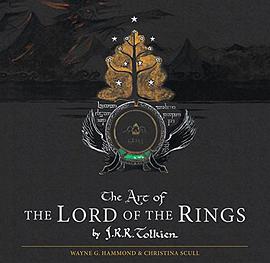
The Art of The Lord of the Rings by J.R.R. Tolkien
DoubanAs he wrote The Lord of the Rings, J.R.R. Tolkiens mental pictures often found expression in drawing, from rough sketches made within the manuscript to more finished illustrations. Only a few of these were meant for publication; most were aids to help Tolkien conceive his complex story and keep it consistent. Many do not illustrate the final text, but represent moments of creation, illuminating Tolkiens process of writing and design. In addition to pictorial sketches, numerous maps follow the development of the Shire and the larger landscape of Middle-earth, while inscriptions in runes and Elvish script, and "facsimile" leaves from the burned and blood-stained Book of Mazarbul, support Tolkiens pose as an "editor" or "translator" of ancient records. The Art of The Lord of the Rings by J.R.R. Tolkien collects these drawings, inscriptions, maps, and plans in one deluxe volume. More than 180 images are included, all of them printed in color from high-quality scans and photographs, more than half not previously published. Wayne G. Hammond and Christina Scull, two of the worlds leading Tolkien scholars, have edited the book and provide an expert introduction and comments.

J.R.R. Tolkien
Google Books Douban
Humphrey Carpenter
publishing house:
HarperCollins
2016
- 10
The original authorised biography, and the only one written by an author who actually met J.R.R. Tolkien, reissued to mark Tolkien’s 125th Anniversary.
In more than 40 years since Tolkien’s death in September 1973, millions have read The Hobbit, The Lord of the Rings and The Silmarillion and become fascinated about the very private man behind the books.
Born in Bloemfontein in January 1892, John Ronald Reuel Tolkien was orphaned in childhood, brought up in near-poverty and almost thwarted in adolescent romance. He served in the First World War, surviving the Battle of the Somme, where he lost some of his closest friends, and returned to academic life, achieving high repute as a scholar and university teacher, eventually becoming Merton Professor of English at Oxford.
Then suddenly his life changed dramatically. One day while marking essay papers he found himself writing ‘In a hole in the ground there lived a hobbit’ – and worldwide renown awaited him.
Humphrey Carpenter was given unrestricted access to all Tolkien’s papers, and interviewed his friends and family. From these sources he follows the long and painful process of creation that produced The Hobbit, The Lord of the Rings and The Silmarillion and offers a wealth of information about the life and work of the twentieth century’s most cherished author.
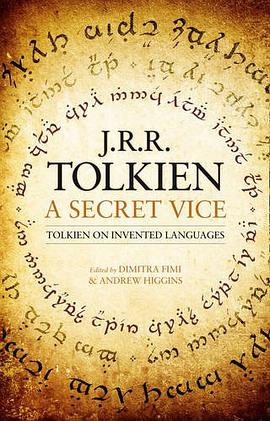
A Secret Vice
DoubanThe first ever critical study of Tolkien’s little-known essay, which reveals how language invention shaped the creation of Middle-earth and beyond, to George R R Martin’s Game of Thrones.
J.R.R. Tolkien’s linguistic invention was a fundamental part of his artistic output, to the extent that later on in life he attributed the existence of his mythology to the desire to give his languages a home and peoples to speak them. As Tolkien puts it in ‘A Secret Vice’, ‘the making of language and mythology are related functions’’.
In the 1930s, Tolkien composed and delivered two lectures, in which he explored these two key elements of his sub-creative methodology. The second of these, the seminal Andrew Lang Lecture for 1938–9, ‘On Fairy-Stories’, which he delivered at the University of St Andrews in Scotland, is well known. But many years before, in 1931, Tolkien gave a talk to a philological society entitled ‘A Hobby for the Home’, where he unveiled for the first time to a listening public the art that he had both himself encountered and been involved with since his earliest childhood: ‘the construction of imaginary languages in full or outline for amusement’.
This talk would be edited by Christopher Tolkien for inclusion as ‘A Secret Vice’ in The Monsters and the Critics and Other Essays and serves as the principal exposition of Tolkien’s art of inventing languages. This new critical edition, which includes previously unpublished notes and drafts by Tolkien connected with the essay, including his ‘Essay on Phonetic Symbolism’, goes some way towards re-opening the debate on the importance of linguistic invention in Tolkien’s mythology and the role of imaginary languages in fantasy literature.
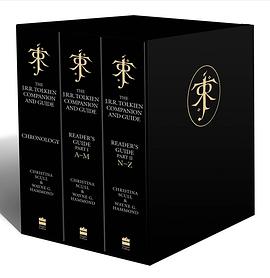
The J.R.R. Tolkien Companion and Guide
Douban
Wayne G. Hammond
/
Christina Scull
publishing house:
HarperCollins
2017
- 9
https://wayneandchristina.wordpress.com/2016/10/04/tolkien-companion-and-guide-2nd-ed/