分析化学
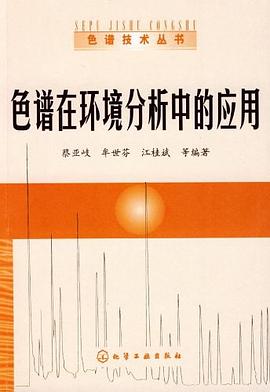
色谱在环境分析中的应用 Douban
2009
- 8
《色谱在环境分析中的应用》比较系统地介绍了色谱技术在各种环境污染物分析特别是持久性有机污染物分析中的应用,以求为从事环境样品分析方法研究、环境监测和其他有关人员提供参考。全书共分为九章:第一章介绍了目前受国际组织和学术界关注的二英类(PCDDs/ PCDFs)和多氯联苯(PCBs)的色谱分析,在第二章特意选择介绍了多溴联苯醚(PBDEs)的色谱分析方法,第三章专门介绍了多环芳烃(PAHs)化合物的分析方法,第四章专门介绍了另一类著名的持久性有机污染物有机氯农药的色谱分析方法,第五章介绍了目前关注的另外一类化合物即挥发性有机污染物(VOCs)及室内空气污染物的色谱分析方法,第六章介绍了难挥发性表面活性剂特别是全氟辛烷磺酸盐类化合物(PFOS等)的色谱分析方法,第七章和第八章分别对无机阴离子、金属和胺类的色谱分析方法作了全面介绍,最后一章对近年来颇受关注的与重要污染事件相关的污染物如硝基苯、有机锡、丙烯酰胺、甲醛、三聚氰胺等污染物的色谱分离与测定方法进行了介绍。
《色谱在环境分析中的应用》可作为相关专业及从事分析工作的科技人员参考。
《色谱在环境分析中的应用》可作为相关专业及从事分析工作的科技人员参考。
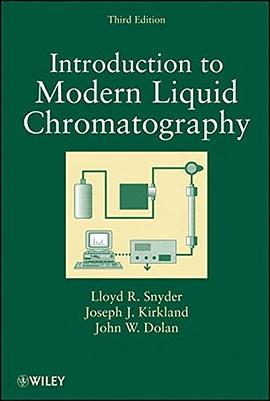
Introduction to Modern Liquid Chromatography Douban
The latest edition of the authoritative reference to HPLC High-performance liquid chromatography (HPLC) is today the leading technique for chemical analysis and related applications, with an ability to separate, analyze, and/or purify virtually any sample. Snyder and Kirkland's Introduction to Modern Liquid Chromatography has long represented the premier reference to HPLC. This Third Edition , with John Dolan as added coauthor, addresses important improvements in columns and equipment, as well as major advances in our understanding of HPLC separation, our ability to solve problems that were troublesome in the past, and the application of HPLC for new kinds of samples. This carefully considered Third Edition maintains the strengths of the previous edition while significantly modifying its organization in light of recent research and experience. The text begins by introducing the reader to HPLC, its use in relation to other modern separation techniques, and its history, then leads into such specific topics as: The basis of HPLC separation and the general effects of different experimental conditions Equipment and detection The column—the "heart" of the HPLC system Reversed-phase separation, normal-phase chromatography, gradient elution, two-dimensional separation, and other techniques Computer simulation, qualitative and quantitative analysis, and method validation and quality control The separation of large molecules, including both biological and synthetic polymers Chiral separations, preparative separations, and sample preparation Systematic development of HPLC separations—new to this edition Troubleshooting tricks, techniques, and case studies for both equipment and chromatograms Designed to fulfill the needs of the full range of HPLC users, from novices to experts, Introduction to Modern Liquid Chromatography, Third Edition offers the most up-to-date, comprehensive, and accessible survey of HPLC methods and applications available.
Modern HPLC for Practicing Scientists Douban
author:
Michael W. Dong
publishing house:
Wiley-Interscience
2006
- 6
A comprehesive yet concise guide to Modern HPLC Written for practitioners by a practitioner, Modern HPLC for Practicing Scientists is a concise text which presents the most important High-Performance Liquid Chromatography (HPLC) fundamentals, applications, and developments. It describes basic theory and terminology for the novice, and reviews relevant concepts, best practices, and modern trends for the experienced practitioner. Moreover, the book serves well as an updated reference guide for busy laboratory analysts and researchers. Topics covered include: HPLC operation Method development Maintenance and troubleshooting Modern trends in HPLC such as quick-turnaround and "greener" methods Regulatory aspects While broad in scope, this book focuses particularly on reversed-phase HPLC, the most common separation mode, and on applications for the pharmaceutical industry, the largest user segment. Accessible to both novice and intermedate HPLC users, information is delivered in a straightforward manner illustrated with an abundance of diagrams, chromatograms, tables, and case studies, and supported with selected key references and Web resources. With intuitive explanations and clear figures, Modern HPLC for Practicing Scientists is an essential resource for practitioners of all levels who need to understand and utilize this versatile analytical technology.