post-bop
The Black Saint & The Sinner Lady Douban
9.6 (36 ratings) Charles Mingus genre: Jazz
release date 1995-11-07 publisher: Impulse!
The Black Saint and the Sinner Lady is a studio album by American jazz musician Charles Mingus, released on Impulse! Records in 1963. The album consists of a single continuous composition—partially written as a ballet—divided into four tracks and six movements
Night Dreamer Douban
9.3 (11 ratings) Wayne Shorter genre: Jazz
release date 2005-03-01 publisher: Blue Note Records
Wayne Shorter's first Blue Note album remains a masterpiece. Lee Morgan, McCoy Tyner, Reggie Workman and Elvin Jones interpret his unique compositions beautifully and they generously add their own creative depth to his creations.

* bonus track, not part of the original LP

Recorded on April 29, 1964 at the Van Gelder Studio, Englewood Cliffs, New Jersey

LEE MORGAN, trumpet; WAYNE SHORTER, tenor sax; McCOY TYNER, piano; REGGIE WORKMAN, bass; ELVIN JONES, drums
Point of Departure Douban
8.3 (6 ratings) Andrew Hill genre: Jazz
release date 1999-05-18 publisher: Blue Note Records
Alfred Lion considered Andrew Hill his last major discovery and rightly so. Hill's rich, rhythmic piano and utterly unique compositions stand alone. Point Of Departure is Hill's masterpiece with rich three-horn arrangements for Kenny Dorham, Eric Dolphy and Joe Henderson. Richard Davis and Tony Williams complete this high level ensemble.
Three alternate takes have been added to the original LP.
Black Fire Douban
Andrew Hill / Joe Henderson genre: Jazz
release date 2004-07-13 publisher: Blue Note Records
Alfred Lion called Andrew Hill his last great discovery and "Black Fire" was the pianist's brilliant Blue Note debut. Despite the originality and complexity of Hill's compositions, Joe Henderson, Richard Davis and Roy Haynes sound like they've been playing them for years. Added to the original LP are two alternate takes.
ANDREW HILL, piano
JOE HENDERSON, tenor sax
RICHARD DAVIS, bass
ROY HAYNES, drums
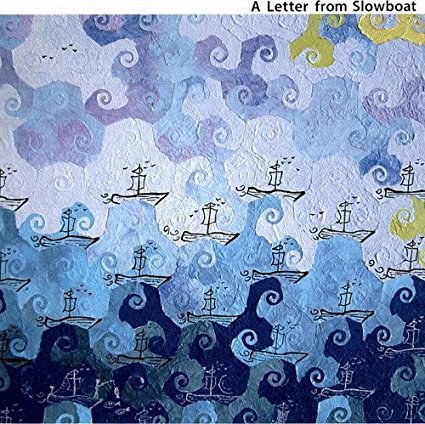
A Letter from Slowboat Douban
8.8 (17 ratings) Ryo Fukui genre: Jazz
release date 2015-01-25 publisher: Sapporo City Jazz
出生於北海道平取町的爵士鋼琴演奏家福居良(Ryo Fukui),1970年無師自通學習鋼琴演奏,六年後便推出一鳴驚人的三重奏專輯《Scenery》,第二年再由原班人馬推出《Mellow Dream》,迅即奠定他在爵士樂圈的地位。
When A Man Loves A Woman Douban
9.5 (8 ratings) 水橋孝 / Takashi Mizuhashi Quartet + 2 genre: Jazz
release date 1974-01-01 publisher: Three Blind Mice
Bassist Takashi Mizuhashi made a stunning debut from the Three Blind Mice label with this live recording with the first regular group he formed as a leader. His quartet consisted of young and competent players who would late become giants in the Japanese jazz scene.
This incredibly well-recorded live album contains only three tunes, each exceeding 11 minutes in length. The opener is a huge R&B hit, "When A Man Loves A Woman," featuring the soulful alto saxophone of Yoshio Otomo. "So What" begins with more than three minutes of free improvisation before the band attacks the tune at a break-neck speed.
The third tune--covering the entire Side B of the original album at 18:26--is Stanley Turrentine's famous "Sugar," and for this tune the quartet is augmented by two powerful guests, Seiichi Nakamura on tenor sax and Shigeharu Mukai on trombone. This is an exciting live album recorded with stunning fidelity!
Takashi Mizuhashi - bass
Yoshio Otomo - alto saxophone
Fumio Karashima - piano
Hideo Sekine - drums
Seiichi Nakamura - tenor saxophone (#3)
Shigeharu Mukai - trombone (#3)
Both Directions at Once: The Lost Album Douban
约翰·柯尔 John Coltrane genre: Jazz
release date 2018-06-29 publisher: Impulse!
A lost album of originals by John Coltrane, the American saxophonist who took jazz to new heights of freedom and expression, has been unearthed.
The album, being released on 29 June as Both Directions at Once: the Lost Album, was recorded in a session on 6 March 1963, at the Van Gelder studios in New Jersey. Joining Coltrane in the quartet that also recorded classic albums such as A Love Supreme, Coltrane, and Ballads, are Jimmy Garrison on double bass, Elvin Jones on drums, and McCoy Tyner on piano.
The master tape left in the studio was lost, and it’s likely it was destroyed in the early 70s when the label, Impulse!, was trying to reduce storage fees. But Coltrane gave his own reference tape of the recording to his wife Naima, despite their then disintegrating relationship – the pair divorced in 1966, and the tape has stayed in her family’s possession ever since.